

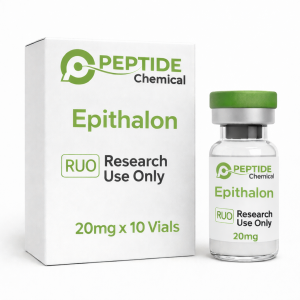
Epithalon (Epitalon)
Epithalon (Epitalon) is a research peptide consisting of a synthetic tetrapeptide (Ala-Glu-Asp-Gly) derived from the natural thymic peptide Epithalamin. It has been shown in preclinical research to influence telomerase activation, oxidative regulation, and circadian gene expression via modulation of pineal peptide signaling pathways. Epithalon is utilized as a model compound in studies investigating genomic stability, epigenetic control, and neuroendocrine peptide regulation.
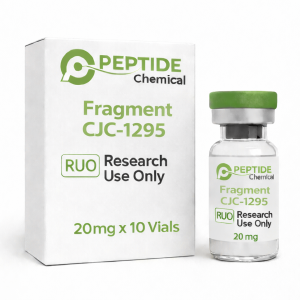
Fragment, CJC-1295 (no DAC), Ipamorelin 12mg (Blend)
Fragment, CJC-1295 (no DAC), and Ipamorelin is a research peptide blend combining hGH Fragment 176–191 with GHRH and ghrelin receptor agonists for coordinated growth hormone axis modeling. The fragment modulates AMPK and β-adrenergic signaling, CJC-1295 (Mod GRF 1–29) activates GHRH receptor pathways, and Ipamorelin stimulates calcium-dependent GHS-R1a signaling. This blend supports research into metabolic peptide synergy and hypothalamic–pituitary function.
Fragment, Modified GRF, Ipamorelin 12mg (Blend)
Fragment, CJC-1295 (no DAC), and Ipamorelin is a research peptide blend combining hGH Fragment 176–191 with GHRH and ghrelin receptor agonists for coordinated growth hormone axis modeling. The fragment modulates AMPK and β-adrenergic signaling, CJC-1295 (Mod GRF 1–29) activates GHRH receptor pathways, and Ipamorelin stimulates calcium-dependent GHS-R1a signaling. This blend supports research into metabolic peptide synergy and hypothalamic–pituitary function.
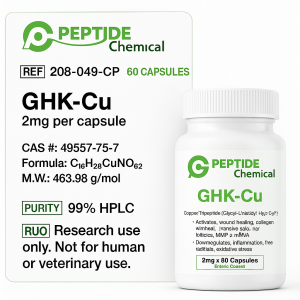
GHK-Cu (2mg x 60 Capsules) (Copper Tripeptide)
GHK-Cu is a small, naturally occurring peptide with the ability to attenuate inflammation, improve antioxidant responses, and improve gene expression on a large scale. Research shows that this copper-chelating peptide may be of critical importance both in the prevention of neurodegenerative disease and as a tool for exploring pathophysiological mechanisms. Studies in mice have revealed that GHK-Cu can protect against neurological insults, improve wound healing, reduce rates of infection, and boost blood vessel growth. The peptide has been of interest in recent years for its anti-oxidant properties that, in combination with its ability to alter gene expression patterns, appear to help slow or even reverse some aspects of aging.
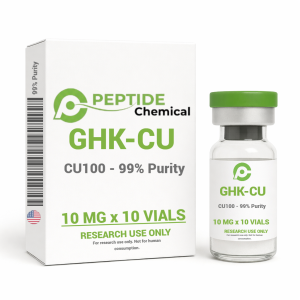
GHK-Cu (Copper Tripeptide)
GHK-Cu, also known as Copper Tripeptide-1, is a naturally occurring peptide complex formed by the binding of the tripeptide GHK (glycyl-L-histidyl-L-lysine) with a copper ion. It is widely studied in cellular biology due to its role in signaling pathways associated with tissue maintenance and cellular communication.
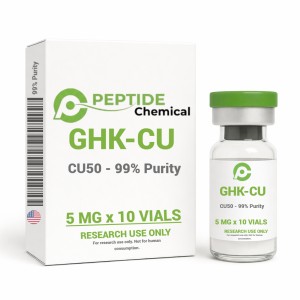
GHK-Cu (Copper Tripeptide) 5mg
GHK-Cu, also known as Copper Tripeptide-1, is a naturally occurring peptide complex formed by the binding of the tripeptide GHK (glycyl-L-histidyl-L-lysine) with a copper ion. It is widely studied in cellular biology due to its role in signaling pathways associated with tissue maintenance and cellular communication.
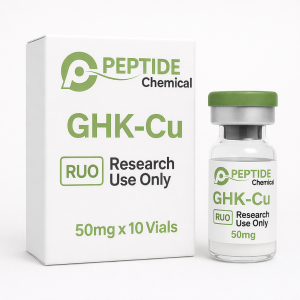
GHK-Cu 50mg Copper Peptide
GHK-Cu is a small, naturally occurring peptide with the ability to attenuate inflammation, improve antioxidant responses, and improve gene expression on a large scale. Research shows that this copper-chelating peptide may be of critical importance both in the prevention of neurodegenerative disease and as a tool for exploring pathophysiological mechanisms. Studies in mice have revealed that GHK-Cu can protect against neurological insults, improve wound healing, reduce rates of infection, and boost blood vessel growth. The peptide has been of interest in recent years for its anti-oxidant properties that, in combination with its ability to alter gene expression patterns, appear to help slow or even reverse some aspects of aging.
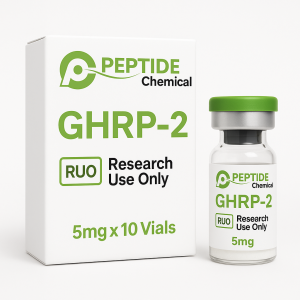
GHRP-2 (5mg x 10) Ipamorelin (5mg x 10)
GHRP-2 (5mg x 10), CJC-1295 no DAC (5mg x 10)
GHRP-6 (5mg x 10) Ipamorelin (5mg x 10)
GHRP-6 (5mg x 10), CJC-1295 no DAC (5mg x 10)
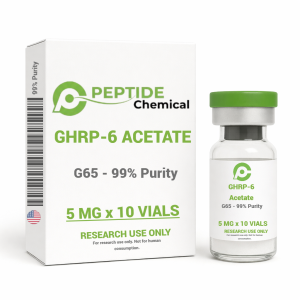
GHRP-6 Acetate (Growth Hormone Releasing Peptide-6) 5mg
GHRP-6 Acetate is a synthetic hexapeptide widely studied in endocrinology and peptide research for its ability to interact with growth hormone secretagogue receptors (GHS-R). Its chemical structure allows researchers to examine receptor-mediated signaling and peptide-driven intracellular pathways in controlled experimental models.