

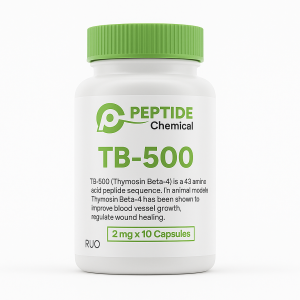
TB-500 (Thymosin Beta-4) is a powerful synthetic version of a naturally occurring peptide involved in cellular repair, tissue regeneration, and structural maintenance throughout the body. This formulation features the full 43–amino acid sequence, ensuring high biological fidelity and functional integrity for advanced research and performance-focused applications.
Thymosin Beta-4 plays a critical role in cellular migration, actin regulation, and tissue remodeling. These processes are essential for maintaining healthy muscles, tendons, ligaments, and connective tissues, making TB-500 one of the most widely explored peptides in regenerative and recovery-focused research.
Each vial contains 2mg of ultra-pure TB-500, with a total of 10 vials per package, delivering 20mg in total. This multi-vial format allows for controlled protocols, long-term exploration, and flexible dosing strategies suitable for a wide range of research applications.
TB-500 is known for its systemic activity, meaning it does not target only one area of the body. Instead, it circulates broadly, supporting generalized tissue repair and cellular communication wherever support is most needed. This whole-body characteristic is one of the reasons TB-500 is highly regarded in regenerative science.
One of the most studied aspects of Thymosin Beta-4 is its role in actin binding and cytoskeletal organization. By supporting these foundational cellular structures, TB-500 helps maintain cellular strength, flexibility, and coordinated movement—key factors in tissue resilience and repair.
Researchers often explore TB-500 for its ability to support rapid recovery following physical stress. Muscles, joints, and connective tissues are constantly undergoing micro-damage during movement and exercise, and TB-500 is studied for how it supports the body’s natural repair mechanisms during these cycles.
Another important feature of TB-500 is its potential influence on angiogenesis—the formation of new blood vessels. Healthy blood flow is essential for nutrient delivery, oxygen transport, and waste removal, all of which are crucial for efficient tissue recovery and regeneration.
Thymosin Beta-4 has also been studied for its ability to support inflammation balance at the tissue level. By helping regulate cellular signaling pathways, it contributes to a more controlled healing environment that supports comfort, mobility, and long-term structural health.
The 43–amino acid structure used in this formulation ensures that TB-500 closely mirrors the naturally occurring human peptide. This structural accuracy enhances stability, interaction with biological pathways, and overall research reliability.
TB-500 is commonly researched for its supportive role in soft tissue maintenance, including tendons, ligaments, fascia, and muscle fibers. These tissues play a critical role in movement, strength, and injury prevention, making TB-500 valuable in performance and longevity research.
Because TB-500 is not tissue-specific, it is often explored as a complementary peptide alongside other regenerative compounds. Its broad systemic activity helps create an internal environment supportive of repair and cellular renewal.
Each vial is lyophilized (freeze-dried) to preserve peptide integrity and long-term stability. This process ensures that the active compound remains potent until reconstitution and use, maintaining high research accuracy and consistency.
TB-500 is widely valued for its potential role in maintaining flexibility and structural balance throughout the body. Healthy connective tissues are essential for daily function, physical performance, and long-term mobility.
In research contexts, Thymosin Beta-4 has been associated with improved coordination between cells during healing processes. This coordinated response supports more efficient tissue remodeling and recovery outcomes.
The peptide’s role in cellular migration allows cells to move effectively to areas that require repair. This mechanism is vital in wound healing and tissue regeneration pathways, making TB-500 central to many advanced studies.
Athletic and performance-oriented research often includes TB-500 due to its support of recovery cycles. Faster recovery allows for better training consistency, reduced downtime, and improved long-term structural resilience.
TB-500 is also studied for its support of endothelial cell health, which contributes to vascular integrity and efficient circulation. This function supports overall tissue vitality and nutrient exchange.
The multi-vial format ensures flexibility in protocol planning. Researchers can stagger use, adjust schedules, or extend study durations while preserving product quality and consistency across sessions.
Because Thymosin Beta-4 naturally occurs in the body, interest in TB-500 has grown for its compatibility with human biological systems. This natural alignment supports smoother integration into research focusing on regenerative balance.
TB-500 is often described as a “repair-support” peptide due to its involvement in foundational cellular processes rather than surface-level effects. This deep-level activity supports long-term tissue quality rather than short-term symptom masking.
The peptide’s support of fibroblast activity makes it relevant to collagen organization and connective tissue strength. These properties are essential for maintaining structural integrity across skin, joints, and muscles.
TB-500 is researched not only for recovery but also for injury prevention through improved tissue health and flexibility. Stronger, better-coordinated tissues are less prone to strain over time.
Each vial undergoes strict quality control testing to ensure purity, sequence accuracy, and absence of contaminants. This ensures consistency and reliability for every research application.
The peptide’s stability and versatility make it suitable for both short-term and extended research protocols. Its effects are cumulative, supporting gradual and sustained improvement over time.
TB-500’s influence on cellular resilience makes it particularly appealing for aging-related research. Tissue regeneration capacity naturally declines with age, and TB-500 is studied for its potential to support youthful cellular behavior.
The 20mg total supply allows for comprehensive exploration of TB-500’s regenerative properties, making it suitable for structured research programs and long-term studies.
TB-500 is widely regarded as one of the most advanced peptides available for tissue repair and regenerative research. Its broad activity profile distinguishes it from peptides that focus on only one pathway or tissue type.
By supporting cellular structure, repair signaling, and tissue coordination, TB-500 contributes to a more resilient internal environment. This holistic support makes it a cornerstone compound in regenerative and performance-focused research.
TB-500 (Thymosin Beta-4) (43aa) (2mg x 10 Vials = 20mg) is a premium research-grade peptide designed for those exploring the frontiers of tissue regeneration, recovery optimization, and long-term structural wellness.
HotNew
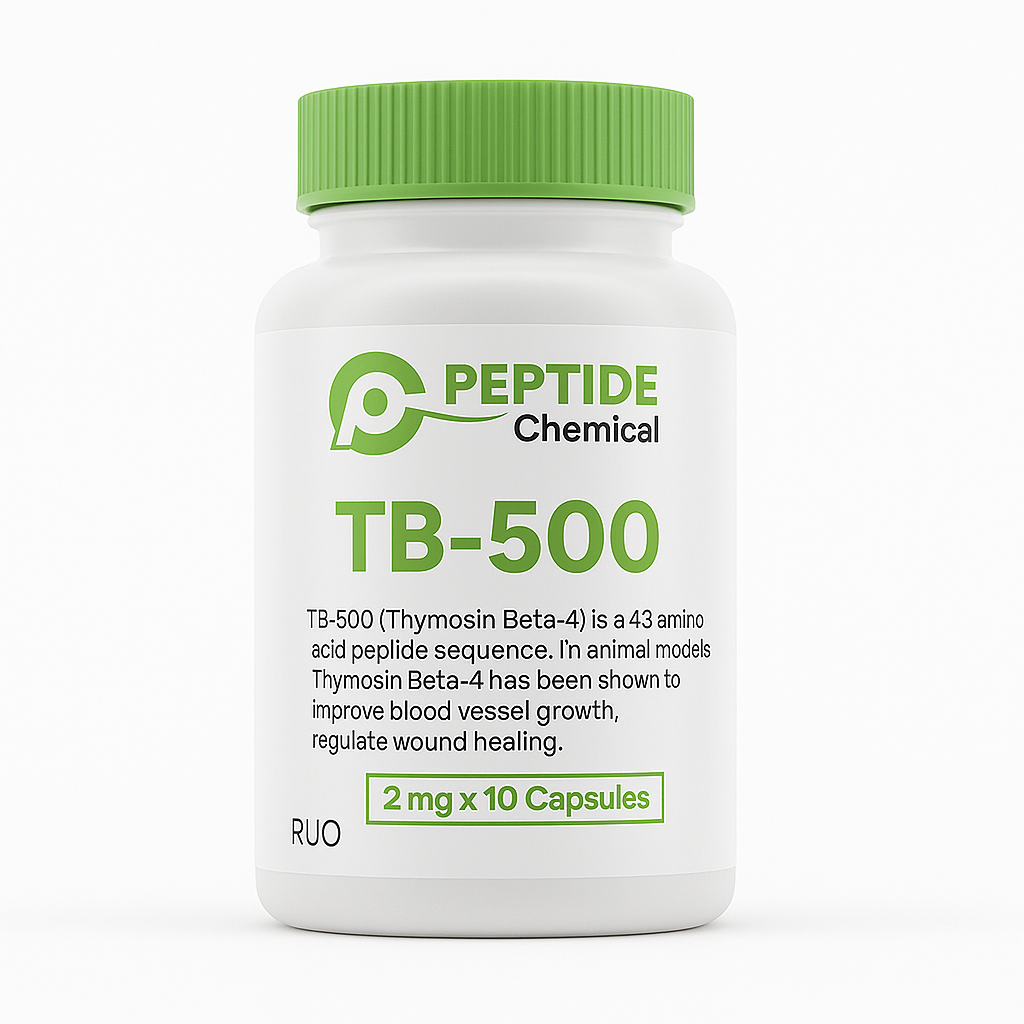
TB-500 (Thymosin Beta-4) (43aa)
$85.00
TB-500 (Thymosin Beta-4) is a 43 amino acid peptide sequence. In animal models, Thymosin Beta-4 has been shown to improve blood vessel growth, regulate wound healing, decrease inflammation, and reduce oxidative damage in the heart and central nervous system. Thymosin-beta-4 has a role in protection, tissue repair, regeneration and remodeling of injured or damaged tissues. It is also of active interest in anti-aging research.
Description
Shipping & Delivery
Related products
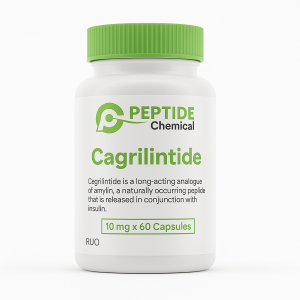
Cagrilintide
Cagrilintide is a long-acting analogue of amylin, a naturally occurring peptide that is released in conjunction with insulin. Cagrilintide has shown promise in animal trials as a treatment for obesity and type 2 diabetes. It has been studied for benefits not just in type 2 diabetes, but for liver damage, alcohol-related liver disease, and heart/blood vessel disease. There is some speculation about the role of this peptide in Alzheimer’s disease as well, but no research has been published in that particular sub-domain, yet. Many trials, however, have looked at the combination of cagrilintide and semaglutide in the treatment of obesity and type 2 diabetes. The two proteins appear to work synergistically to provide more robust and more permanent weight loss effects. It is important to note that while preclinical studies suggest promising therapeutic potential, clinical trials in humans are limited. Further research needs to be done to determine the efficacy and safety profiles.
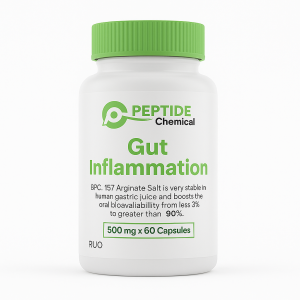
Gut Inflammation (60 Capsules) (Stable BPC-157 Arginate, KPV, Larazotide) FREE Shipping
BPC-157 Arginate Salt is very stable in human gastric juice and boosts the oral bioavailability from less than 3% to greater than 90%. BPC 157 arginate salt is also more stable in varied temperature environments and can resist the effects of UV light. Studies show that just 5% of BPC 157 arginate is degraded after 5 hours in gastric acid as compared to 98% of the acetate salt with oral administration. The enhanced oral bioavailability of the arginate salt makes it the preferred choice in BPC 157 oral research.
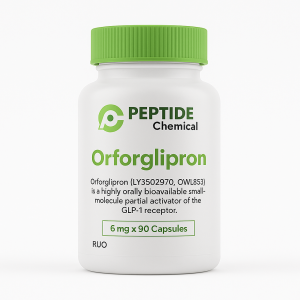
Orforglipron (6mg x 90 Capsules)



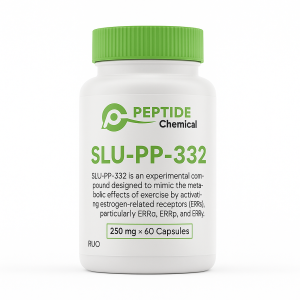
SLU-PP-332
SLU-PP-332 (250mcg x 60 Capsules = 15,000mcg) SLU-PP-332 (1000mcg x 30 Capsules = 30,000mcg) SLU-PP-332 is an experimental compound designed to mimic the metabolic effects of exercise by activating estrogen-related receptors (ERRs), particularly ERRα, ERRβ, and ERRγ. This activation leads to increased energy expenditure, enhanced fatty acid oxidation, and improved mitochondrial function.



Reviews
There are no reviews yet.