

MK-677, commonly known as Ibutamoren, is a potent and highly selective growth hormone secretagogue that mimics the action of ghrelin, the endogenous hunger hormone. It binds to the ghrelin receptor (GHS-R1a), which is responsible for stimulating natural growth hormone (GH) release from the pituitary gland. Unlike synthetic GH, MK-677 does not introduce external hormones into the body; instead, it enhances the body’s own pulsatile GH secretion.
One of the defining characteristics of Ibutamoren is its ability to elevate both GH and IGF-1 levels consistently. Research shows that continuous administration does not blunt GH response, meaning the pituitary remains responsive even with long-term stimulation. This provides a unique model for studying sustained GH elevation without receptor desensitization.
GH secretion naturally declines with age, reducing muscle mass, bone density, and metabolic efficiency. Because MK-677 stimulates physiologic GH release, it has become one of the most widely investigated compounds in longevity studies. Its ability to mimic youthful GH secretion patterns attracts interest in regenerative and metabolic research.
The ghrelin receptor activation caused by MK-677 extends beyond GH stimulation. Ghrelin itself plays major roles in metabolism, appetite, sleep regulation, cognitive function, and even mood. By activating this receptor, Ibutamoren can influence several interconnected biological systems in a predictable manner, making it a valuable research molecule.
One of the most documented observations in MK-677 research is its effect on appetite. Activation of the ghrelin receptor stimulates hunger signaling in the hypothalamus. This provides a controlled model for appetite-related studies and for understanding the metabolic consequences of increased caloric intake.
Ibutamoren has been shown to improve sleep architecture in research subjects, particularly by increasing REM sleep and deep restorative sleep. Deeper sleep correlates with improved GH pulsatility, enhanced recovery, and better metabolic function. This connection creates a feedback loop where GH and sleep enhance one another.
Lean muscle mass has consistently increased in research models involving MK-677 due to higher GH and IGF-1. These hormones stimulate protein synthesis, satellite cell activation, and overall muscle hypertrophy. Because of this, Ibutamoren is frequently used in muscle biology and sarcopenia studies.
Bone density research has shown promising results as well. GH and IGF-1 strongly influence bone remodeling by activating osteoblasts and improving mineral retention. This makes MK-677 relevant in studies involving osteoporosis, aging, and skeletal regeneration.
In metabolic studies, Ibutamoren demonstrates improvements in nitrogen retention, which is crucial during caloric deficit or muscle loss. GH influences how the body partitions nutrients, leading to better preservation of lean mass and reduced catabolism.
MK-677 has been observed to reduce LDL cholesterol and improve lipid metabolism markers in some research models. These changes are consistent with GH’s known influence on fat oxidation and lipid turnover. Enhanced IGF-1 levels may also contribute to improved overall metabolic health.
Visceral fat reduction has also been documented, though results may vary. Elevated GH increases lipolysis, helping break down stored fat, especially around the abdomen. This effect often appears more slowly than with direct fat-burning compounds because it is mediated through GH’s long-term metabolic actions.
In cognitive research, ghrelin receptor activation has been linked to memory enhancement and neuroprotection. Ghrelin neurons interact with hippocampal circuits, influencing learning, spatial memory, and synaptic plasticity. MK-677 provides a stable model for studying these neurological pathways.
Ibutamoren may influence mood and well-being through its interaction with ghrelin receptors in brain regions regulating reward and motivation. Ghrelin is known to modulate dopamine pathways, suggesting potential applications in neuropsychiatric research.
One important aspect of MK-677 research involves glucose metabolism. GH increases insulin resistance in some contexts, so researchers carefully monitor fasting glucose and insulin levels in metabolic studies. This helps differentiate adaptive metabolic changes from undesired elevations.
Fluid retention is another observed outcome in GH-elevating studies, often linked to sodium retention and increased IGF-1. Monitoring extracellular fluid balance helps researchers understand how GH-induced changes influence body composition.
Because MK-677 is orally bioavailable, it offers a major advantage over peptides that must be injected. Oral delivery makes long-term dosing and compliance easier to study, giving researchers a more stable dataset over extended periods.
Its long half-life, typically around 24 hours, enables consistent GH elevation from a single daily dose. This eliminates the need for multiple injections throughout the day, unlike traditional GH secretagogues.
Hypothalamic-pituitary responsiveness remains intact during Ibutamoren research, which is unusual for substances that chronically stimulate hormone release. This characteristic suggests that ghrelin receptor signaling maintains physiological balance better than direct pituitary agonists.
MK-677 may enhance collagen synthesis indirectly through increased GH and IGF-1. Collagen production plays a major role in joint health, tendon strength, and overall elasticity of connective tissues. Researchers studying recovery and injury repair often include GH secretagogues in their models.
In elderly study populations, MK-677 helped improve frailty markers, strength, and mobility. These benefits highlight its potential role in age-related muscle decline and functional impairment research.
The peptide’s influence on metabolism makes it relevant in obesity-related studies. However, increased appetite must be considered, as caloric intake strongly influences research outcomes. Understanding how ghrelin receptor activation interacts with food availability remains an active area of investigation.
Enhanced protein synthesis associated with elevated GH also influences recovery models. MK-677 has been used experimentally to study recovery from surgery, wounds, or muscle trauma, providing insight into regeneration processes.
In immune system studies, IGF-1 is known to support cellular repair and modulate inflammation. Ibutamoren’s ability to elevate IGF-1 may indirectly support immune resilience, although this area remains under early investigation.
MK-677 is also examined for its potential role in androgen-deficient research models where lean mass preservation is needed. While the compound does not influence testosterone directly, improved GH/IGF-1 activity may synergize with hormonal pathways.
Athletic performance studies often explore MK-677 due to prolonged GH elevation, improved recovery, and increased nitrogen retention. However, appetite stimulation must be factored into performance-based observations.
Ibutamoren’s predictable pharmacokinetics make it ideal for long-term longevity research. Stable GH elevation enables continuous study of mitochondrial function, metabolic repair, and anti-aging biomarkers over many months.
In pediatric growth studies, MK-677 has been evaluated for its ability to increase height velocity in models of GH deficiency. The results indicate significant potential for supporting growth in cases where pituitary function remains intact.
As a secretagogue rather than an exogenous hormone, MK-677 allows the body to maintain physiological feedback loops. This helps prevent extreme hormonal fluctuations while still elevating GH and IGF-1 to biologically meaningful levels.
Overall, MK-677 stands out as a versatile research compound with applications in muscle biology, aging, metabolism, neurology, and tissue regeneration. Its oral bioavailability, long half-life, and ability to naturally elevate GH and IGF-1 distinguish it from both peptides and synthetic hormones. As research continues, Ibutamoren remains one of the most important tools for studying the interconnected pathways of growth, recovery, and metabolic health.
HotNew
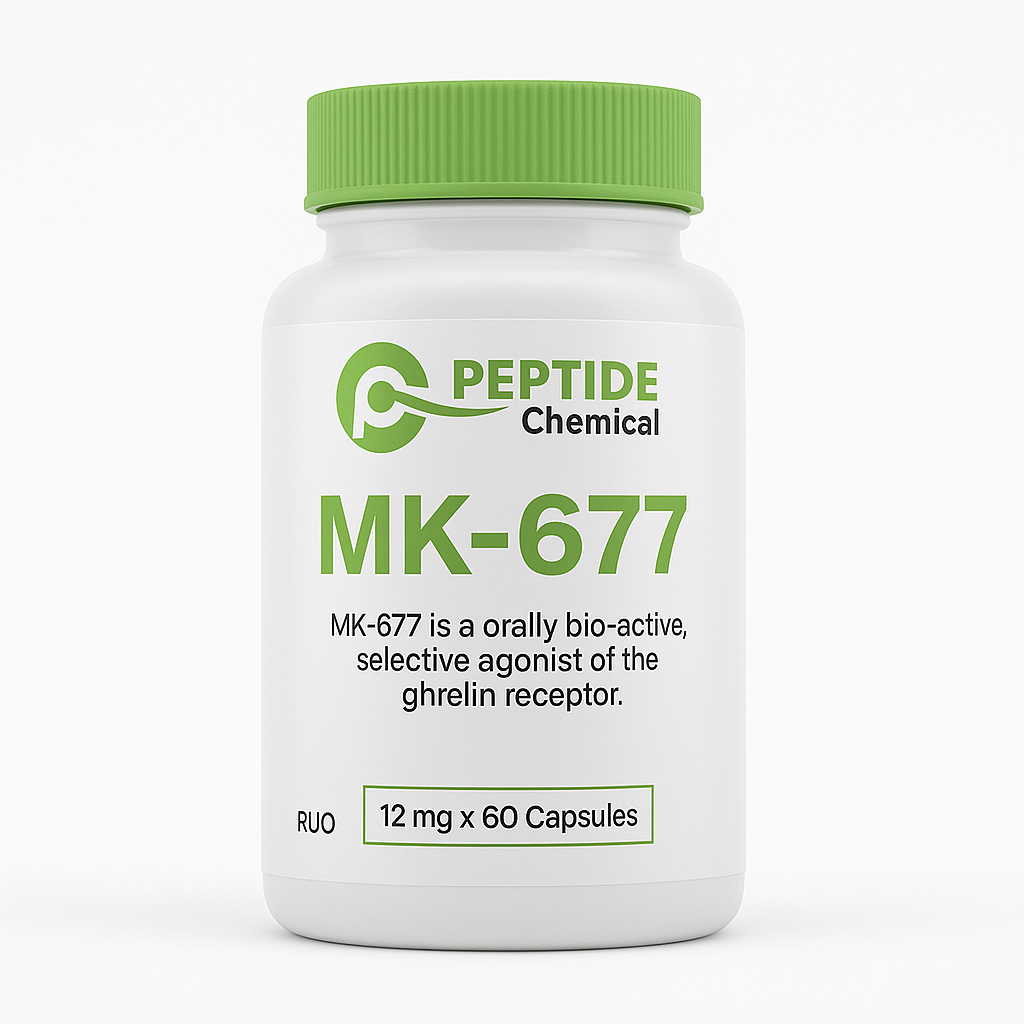
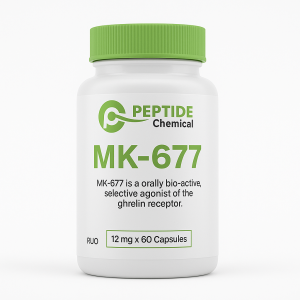
MK-677 (Ibutamoren) 12.5mg (60 Capsules)
$150.00
MK-677, is a orally bio-active, selective agonist of the ghrelin receptor. Research shows that MK-677 increases the natural secretion of growth hormone (GH) and insulin-like growth factor 1 (IGF-1), but does not affect cortisol levels. It is being researched as a possible treatment for GH deficiency, muscle and bone wasting, appetite stimulation and Alzheimer’s disease. MK-677 research in mice, appeared to prevent the onset of AD, even in genetically predisposed mice, as long as it was started before significant amyloid beta accumulation. MK-677 research has also shown exceptionally promising benefits in improving sleep quality.
Description
Shipping & Delivery
Related products
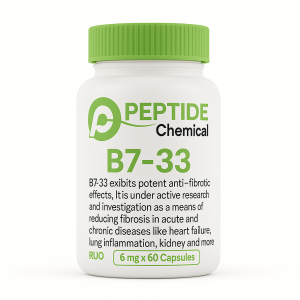
B7-33 6mg
B7-33 exibits potent anti-fibrotic effects. It is under active research and investigation as a means of reducing fibrosis in acute and chronic diseases like heart failure, lung inflammation, kidney and more. In animal studies, B7-33 has reduced fibrosis by roughly 50%, leading to prolonged survival following injury and offering the first new means of treating heart failure in 20 years. It has been shown to reduce excessive scar formation following cardiac injury. It has also shown promise in the treatment of certain vascular disorders as well as preeclampsia of pregnancy.
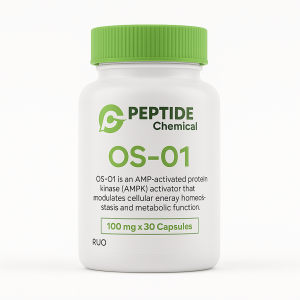
OS-01 (100mg x 30 Capsules)



OS-01 is an AMP-activated protein kinase (AMPK) activator that modulates cellular energy homeostasis and metabolic function. AMPK, a central regulator of energy balance, is activated in response to low intracellular ATP levels, enhancing glucose uptake, fatty acid oxidation, and mitochondrial biogenesis. OS-01 stimulates AMPK phosphorylation, leading to increased ATP production, improved insulin sensitivity, and enhanced autophagic flux, thereby promoting cellular repair and longevity. This compound has been shown to mitigate oxidative stress by downregulating reactive oxygen species (ROS) and inflammatory cytokines, reducing cellular damage and aging-related dysfunction. Additionally, OS-01 enhances endurance by optimizing energy substrate utilization and preserving glycogen stores during exercise. It plays a protective role in renal and cardiovascular systems by attenuating fibrosis, reducing endothelial dysfunction, and improving mitochondrial efficiency. Preclinical studies suggest its potential in managing metabolic disorders, including type 2 diabetes, obesity, and cardiovascular diseases, by improving glucose homeostasis and reducing insulin resistance. Furthermore, OS-01’s activation of autophagy contributes to neuroprotection, reducing age-related neurodegeneration. Its multifaceted mechanism positions it as a promising candidate for therapeutic intervention in metabolic and age-related diseases.
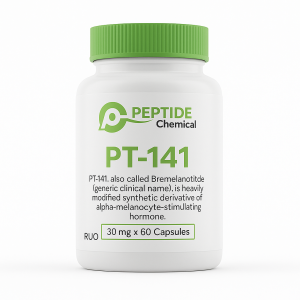
PT-141 (3mg x 10 Vials = 30mg)
PT-141, also called Bremelanotide (generic clinical name), is a heavily modified synthetic derivative of alpha-melanocyte-stimulating hormone. It has been tested in clinical trials as a treatment for both male/female hypoactive sexual desire disorder and acute hemorrhage. PT-141 is an agonist for the melanocortin-4 and melanocortin-1 receptors. Research shows that it promotes sexual arousal and stimulates the immune system.
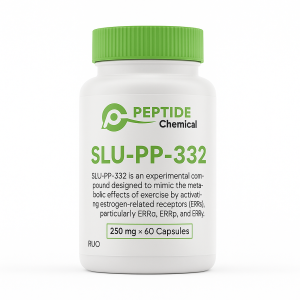
SLU-PP-332
SLU-PP-332 (250mcg x 60 Capsules = 15,000mcg) SLU-PP-332 (1000mcg x 30 Capsules = 30,000mcg) SLU-PP-332 is an experimental compound designed to mimic the metabolic effects of exercise by activating estrogen-related receptors (ERRs), particularly ERRα, ERRβ, and ERRγ. This activation leads to increased energy expenditure, enhanced fatty acid oxidation, and improved mitochondrial function.
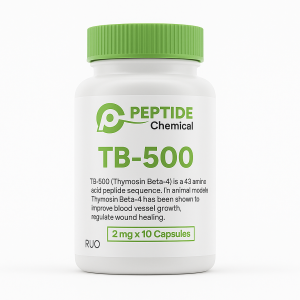
TB-500 (Thymosin Beta-4) (43aa)
TB-500 (Thymosin Beta-4) is a 43 amino acid peptide sequence. In animal models, Thymosin Beta-4 has been shown to improve blood vessel growth, regulate wound healing, decrease inflammation, and reduce oxidative damage in the heart and central nervous system. Thymosin-beta-4 has a role in protection, tissue repair, regeneration and remodeling of injured or damaged tissues. It is also of active interest in anti-aging research.



Reviews
There are no reviews yet.