

VIP5 (Vasoactive Intestinal Peptide Fragment)
VIP5 is a short peptide fragment derived from vasoactive intestinal peptide (VIP), a naturally occurring neuropeptide involved in cellular communication, vascular signaling, and immune-related pathways. In research settings, VIP5 is studied for its ability to model selective aspects of VIP-related signaling while offering a more focused and simplified peptide structure.
In laboratory research, VIP5 is valued for its interaction with VIP-associated receptor pathways. VIP receptors are widely distributed across nervous, immune, and vascular systems, making VIP-derived fragments relevant for studying cross-system cellular communication.
One of the defining characteristics of VIP5 is its reduced peptide length compared to full-length VIP. This allows researchers to isolate and examine specific signaling behaviors without the complexity of the parent peptide, supporting precision-based experimental design.
VIP5 is frequently examined in neurobiology research focused on neuromodulation and neurotransmitter signaling. VIP-related pathways are known to influence neural communication balance, and VIP5 provides insight into how smaller peptide sequences contribute to these effects.
The peptide is also studied in immune signaling research. VIP pathways are associated with immune cell communication and inflammatory signaling modulation, making VIP5 useful for exploring how peptide fragments influence immune response coordination in controlled models.
In vascular and endothelial research, VIP5 is examined for its relevance to cellular signaling involved in vasodilation-related mechanisms. This allows researchers to investigate how peptide-mediated signals influence vascular cell behavior at the molecular level.
VIP5’s compact structure supports stability and predictable behavior in laboratory environments. This reliability contributes to reproducible results and makes it suitable for comparative peptide signaling studies.
Researchers often include VIP5 in structure–function investigations to better understand how truncation of larger neuropeptides alters receptor interaction and downstream signaling pathways.
Unlike full-length VIP, VIP5 is studied for its selective signaling potential rather than broad systemic activity. This targeted approach allows for focused examination of specific biological mechanisms.
VIP5 is also of interest in gut–brain axis research, where VIP-related signaling plays a role in communication between the nervous system and gastrointestinal cellular networks.
Because VIP signaling intersects multiple biological systems, VIP5 is commonly used in systems-based research rather than isolated pathway studies, supporting broader insight into peptide-mediated coordination.
The peptide’s well-defined sequence makes it a useful reference compound in neuropeptide and immune-modulation research.
As peptide science continues to evolve, VIP5 remains a valuable research tool for studying how short peptide fragments contribute to complex biological signaling networks.
Its focused design, stability, and relevance to VIP-related pathways make VIP5 an important compound for advanced cellular communication research.
New
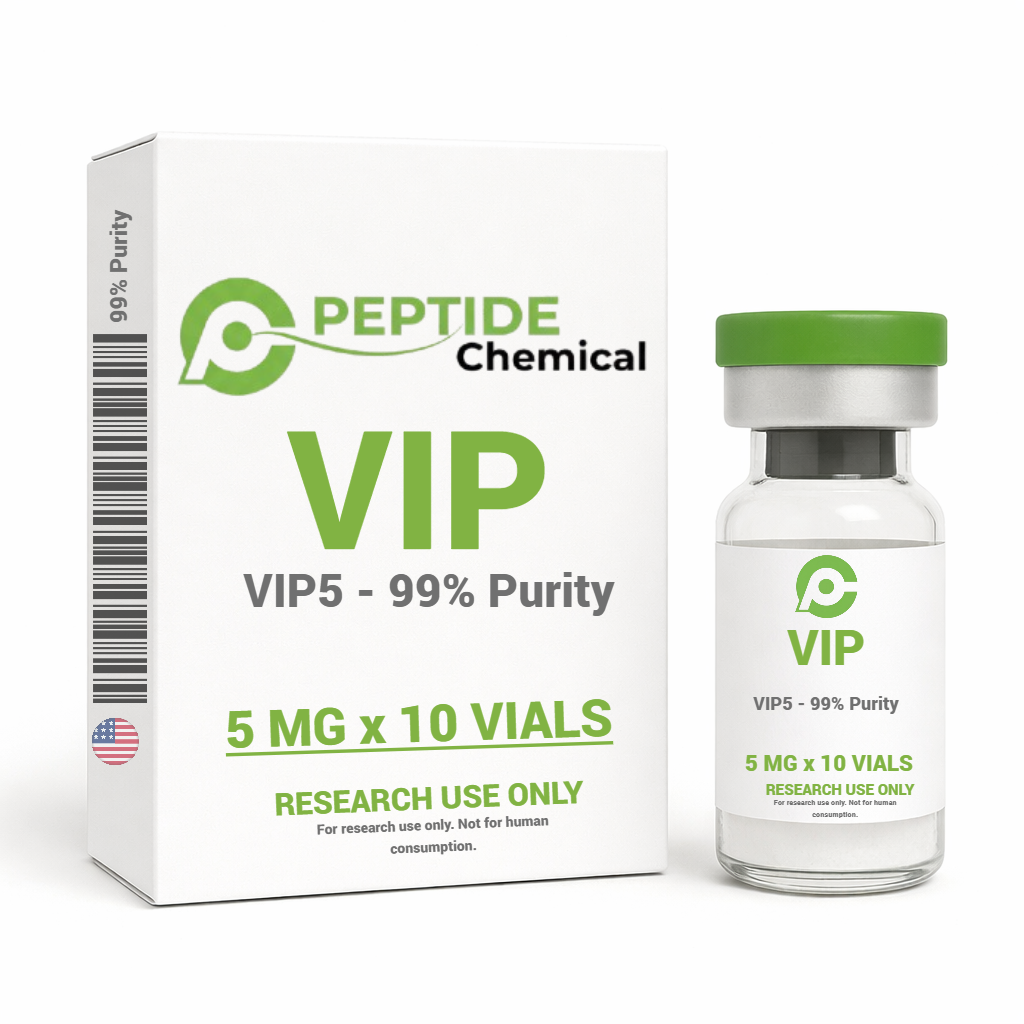
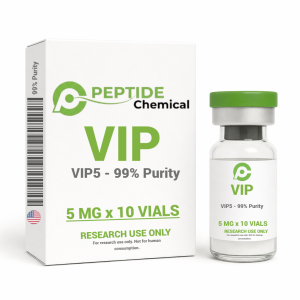
VIP5 (Vasoactive Intestinal Peptide Fragment) 5mg
$78.00
VIP5 is a short peptide fragment derived from vasoactive intestinal peptide (VIP), a naturally occurring neuropeptide involved in cellular communication, vascular signaling, and immune-related pathways. In research settings, VIP5 is studied for its ability to model selective aspects of VIP-related signaling while offering a more focused and simplified peptide structure.
Description
Shipping & Delivery
Related products
BPC 157 500mcg (60 Capsules)
 BPC-157 has undergone a great deal of research because its healing abilities extend well beyond the lining of the stomach. Studies in animal models indicate that BPC-157 can enhance angiogenesis, promote wound healing, stimulate collagen synthesis, modulate the inflammatory response, and protect against oxidative stress. The peptide has shown benefits in animal models with inflammatory bowel disease, GI ulcers, musculoskeletal injuries, heart damage, eye injuries and neurological damage. Research has shown that the oral bioavailability of BPC-157 is quite high.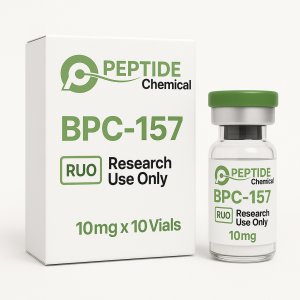
BPC-157 10mg
BPC-157 has undergone a great deal of research because its healing abilities extend well beyond the lining of the stomach. Studies in animal models indicate that BPC-157 can enhance angiogenesis, promote wound healing, stimulate collagen synthesis, modulate the inflammatory response, and protect against oxidative stress. The peptide has shown benefits in animal models with inflammatory bowel disease, GI ulcers, musculoskeletal injuries, heart damage, eye injuries and neurological damage. Research has shown that the oral bioavailability of BPC-157 is quite high. BPC-157 5mg
BPC-157 has undergone a great deal of research because its healing abilities extend well beyond the lining of the stomach. Studies in animal models indicate that BPC-157 can enhance angiogenesis, promote wound healing, stimulate collagen synthesis, modulate the inflammatory response, and protect against oxidative stress. The peptide has shown benefits in animal models with inflammatory bowel disease, GI ulcers, musculoskeletal injuries, heart damage, eye injuries and neurological damage. Research has shown that the oral bioavailability of BPC-157 is quite high. BPC-157 5mg
BPC-157 has undergone a great deal of research because its healing abilities extend well beyond the lining of the stomach. Studies in animal models indicate that BPC-157 can enhance angiogenesis, promote wound healing, stimulate collagen synthesis, modulate the inflammatory response, and protect against oxidative stress. The peptide has shown benefits in animal models with inflammatory bowel disease, GI ulcers, musculoskeletal injuries, heart damage, eye injuries and neurological damage. Research has shown that the oral bioavailability of BPC-157 is quite high. BPC-157, TB-500, KPV, GHK-Cu 80mg (Klow Blend)
BPC-157 has undergone a great deal of research because its healing abilities extend well beyond the lining of the stomach. Studies in animal models indicate that BPC-157 can enhance angiogenesis, promote wound healing, stimulate collagen synthesis, modulate the inflammatory response, and protect against oxidative stress. The peptide has shown benefits in animal models with inflammatory bowel disease, GI ulcers, musculoskeletal injuries, heart damage, eye injuries and neurological damage. Research has shown that the oral bioavailability of BPC-157 is quite high. 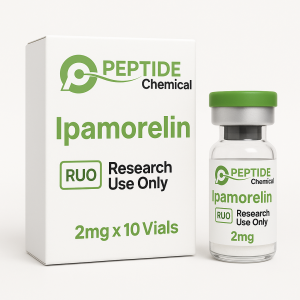
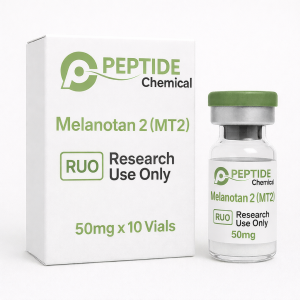
Melanotan 2 (MT2) (3mg x 10 Vials = 30mg)
Melanotan-2 (MT-2) is a synthetic derivative of human alpha-melanocyte-stimulating hormone (α-MSH), developed at the University of Arizona in the 1980s. The initial purpose was to create a sunless tanning alternative, inspired by α-MSH's ability to induce sexual arousal and skin darkening in rodents. However, as research progressed, MT-2's diverse effects were unveiled. These include enhancing sexual arousal, promoting skin pigmentation, reducing compulsive behavior, managing addiction, suppressing hunger, decreasing glucagon production, and even potentially reversing certain features associated with autism. Melanotan-2 research has shown it to enhance sexual arousal, promote skin pigmentation through melanocyte activation and reduce compulsive/addictive behaviors.
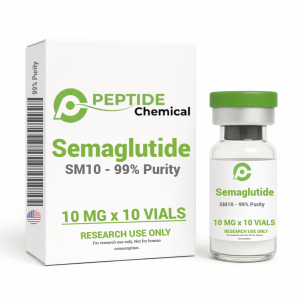
Semaglutide 10
Semaglutide is a widely researched peptide-based compound recognized for its significant role in metabolic regulation and appetite control. It belongs to the class of GLP-1 receptor agonists, which are designed to mimic naturally occurring hormones involved in glucose metabolism and satiety signaling.



Reviews
There are no reviews yet.