

Tesamorelin
Tesamorelin is a synthetic peptide analog of growth hormone–releasing hormone (GHRH), developed for research into endocrine signaling and metabolic regulation. Its structure is designed to selectively stimulate endogenous growth hormone signaling pathways without acting as growth hormone itself.
In laboratory settings, Tesamorelin is studied for its interaction with GHRH receptors located in the pituitary system. These receptors play a central role in regulating pulsatile growth hormone release, making Tesamorelin relevant to investigations of hormonal rhythm and feedback mechanisms.
One of Tesamorelin’s defining research characteristics is its receptor specificity. By targeting GHRH receptors, it allows researchers to examine downstream growth hormone signaling while preserving natural regulatory controls within experimental models.
Tesamorelin is frequently included in studies focused on body composition signaling and lipid metabolism pathways. Growth hormone–related signaling is closely tied to fat utilization and energy balance, making the compound useful for metabolic research frameworks.
The peptide is also examined for its role in insulin sensitivity and glucose-related signaling. Researchers explore how modulation of endogenous growth hormone release influences broader metabolic coordination at the cellular level.
Tesamorelin’s molecular design supports predictable behavior in research environments. Its stability and receptor affinity contribute to consistent outcomes and reproducibility across controlled experimental protocols.
Unlike direct growth hormone analogs, Tesamorelin is studied for its indirect mechanism of action. This distinction allows researchers to observe how endogenous hormone release patterns affect downstream biological responses.
In endocrine research, Tesamorelin is used to explore feedback regulation within the hypothalamic–pituitary axis. Understanding how signaling loops maintain hormonal balance is a key area of interest in systems-based studies.
Researchers also investigate Tesamorelin’s influence on gene expression related to metabolic and growth pathways. Its role in transcriptional regulation provides insight into long-term cellular adaptation mechanisms.
Because growth hormone signaling affects multiple tissues, Tesamorelin is often used in whole-system research rather than isolated pathway analysis. This approach supports a broader understanding of endocrine coordination.
The peptide’s well-characterized structure and signaling profile make it suitable for comparative studies with other GHRH analogs and growth-related peptides.
Tesamorelin is commonly included in longevity and metabolic efficiency research, where regulated growth hormone signaling is studied for its role in cellular maintenance and adaptation.
As interest in peptide-based endocrine research continues to expand, Tesamorelin remains a valuable compound due to its specificity, stability, and relevance to natural hormonal signaling processes.
Its ability to support controlled investigation of growth hormone pathways makes Tesamorelin an important tool for researchers studying complex endocrine and metabolic systems.
New
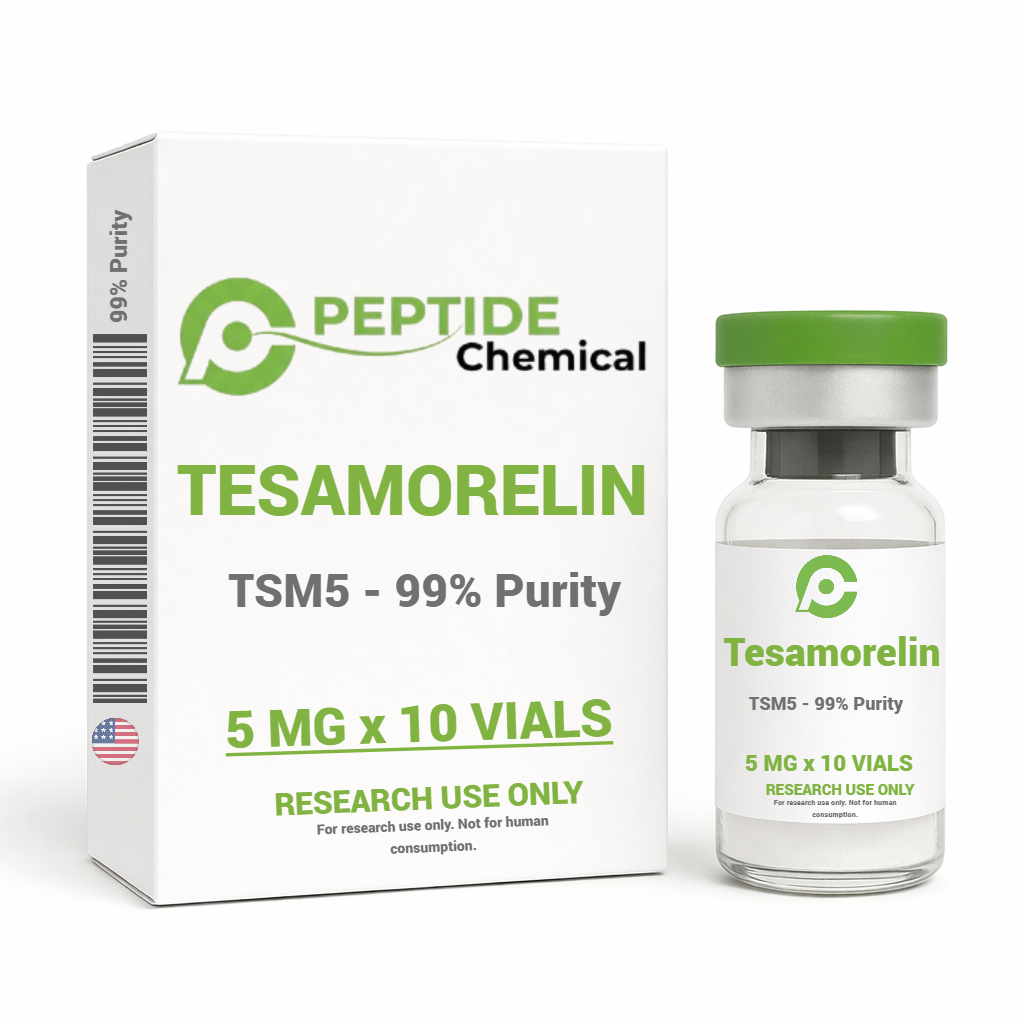
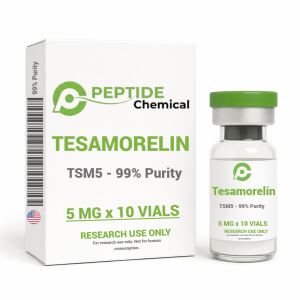
Tesamorelin 5mg/10Vials
$90.00
Tesamorelin is a synthetic peptide analog of growth hormone–releasing hormone (GHRH), developed for research into endocrine signaling and metabolic regulation. Its structure is designed to selectively stimulate endogenous growth hormone signaling pathways without acting as growth hormone itself.
Description
Shipping & Delivery
Related products
AOD9604 6mg
AOD9604 is a modified version of the hGH fragment 176-191 peptide (contains a di-sulfide bridge) and thus a derivative of human growth hormone (hGH). Originally developed as a lipolytic (fat burning) compound, AOD9604 has shown benefit in studies of heart disease, osteoarthritis/cartilage repair, and metabolic syndrome. AOD9604 stimulates lipolysis (the breakdown or destruction of fat) and inhibits lipogenesis in animal studies.
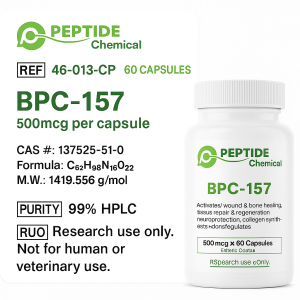
BPC 157 500mcg (60 Capsules)
 BPC-157 has undergone a great deal of research because its healing abilities extend well beyond the lining of the stomach. Studies in animal models indicate that BPC-157 can enhance angiogenesis, promote wound healing, stimulate collagen synthesis, modulate the inflammatory response, and protect against oxidative stress. The peptide has shown benefits in animal models with inflammatory bowel disease, GI ulcers, musculoskeletal injuries, heart damage, eye injuries and neurological damage. Research has shown that the oral bioavailability of BPC-157 is quite high.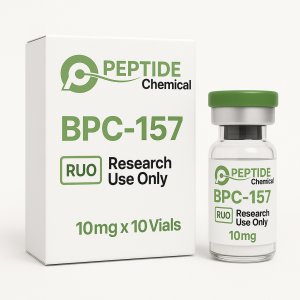
BPC-157 10mg
BPC-157 has undergone a great deal of research because its healing abilities extend well beyond the lining of the stomach. Studies in animal models indicate that BPC-157 can enhance angiogenesis, promote wound healing, stimulate collagen synthesis, modulate the inflammatory response, and protect against oxidative stress. The peptide has shown benefits in animal models with inflammatory bowel disease, GI ulcers, musculoskeletal injuries, heart damage, eye injuries and neurological damage. Research has shown that the oral bioavailability of BPC-157 is quite high. BPC-157 10mg
BPC-157 has undergone a great deal of research because its healing abilities extend well beyond the lining of the stomach. Studies in animal models indicate that BPC-157 can enhance angiogenesis, promote wound healing, stimulate collagen synthesis, modulate the inflammatory response, and protect against oxidative stress. The peptide has shown benefits in animal models with inflammatory bowel disease, GI ulcers, musculoskeletal injuries, heart damage, eye injuries and neurological damage. Research has shown that the oral bioavailability of BPC-157 is quite high. BPC-157, TB-500, GHK-Cu (Glow Blend)
BPC-157 has undergone a great deal of research because its healing abilities extend well beyond the lining of the stomach. Studies in animal models indicate that BPC-157 can enhance angiogenesis, promote wound healing, stimulate collagen synthesis, modulate the inflammatory response, and protect against oxidative stress. The peptide has shown benefits in animal models with inflammatory bowel disease, GI ulcers, musculoskeletal injuries, heart damage, eye injuries and neurological damage. Research has shown that the oral bioavailability of BPC-157 is quite high. 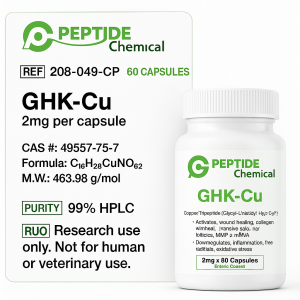
GHK-Cu (2mg x 60 Capsules) (Copper Tripeptide)
GHK-Cu is a small, naturally occurring peptide with the ability to attenuate inflammation, improve antioxidant responses, and improve gene expression on a large scale. Research shows that this copper-chelating peptide may be of critical importance both in the prevention of neurodegenerative disease and as a tool for exploring pathophysiological mechanisms. Studies in mice have revealed that GHK-Cu can protect against neurological insults, improve wound healing, reduce rates of infection, and boost blood vessel growth. The peptide has been of interest in recent years for its anti-oxidant properties that, in combination with its ability to alter gene expression patterns, appear to help slow or even reverse some aspects of aging.
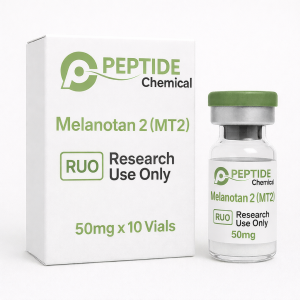
Melanotan 2 (MT2) (3mg x 10 Vials = 30mg)
Melanotan-2 (MT-2) is a synthetic derivative of human alpha-melanocyte-stimulating hormone (α-MSH), developed at the University of Arizona in the 1980s. The initial purpose was to create a sunless tanning alternative, inspired by α-MSH's ability to induce sexual arousal and skin darkening in rodents. However, as research progressed, MT-2's diverse effects were unveiled. These include enhancing sexual arousal, promoting skin pigmentation, reducing compulsive behavior, managing addiction, suppressing hunger, decreasing glucagon production, and even potentially reversing certain features associated with autism. Melanotan-2 research has shown it to enhance sexual arousal, promote skin pigmentation through melanocyte activation and reduce compulsive/addictive behaviors.



Reviews
There are no reviews yet.