

SNAP-8 (Acetyl Octapeptide-3)
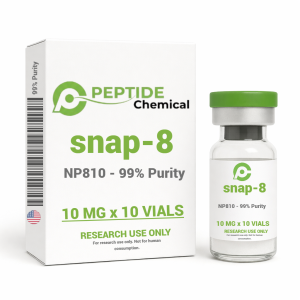
SNAP-8 is a synthetic octapeptide developed for research into neuromodulation and cellular signaling pathways. It is structurally related to SNAP-25 fragments and is studied for its interaction with mechanisms involved in neurotransmitter release and cell-to-cell communication.
In laboratory settings, SNAP-8 is examined for its ability to influence SNARE complex–related signaling. These complexes play a critical role in vesicle fusion and neurotransmitter exocytosis, making SNAP-8 relevant to studies of controlled signal transmission at the cellular level.
One of the defining characteristics of SNAP-8 is its extended peptide chain compared to earlier analogs. This structural extension is designed to support enhanced stability and prolonged interaction with target signaling pathways, allowing for sustained observation in research models.
SNAP-8 is frequently studied in neuromuscular and neurocellular research. By influencing communication between nerve cells and target tissues, it provides insight into how signaling intensity and frequency are regulated under controlled conditions.
Researchers also explore SNAP-8 in studies related to cellular relaxation signaling. Its interaction with neurotransmitter-associated pathways allows investigation into how reduced signaling activity affects downstream cellular responses.
The peptide’s predictable molecular behavior supports reproducibility in laboratory experiments. Consistent interaction patterns make SNAP-8 suitable for comparative studies and protocol standardization.
SNAP-8 is often included in research examining signal modulation rather than signal activation. This makes it valuable for understanding how cells fine-tune communication rather than simply turning pathways on or off.
Unlike broad-acting compounds, SNAP-8 operates through targeted peptide signaling. This specificity supports focused research into localized cellular communication mechanisms.
The peptide’s relatively small size allows researchers to study peptide–protein interactions with precision. Its structure provides a clear model for examining how peptide length and sequence influence signaling outcomes.
SNAP-8 is also of interest in aging and cellular stress research, where changes in neurotransmitter signaling and cellular communication are closely examined.
Because neurotransmission intersects with many biological systems, SNAP-8 is often used in systems-based research to explore how signaling modulation affects broader cellular networks.
The compound’s stability and well-characterized signaling profile make it a reliable research tool for neuropeptide and signaling pathway studies.
SNAP-8 continues to be studied as an advanced signaling peptide due to its refined structure, stability, and relevance to controlled neuromodulatory research.
As peptide science advances, SNAP-8 remains a valuable compound for exploring the regulation of cellular communication and signal transmission in complex biological systems.
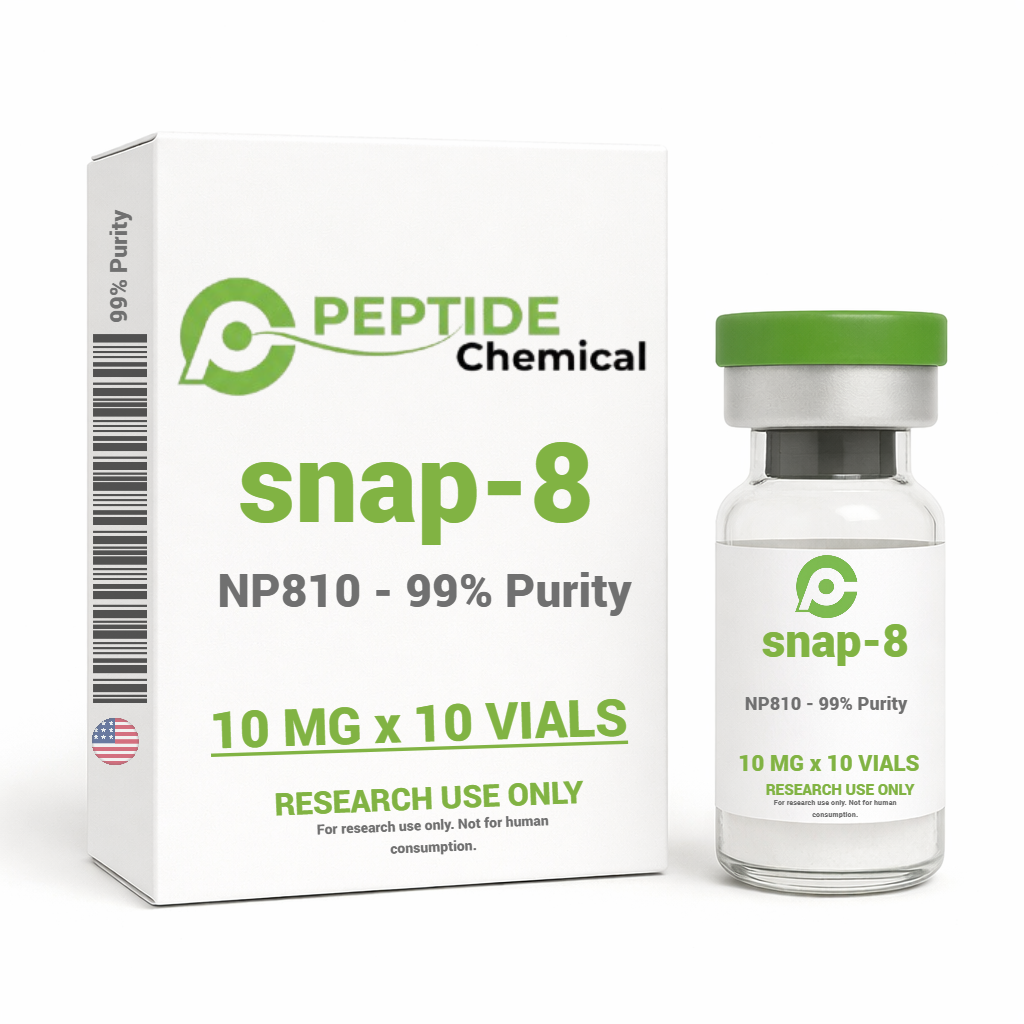
SNAP-8 (Acetyl Octapeptide-3)
$40.00
SNAP-8 is a synthetic octapeptide developed for research into neuromodulation and cellular signaling pathways. It is structurally related to SNAP-25 fragments and is studied for its interaction with mechanisms involved in neurotransmitter release and cell-to-cell communication.
Related products
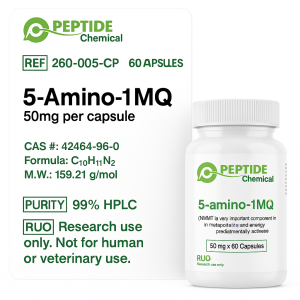
5-Amino-1MQ 50mg (60 Capsules)
 5-amino-1MQ is a small molecule that blocks the activity of the enzyme called nicotinamide N-methyltransferase (NNMT). NNMT is a very important component in metabolism and energy and is predominantly active in fat tissue. By blocking NNMT, 5-amino-1MQ stimulates an increase in nicotinamide adenine dinucleotide (NAD+), a cofactor that is central to cellular metabolism, thereby increasing metabolic rate and activating a gene called sirtuin-1 (SIRT1).
SIRT1 is also known as the "longevity gene" because of its role in reducing the risk of diabetes, obesity, metabolic syndrome, atherosclerosis and other forms of cardiovascular disease, kidney disease, liver disease, neurodegeneration, and cancer. Research in mice given 5-amino-1MQ showed a 7% reduction in body mass over 10 days without any changes in food intake, compared to controls. Research has shown that decreasing NNMT may help shrink fat cells and reduce the size of fat deposits.
5-amino-1MQ is a small molecule that blocks the activity of the enzyme called nicotinamide N-methyltransferase (NNMT). NNMT is a very important component in metabolism and energy and is predominantly active in fat tissue. By blocking NNMT, 5-amino-1MQ stimulates an increase in nicotinamide adenine dinucleotide (NAD+), a cofactor that is central to cellular metabolism, thereby increasing metabolic rate and activating a gene called sirtuin-1 (SIRT1).
SIRT1 is also known as the "longevity gene" because of its role in reducing the risk of diabetes, obesity, metabolic syndrome, atherosclerosis and other forms of cardiovascular disease, kidney disease, liver disease, neurodegeneration, and cancer. Research in mice given 5-amino-1MQ showed a 7% reduction in body mass over 10 days without any changes in food intake, compared to controls. Research has shown that decreasing NNMT may help shrink fat cells and reduce the size of fat deposits. 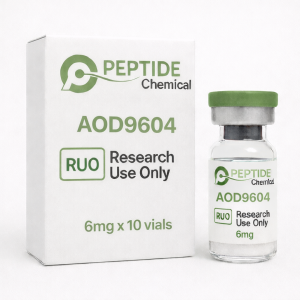
AOD9604 6mg
AOD9604 is a modified version of the hGH fragment 176-191 peptide (contains a di-sulfide bridge) and thus a derivative of human growth hormone (hGH). Originally developed as a lipolytic (fat burning) compound, AOD9604 has shown benefit in studies of heart disease, osteoarthritis/cartilage repair, and metabolic syndrome. AOD9604 stimulates lipolysis (the breakdown or destruction of fat) and inhibits lipogenesis in animal studies.
BPC-157 10mg
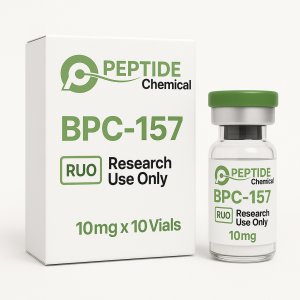
BPC-157 has undergone a great deal of research because its healing abilities extend well beyond the lining of the stomach. Studies in animal models indicate that BPC-157 can enhance angiogenesis, promote wound healing, stimulate collagen synthesis, modulate the inflammatory response, and protect against oxidative stress. The peptide has shown benefits in animal models with inflammatory bowel disease, GI ulcers, musculoskeletal injuries, heart damage, eye injuries and neurological damage. Research has shown that the oral bioavailability of BPC-157 is quite high. BPC-157 5mg
BPC-157 has undergone a great deal of research because its healing abilities extend well beyond the lining of the stomach. Studies in animal models indicate that BPC-157 can enhance angiogenesis, promote wound healing, stimulate collagen synthesis, modulate the inflammatory response, and protect against oxidative stress. The peptide has shown benefits in animal models with inflammatory bowel disease, GI ulcers, musculoskeletal injuries, heart damage, eye injuries and neurological damage. Research has shown that the oral bioavailability of BPC-157 is quite high. 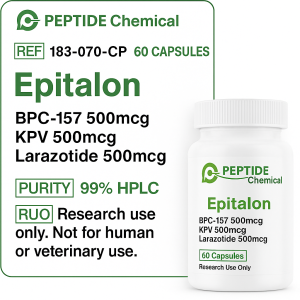
Epitalon 3mg (60 capsules) (Telomere Length)
Epithalon (Epitalon) has long been understood to help preserve telomeres, which are the protective end caps found on fragments of DNA (chromosomes). Telomeres protect DNA from degradation as it is replicated during cell division (one cell splitting into two). Telomeres themselves suffer degradation, however, and eventually become too short to be effective. At this point, a cell will either commit cell suicide in a process called apoptosis or it will go dormant in a process called senescence. Both processes lead to aging and eventual dysfunction and disease. Senescence is one of the primary drivers of disease and aging.
Epitalon has been shown to activate an enzyme called telomerase, which protects and repairs telomeres. More active telomerase means that cells age slower and remain functional longer. The net result is that overall aging appears to be slowed down. Research in rodents indicates that Epitalon may extend life by as much as 27% via this mechanism[2], [3].
Epitalon does not only activate telomerase. As noted above, Epitalon has been shown to affect expression for several genes through alteration of DNA structure. This process, called epigenetic modification, is of interest to scientists because it provides the foundation for controlling gene expression at a very fine level. Research is being conducted to learn how to harness epigenetic technology, which could potentially allow scientists to alter everything from an individual’s eye color to how intelligent a person is or how long someone lives.
Micro-encapsulated Epitalon has shown excellent orally bioavailability in lab research studies. 
GHK-Cu 50mg Copper Peptide
NAD+
NAD+ (nicotinamide adenine dinucleotide) is a vital coenzyme in all living cells, essential for metabolic processes and cellular function. It acts as a mediator of redox reactions, alternating between its oxidized (NAD+) and reduced (NADH) forms to facilitate electron transfer, crucial for energy production and sustaining life. Involved in over 500 enzymatic reactions, NAD+ is central to maintaining cellular homeostasis. Research shows that NAD+ may be beneficial in improving muscle function, protecting cells of the nervous system, and generally reducing the effects of aging.
Beyond energy metabolism, NAD+ supports DNA repair and gene regulation through enzymes like sirtuins and PARPs. Sirtuins use NAD+ to regulate cellular functions such as DNA repair, gene expression, and aging, while PARPs utilize it to repair DNA damage and maintain genomic stability. These roles underscore NAD+'s importance in cellular integrity and combating aging.



Reviews
There are no reviews yet.