

NAD⁺ (Nicotinamide Adenine Dinucleotide)
NAD⁺ is a fundamental biological coenzyme essential to cellular energy production and metabolic regulation. Present in all living cells, it plays a central role in redox reactions that allow cells to convert nutrients into usable energy, making it a core molecule in cellular and mitochondrial research.
In research environments, NAD⁺ is primarily studied for its involvement in mitochondrial function. Mitochondria rely on NAD⁺ to drive oxidative phosphorylation, the process responsible for generating ATP, the cell’s primary energy currency. Adequate NAD⁺ availability is therefore critical for maintaining cellular efficiency and metabolic performance.
NAD⁺ is also a key regulator of cellular repair and maintenance pathways. It serves as a required cofactor for enzymes such as sirtuins and PARPs, which are involved in DNA repair, genomic stability, and cellular stress response mechanisms. This makes NAD⁺ highly relevant in longevity and cellular resilience research.
One of the most significant research interests surrounding NAD⁺ is its relationship with aging. Cellular NAD⁺ levels naturally decline over time, and this reduction is associated with decreased mitochondrial efficiency and impaired cellular repair processes. As a result, NAD⁺ is frequently studied in models of age-related metabolic decline.
Beyond energy metabolism, NAD⁺ plays an important role in cellular signaling. It helps regulate how cells respond to oxidative stress, inflammation, and metabolic demand, allowing researchers to explore how cells adapt to internal and external challenges.
NAD⁺ is also essential for maintaining redox balance within cells. By cycling between oxidized (NAD⁺) and reduced (NADH) forms, it helps regulate electron flow and supports stable cellular respiration under varying metabolic conditions.
In neurological research, NAD⁺ is examined for its importance in neuron energy demands. Brain cells require high and consistent energy output, and NAD⁺ availability is closely tied to cognitive resilience and neural cellular function in experimental models.
Metabolic research frequently includes NAD⁺ due to its influence on glucose and lipid metabolism. Its role in enzymatic reactions makes it a central molecule for studying how cells process and allocate energy substrates.
NAD⁺ is also studied in the context of cellular stress resistance. By supporting repair enzymes and mitochondrial signaling, it allows cells to better tolerate metabolic strain and environmental stressors in controlled research settings.
Unlike pathway-specific compounds, NAD⁺ functions as a foundational cellular cofactor. Its broad involvement across energy production, repair, and signaling systems gives it system-wide relevance rather than isolated effects.
Researchers value NAD⁺ for its predictability and essential biological role. Because it is required for fundamental cellular processes, it serves as a reliable reference molecule in metabolic and aging research.
NAD⁺ is commonly incorporated into studies focused on cellular efficiency rather than surface-level outcomes. Improvements at the cellular level often translate into broader physiological effects, making NAD⁺ a cornerstone of systems-based research.
As interest in cellular health, longevity science, and mitochondrial biology continues to grow, NAD⁺ remains a central focus due to its indispensable role in sustaining life at the molecular level.
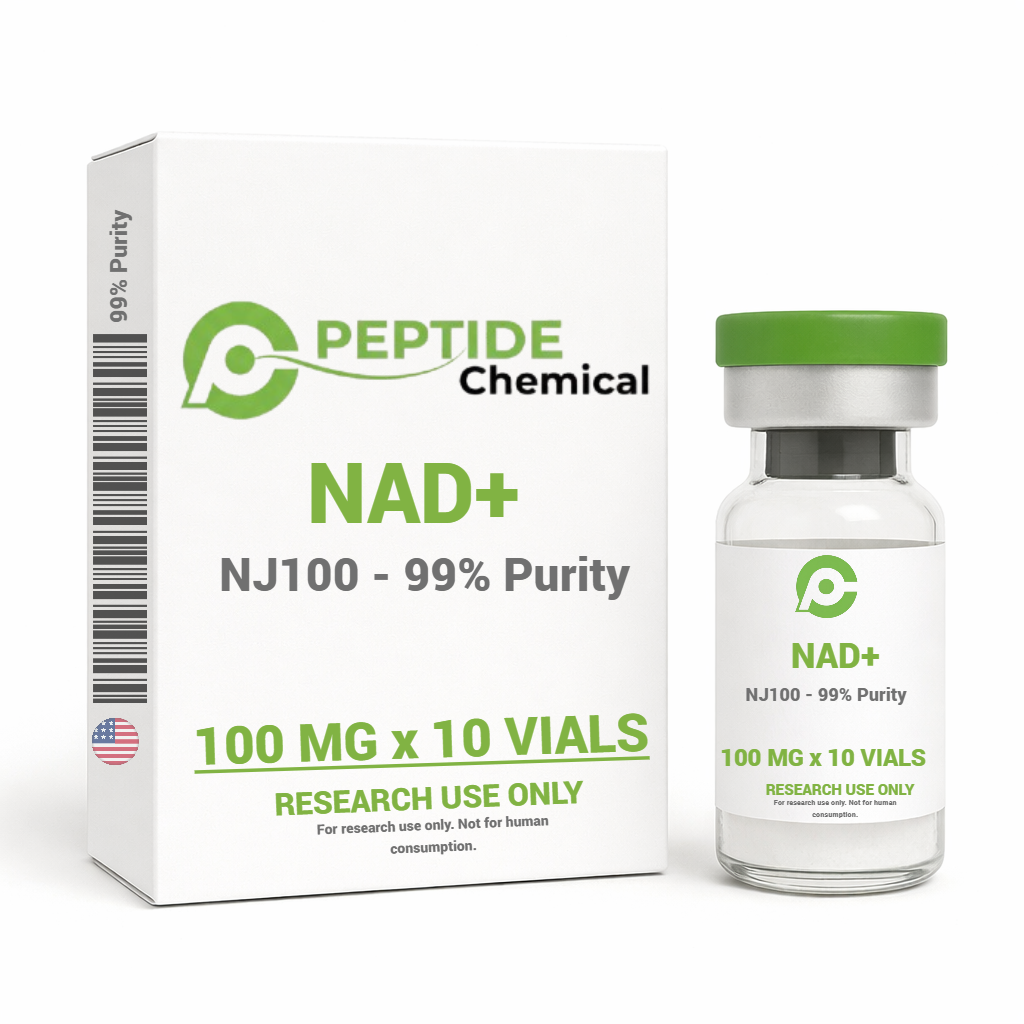
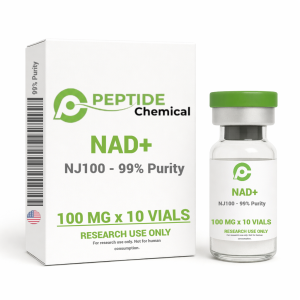
NAD⁺ (Nicotinamide Adenine Dinucleotide) 100mg
$39.00
NAD⁺ is a fundamental biological coenzyme essential to cellular energy production and metabolic regulation. Present in all living cells, it plays a central role in redox reactions that allow cells to convert nutrients into usable energy, making it a core molecule in cellular and mitochondrial research.
Related products
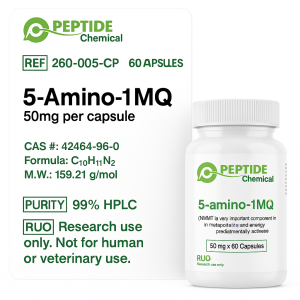
5-Amino-1MQ 50mg (60 Capsules)
 5-amino-1MQ is a small molecule that blocks the activity of the enzyme called nicotinamide N-methyltransferase (NNMT). NNMT is a very important component in metabolism and energy and is predominantly active in fat tissue. By blocking NNMT, 5-amino-1MQ stimulates an increase in nicotinamide adenine dinucleotide (NAD+), a cofactor that is central to cellular metabolism, thereby increasing metabolic rate and activating a gene called sirtuin-1 (SIRT1).
SIRT1 is also known as the "longevity gene" because of its role in reducing the risk of diabetes, obesity, metabolic syndrome, atherosclerosis and other forms of cardiovascular disease, kidney disease, liver disease, neurodegeneration, and cancer. Research in mice given 5-amino-1MQ showed a 7% reduction in body mass over 10 days without any changes in food intake, compared to controls. Research has shown that decreasing NNMT may help shrink fat cells and reduce the size of fat deposits.
5-amino-1MQ is a small molecule that blocks the activity of the enzyme called nicotinamide N-methyltransferase (NNMT). NNMT is a very important component in metabolism and energy and is predominantly active in fat tissue. By blocking NNMT, 5-amino-1MQ stimulates an increase in nicotinamide adenine dinucleotide (NAD+), a cofactor that is central to cellular metabolism, thereby increasing metabolic rate and activating a gene called sirtuin-1 (SIRT1).
SIRT1 is also known as the "longevity gene" because of its role in reducing the risk of diabetes, obesity, metabolic syndrome, atherosclerosis and other forms of cardiovascular disease, kidney disease, liver disease, neurodegeneration, and cancer. Research in mice given 5-amino-1MQ showed a 7% reduction in body mass over 10 days without any changes in food intake, compared to controls. Research has shown that decreasing NNMT may help shrink fat cells and reduce the size of fat deposits. 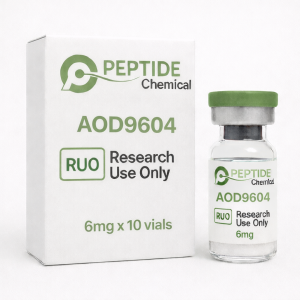
AOD9604 6mg
AOD9604 is a modified version of the hGH fragment 176-191 peptide (contains a di-sulfide bridge) and thus a derivative of human growth hormone (hGH). Originally developed as a lipolytic (fat burning) compound, AOD9604 has shown benefit in studies of heart disease, osteoarthritis/cartilage repair, and metabolic syndrome. AOD9604 stimulates lipolysis (the breakdown or destruction of fat) and inhibits lipogenesis in animal studies.
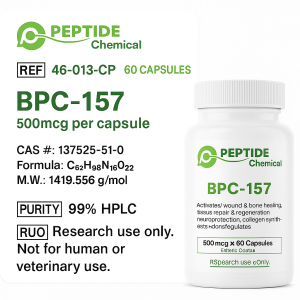
BPC 157 500mcg (60 Capsules)
BPC-157 has undergone a great deal of research because its healing abilities extend well beyond the lining of the stomach. Studies in animal models indicate that BPC-157 can enhance angiogenesis, promote wound healing, stimulate collagen synthesis, modulate the inflammatory response, and protect against oxidative stress. The peptide has shown benefits in animal models with inflammatory bowel disease, GI ulcers, musculoskeletal injuries, heart damage, eye injuries and neurological damage. Research has shown that the oral bioavailability of BPC-157 is quite high. 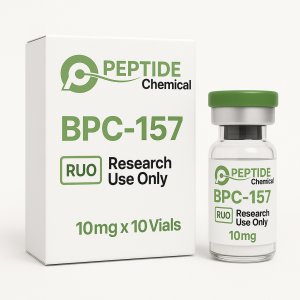
BPC-157 10mg
BPC-157 has undergone a great deal of research because its healing abilities extend well beyond the lining of the stomach. Studies in animal models indicate that BPC-157 can enhance angiogenesis, promote wound healing, stimulate collagen synthesis, modulate the inflammatory response, and protect against oxidative stress. The peptide has shown benefits in animal models with inflammatory bowel disease, GI ulcers, musculoskeletal injuries, heart damage, eye injuries and neurological damage. Research has shown that the oral bioavailability of BPC-157 is quite high. BPC-157 5mg
BPC-157 has undergone a great deal of research because its healing abilities extend well beyond the lining of the stomach. Studies in animal models indicate that BPC-157 can enhance angiogenesis, promote wound healing, stimulate collagen synthesis, modulate the inflammatory response, and protect against oxidative stress. The peptide has shown benefits in animal models with inflammatory bowel disease, GI ulcers, musculoskeletal injuries, heart damage, eye injuries and neurological damage. Research has shown that the oral bioavailability of BPC-157 is quite high. 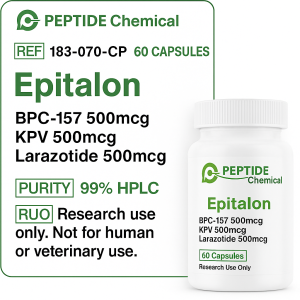
Epitalon 3mg (60 capsules) (Telomere Length)
Epithalon (Epitalon) has long been understood to help preserve telomeres, which are the protective end caps found on fragments of DNA (chromosomes). Telomeres protect DNA from degradation as it is replicated during cell division (one cell splitting into two). Telomeres themselves suffer degradation, however, and eventually become too short to be effective. At this point, a cell will either commit cell suicide in a process called apoptosis or it will go dormant in a process called senescence. Both processes lead to aging and eventual dysfunction and disease. Senescence is one of the primary drivers of disease and aging.
Epitalon has been shown to activate an enzyme called telomerase, which protects and repairs telomeres. More active telomerase means that cells age slower and remain functional longer. The net result is that overall aging appears to be slowed down. Research in rodents indicates that Epitalon may extend life by as much as 27% via this mechanism[2], [3].
Epitalon does not only activate telomerase. As noted above, Epitalon has been shown to affect expression for several genes through alteration of DNA structure. This process, called epigenetic modification, is of interest to scientists because it provides the foundation for controlling gene expression at a very fine level. Research is being conducted to learn how to harness epigenetic technology, which could potentially allow scientists to alter everything from an individual’s eye color to how intelligent a person is or how long someone lives.
Micro-encapsulated Epitalon has shown excellent orally bioavailability in lab research studies. 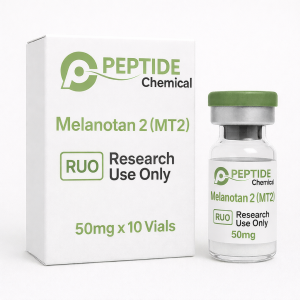
Melanotan 2 (MT2) (3mg x 10 Vials = 30mg)
Melanotan-2 (MT-2) is a synthetic derivative of human alpha-melanocyte-stimulating hormone (α-MSH), developed at the University of Arizona in the 1980s. The initial purpose was to create a sunless tanning alternative, inspired by α-MSH's ability to induce sexual arousal and skin darkening in rodents. However, as research progressed, MT-2's diverse effects were unveiled. These include enhancing sexual arousal, promoting skin pigmentation, reducing compulsive behavior, managing addiction, suppressing hunger, decreasing glucagon production, and even potentially reversing certain features associated with autism. Melanotan-2 research has shown it to enhance sexual arousal, promote skin pigmentation through melanocyte activation and reduce compulsive/addictive behaviors.
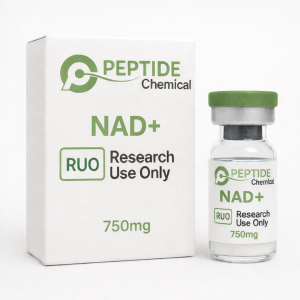
NAD+
NAD+ (nicotinamide adenine dinucleotide) is a vital coenzyme in all living cells, essential for metabolic processes and cellular function. It acts as a mediator of redox reactions, alternating between its oxidized (NAD+) and reduced (NADH) forms to facilitate electron transfer, crucial for energy production and sustaining life. Involved in over 500 enzymatic reactions, NAD+ is central to maintaining cellular homeostasis. Research shows that NAD+ may be beneficial in improving muscle function, protecting cells of the nervous system, and generally reducing the effects of aging.
Beyond energy metabolism, NAD+ supports DNA repair and gene regulation through enzymes like sirtuins and PARPs. Sirtuins use NAD+ to regulate cellular functions such as DNA repair, gene expression, and aging, while PARPs utilize it to repair DNA damage and maintain genomic stability. These roles underscore NAD+'s importance in cellular integrity and combating aging.



Reviews
There are no reviews yet.