

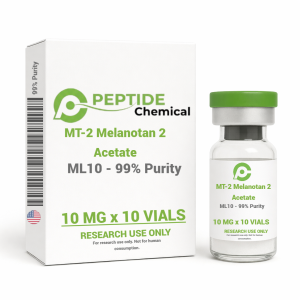
MT-2 (Melanotan II Acetate)
MT-2, also known as Melanotan II Acetate, is a synthetic peptide analog studied primarily for its interaction with melanocortin receptors. These receptors are involved in multiple physiological signaling pathways related to pigmentation, appetite regulation, and energy balance, making MT-2 a compound of interest across several research domains.
In laboratory settings, MT-2 is valued for its strong receptor affinity and compact peptide structure. Its design allows it to interact efficiently with melanocortin receptor subtypes, enabling researchers to explore receptor-specific signaling behavior in controlled experimental models.
One area of ongoing research involving MT-2 focuses on melanocortin pathway activation. These pathways play a role in how cells respond to environmental stimuli and regulate downstream biological processes. MT-2 provides a consistent tool for examining these signaling mechanisms at the molecular level.
MT-2 is also examined in appetite and energy-balance research. Melanocortin receptors are closely linked to central nervous system signaling associated with hunger and satiety, making MT-2 relevant in studies investigating behavioral and metabolic regulation.
The peptide’s acetylated form contributes to its stability and usability in research environments. Enhanced molecular stability allows for predictable behavior and reproducible results, which are critical in peptide signaling studies.
Researchers often include MT-2 in comparative studies involving melanocortin receptor agonists to better understand differences in receptor selectivity, signaling strength, and duration of action.
Unlike endocrine hormones that act broadly across multiple systems, MT-2 operates through targeted receptor interaction. This specificity supports focused research on melanocortin-mediated pathways without broad systemic activation.
MT-2’s relatively short amino acid sequence makes it a useful model compound for studying peptide–receptor binding dynamics. Its structure allows researchers to analyze how small changes in peptide design influence receptor engagement.
In neurological and behavioral research, MT-2 is studied for its role in central signaling pathways connected to motivation, appetite, and physiological response modulation.
Because melanocortin signaling intersects with several biological systems, MT-2 is often used in systems-based research rather than isolated pathway studies. This allows for a broader understanding of interconnected signaling networks.
The peptide’s well-documented receptor profile makes it suitable for reproducible laboratory protocols and comparative research designs.
MT-2 continues to attract scientific interest as a research compound due to its receptor specificity, stability, and relevance to melanocortin signaling science.
As peptide research evolves, MT-2 remains a valuable tool for exploring how targeted receptor activation influences complex biological responses within controlled experimental environments.
Hot
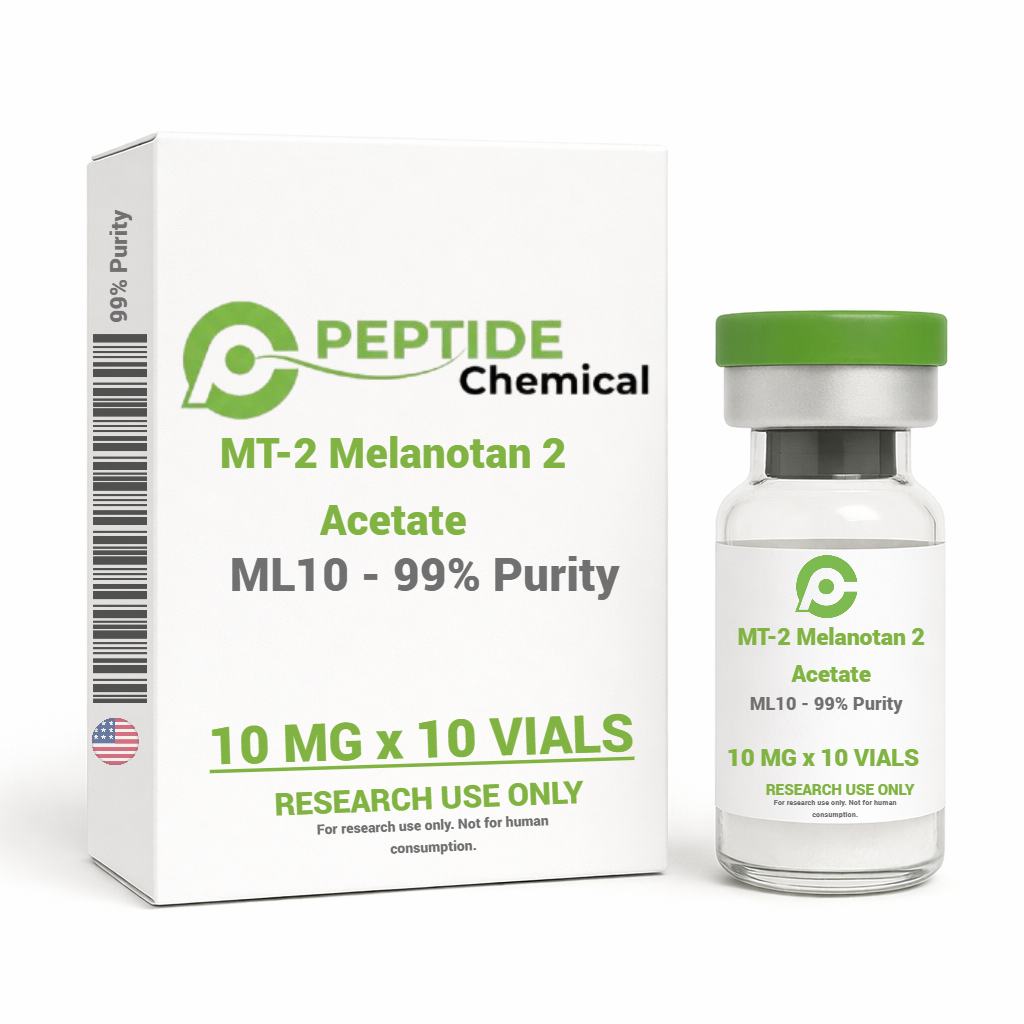
MT-2 (Melanotan II Acetate)
$42.00
MT-2, also known as Melanotan II Acetate, is a synthetic peptide analog studied primarily for its interaction with melanocortin receptors. These receptors are involved in multiple physiological signaling pathways related to pigmentation, appetite regulation, and energy balance, making MT-2 a compound of interest across several research domains.
Description
Shipping & Delivery
Related products
BPC-157 15mg
 BPC-157 has undergone a great deal of research because its healing abilities extend well beyond the lining of the stomach. Studies in animal models indicate that BPC-157 can enhance angiogenesis, promote wound healing, stimulate collagen synthesis, modulate the inflammatory response, and protect against oxidative stress. The peptide has shown benefits in animal models with inflammatory bowel disease, GI ulcers, musculoskeletal injuries, heart damage, eye injuries and neurological damage. Research has shown that the oral bioavailability of BPC-157 is quite high.
 BPC-157, TB-500, KPV, GHK-Cu 80mg (Klow Blend)
BPC-157 has undergone a great deal of research because its healing abilities extend well beyond the lining of the stomach. Studies in animal models indicate that BPC-157 can enhance angiogenesis, promote wound healing, stimulate collagen synthesis, modulate the inflammatory response, and protect against oxidative stress. The peptide has shown benefits in animal models with inflammatory bowel disease, GI ulcers, musculoskeletal injuries, heart damage, eye injuries and neurological damage. Research has shown that the oral bioavailability of BPC-157 is quite high. 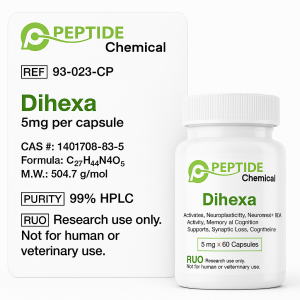
Dihexa (5mg x 60 Capsules = 300mg)
Dihexa is a small peptide-derived compound designed to support cognitive function and brain regeneration. It acts by activating the HGF/c-Met signaling pathway, which plays a critical role in forming new synaptic connections and enhancing neuroplasticity. Dihexa also mimics the action of brain-derived neurotrophic factor (BDNF), a key molecule involved in learning, memory, and neuronal survival. Preclinical research studies have shown that Dihexa can significantly improve memory consolidation and reverse cognitive deficits in models of Alzheimer’s disease, traumatic brain injury, and stroke. Unlike traditional nootropics or growth factors with poor blood–brain barrier penetration, Dihexa is orally bioavailable and metabolically stable, allowing for targeted CNS effects. Its unique mechanism positions it as a promising research compound for neurodegenerative conditions, offering potential in synaptic repair, inflammation reduction, and long-term cognitive enhancement. 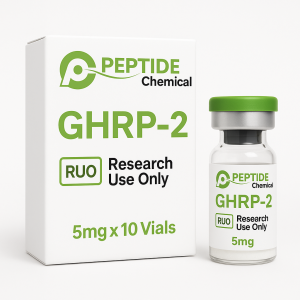



Reviews
There are no reviews yet.