

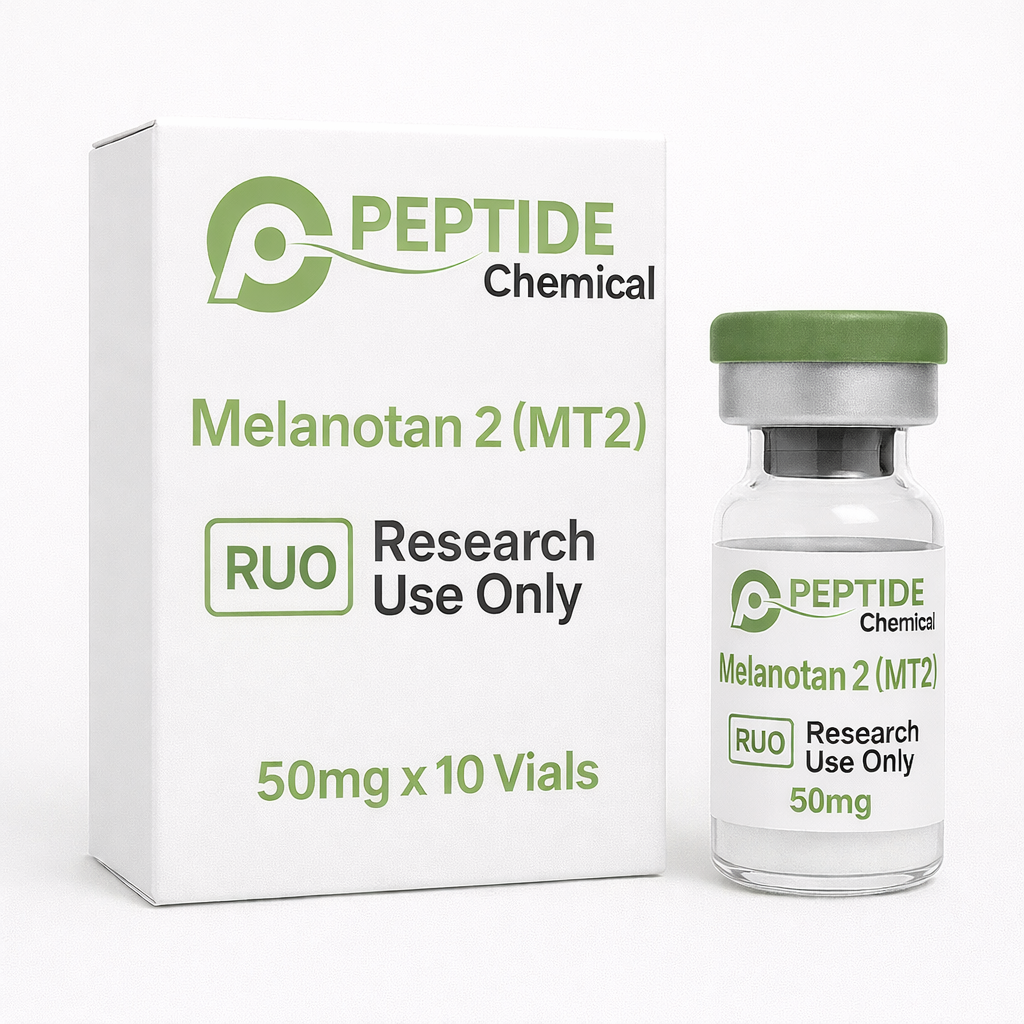
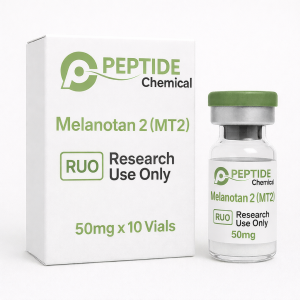
Melanotan II, commonly referred to as MT2, is a synthetic analog of the naturally occurring hormone alpha-melanocyte-stimulating hormone (α-MSH). This family of peptides plays a central role in skin pigmentation, energy balance, appetite regulation, and sexual behavior. MT2 was engineered to amplify these biological effects with greater potency and stability compared to the natural hormone.
The peptide primarily targets melanocortin receptors—specifically MC1R, MC3R, MC4R, and MC5R. These receptors are dispersed across the skin, brain, and peripheral tissues. The interaction with MC1R drives its most well-known effect: increased melanin production. Melanin is the pigment responsible for tanning, UV protection, and skin tone regulation.
MT2 gained early scientific interest because of its ability to stimulate melanin production without direct UV exposure. This effect occurs because activation of MC1R encourages melanocytes to produce more eumelanin, the dark protective form of melanin that offers greater resistance to UV damage. As a result, MT2 produces a more natural-looking, deeper tan compared to sun exposure alone.
Researchers have also noted that MT2 enhances the tanning response when UV exposure does occur. Even small amounts of sunlight or artificial UV light can create a rapid and intense pigment reaction, making it ideal for studying photoprotective adaptations and melanin biogenesis.
Beyond pigmentation, Melanotan II’s actions on MC3R and MC4R make it highly relevant in appetite and energy regulation research. These receptors are involved in the hypothalamic pathways that control hunger, satiety, and metabolic signaling. MT2 has been observed to reduce appetite in certain test conditions, providing insight into melanocortin-based weight regulation.
One of the most unexpected scientific discoveries associated with MT2 came during early trials: its strong effect on sexual arousal. Activation of MC4R in the central nervous system increases libido and sexual response, making MT2 a valuable model for studying neural pathways involved in arousal, motivation, and sexual behavior.
The melanocortin system is deeply interconnected with reward circuits in the brain. Because MT2 influences these receptors, researchers have explored its impact on mood, emotional processing, and stress resilience. Its effects vary depending on dose and individual receptor sensitivity, making it an important tool for studying neurobehavioral dynamics.
Melanotan II also interacts with MC5R, which contributes to various physiological processes including exocrine function, sebaceous gland activity, and immune modulation. Although less understood, this receptor may help explain certain secondary effects seen in research settings.
Due to its enhanced stability compared to natural α-MSH, MT2 remains active in the body far longer, allowing stronger and more sustained receptor activation. This increased duration supports more predictable outcomes in pigmentation and neurobehavioral studies.
The peptide’s efficiency in stimulating melanin has made it a focus in photoprotection research. Increased eumelanin levels correlate with reduced DNA damage from UV exposure, highlighting the biological importance of protective pigmentation. MT2 serves as a model for studying how synthetic peptides may influence natural UV defense mechanisms.
In dermatological research, MT2’s role in pigmentation disorders such as vitiligo has been investigated. By stimulating melanocyte activity, MT2 may help researchers understand pathways involved in repigmentation and melanin restoration.
Some studies explore whether MT2 can influence inflammatory and immunomodulatory pathways. Since melanocortins have been shown to possess anti-inflammatory properties, MT2’s receptor activity may reveal new mechanisms involved in immune balance and tissue protection.
Melanotan II has also been examined for its effect on blood pressure and vascular tone, though these effects are typically mild and secondary. They stem from melanocortin receptor interactions that influence autonomic nervous system activity.
One of the notable physiological reactions associated with MT2 research is flushing or redness shortly after administration. This is believed to originate from transient vasodilation related to central melanocortin activation. It provides an observable marker of the peptide’s systemic engagement.
Another well-documented response is increased nausea in some subjects. This effect seems connected to melanocortin signaling in the brainstem, particularly within regions that regulate appetite and gastrointestinal motility.
Because MT2 strongly stimulates melanocytes, researchers carefully evaluate pigment distribution during studies. Freckles, moles, and naturally pigmented areas may darken at a faster rate due to increased melanin production, offering insight into melanocyte sensitivity.
The peptide’s role in sexual function models has been one of the most widely studied non-pigmentation effects. Both male and female models show increased central arousal, independent of hormonal shifts or vascular status. This positions MT2 as a useful compound for exploring sexual neurobiology.
In mood and reward studies, melanocortin pathways influenced by MT2 have been linked to motivation, drive, and emotional response. While not a mood enhancer, MT2 provides a controlled tool for mapping neural circuits connected to desire and reinforcement.
Researchers also study MT2’s metabolic effects because the melanocortin system plays a major role in body weight regulation. While appetite suppression is not universal, it appears in enough subjects to justify continued investigation into its metabolic influence.
The peptide’s relative simplicity and predictable receptor activity make it an excellent model for studying receptor cross-activity and pathway dominance, particularly in systems where multiple melanocortin receptors overlap.
Because MT2 does not cause permanent changes to melanocyte DNA or structure, pigmentation effects fade gradually after discontinuation. This reversible nature allows researchers to observe both activation and regression phases of melanin physiology.
The central mechanism driving MT2’s libido effects remains one of the most intriguing areas of study. Unlike compounds that act on nitric oxide pathways, MT2 initiates arousal directly from the brain’s regulatory centers, highlighting the importance of MC4R in sexual motivation.
In sleep research, melanocortin peptides have shown potential influence on circadian rhythm and wakefulness, though MT2’s effects are mild. Still, researchers monitor sleep patterns when evaluating central receptor activation.
Melanotan II’s broad range of receptor interactions makes it highly versatile but also demands careful interpretation of data. Its effects can vary depending on dose, model, genetic factors, and baseline melanocortin receptor expression.
In long-term pigmentation models, repeated MT2 exposure helps illustrate how melanocyte density, melanin distribution, and skin phototype respond to sustained stimulation. These models deepen understanding of tanning biology and long-term UV adaptation.
MT2’s pharmacokinetics demonstrate rapid onset with moderate half-life, balancing strong immediate effects with predictable tapering. This allows precise timing in experimental design, especially in pigmentation and behavioral studies.
As melanocortin research continues to advance, Melanotan II remains a central reference compound. It provides insight into how synthetic peptides can modulate pigmentation, appetite, sexual function, and neural activity through unified receptor families.
Overall, Melanotan II represents a cornerstone of melanocortin biology research. Its ability to influence multiple physiological systems through a single receptor network makes it invaluable for exploring the interconnected pathways of pigmentation, metabolism, neurology, and behavior.
 BPC-157 has undergone a great deal of research because its healing abilities extend well beyond the lining of the stomach. Studies in animal models indicate that BPC-157 can enhance angiogenesis, promote wound healing, stimulate collagen synthesis, modulate the inflammatory response, and protect against oxidative stress. The peptide has shown benefits in animal models with inflammatory bowel disease, GI ulcers, musculoskeletal injuries, heart damage, eye injuries and neurological damage. Research has shown that the oral bioavailability of BPC-157 is quite high.



Reviews
There are no reviews yet.