

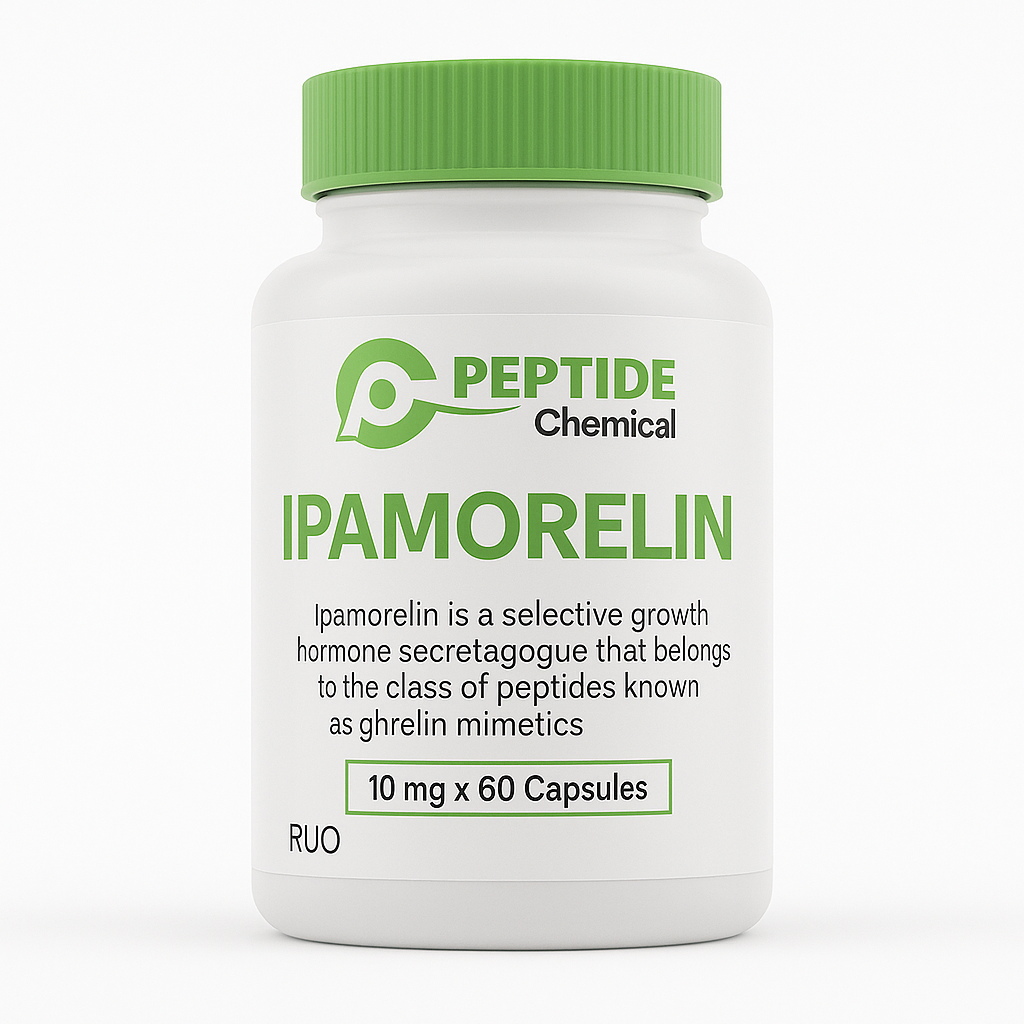
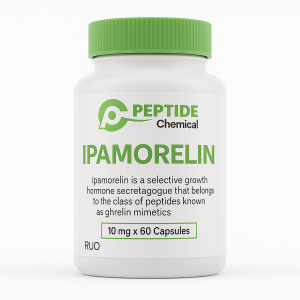
Ipamorelin is a selective growth hormone secretagogue that belongs to the class of peptides known as ghrelin mimetics. It stimulates the natural release of growth hormone (GH) through the ghrelin receptor pathway, offering a more targeted and controlled response than many earlier GH secretagogues. Because it works upstream of the pituitary gland, it promotes the release of endogenous GH rather than substituting it with exogenous hormone sources.
Ipamorelin is regarded for its exceptional receptor selectivity. Many peptides in its category stimulate multiple hormonal pathways, but Ipamorelin is designed specifically to trigger GH release without significantly affecting cortisol or prolactin. This targeted action makes it valuable in research models where minimizing endocrine disruption is essential.
The peptide functions by binding to growth hormone secretagogue receptors (GHS-R1a) in the anterior pituitary and hypothalamus. These receptors normally interact with ghrelin, a natural hormone involved in hunger signaling, energy balance, and GH release. By activating the same receptor system, Ipamorelin initiates a physiological cascade that triggers pulsatile GH secretion.
One of the hallmarks of Ipamorelin’s activity is the preservation of natural GH rhythm. Growth hormone is normally released in pulses, especially during deep sleep and fasting states. Ipamorelin enhances these pulses without flattening them into continuous elevation, which helps maintain metabolic balance and reduces the risk of GH desensitization.
Structurally, Ipamorelin is a pentapeptide, meaning it consists of five amino acids arranged in a sequence optimized for receptor affinity and stability. Its compact size contributes to its fast onset, minimal degradation, and consistent activity in research settings. The peptide was developed to build upon the strengths of earlier GH secretagogues while eliminating their drawbacks.
Ipamorelin’s selectivity makes it unique compared to peptides like GHRP-6 or GHRP-2, which often increase hunger significantly as a result of broader ghrelin receptor activation. Ipamorelin elicits mild or negligible appetite stimulation, making it useful in metabolic research where appetite control is important.
In metabolic studies, Ipamorelin is closely associated with improved fat metabolism and body composition. Growth hormone enhances lipolysis, allowing the body to break down stored fat more efficiently. As GH levels rise through Ipamorelin stimulation, researchers observe improved fat oxidation and greater use of fatty acids as energy substrates.
Ipamorelin’s impact on muscle tissue has also been a focus of research. Growth hormone and its downstream mediator IGF-1 support protein synthesis, cell growth, and tissue repair. As a result, Ipamorelin plays a role in studies related to muscle preservation, recovery from catabolic stress, and age-related muscle decline.
In aging research, Ipamorelin is of interest due to the natural decline in GH and IGF-1 levels over time. As individuals age, these decreases contribute to increased fat storage, reduced muscle mass, diminished bone density, and slower tissue healing. By restoring more youthful GH pulses, Ipamorelin offers a tool for exploring interventions that counteract age-associated metabolic changes.
One of the key advantages emphasized in Ipamorelin-related studies is its clean side-effect profile. Because it does not substantially elevate cortisol or prolactin, it avoids many complications that arise from hormonal imbalance. This makes it one of the safest GH-stimulating peptides to study in controlled environments.
Researchers have also noted Ipamorelin’s potential influence on sleep. Since GH secretion is closely tied to sleep quality, particularly slow-wave sleep, Ipamorelin may indirectly support deeper rest and improved recovery. This is an ongoing area of exploration in sleep physiology and neuroendocrinology.
Ipamorelin has been investigated in models of joint and connective tissue health. Growth hormone and IGF-1 stimulate collagen synthesis, which supports the structure of tendons, ligaments, and cartilage. This has made Ipamorelin an important peptide in orthopedic and rehabilitation research.
The peptide’s stability is an additional trait that contributes to its widespread use. Ipamorelin is resistant to rapid enzymatic degradation, enabling it to exert predictable and sustained activity during research protocols. Its stability profile also allows precise control over dosage and timing.
Ipamorelin does not significantly interfere with glucose metabolism when used under normal research parameters. This is important, because growth hormone can influence insulin sensitivity. Ipamorelin’s balanced stimulation helps maintain metabolic equilibrium without sharp increases in blood glucose levels.
In cardiovascular research, Ipamorelin is being studied for its potential indirect benefits. Growth hormone may contribute to improved endothelial function, enhanced lipid metabolism, and better circulation. Ipamorelin’s ability to raise GH levels without stressing other hormonal systems makes it attractive for such investigations.
Ipamorelin has gained attention in regenerative medicine studies due to its role in stimulating growth and repair pathways. Elevated IGF-1 levels may support tissue regeneration, neuronal repair, and improved cellular resilience, which opens the door to examining Ipamorelin’s potential in neuroprotective and longevity studies.
Unlike some GH secretagogues that produce strong hunger signals or promote water retention, Ipamorelin generally produces more subtle physiological changes. This helps maintain internal balance while still achieving meaningful increases in GH output. Its mild profile is a major reason for its widespread popularity in GH research.
Ipamorelin has been used to examine how GH modulation affects mitochondrial function. Enhanced GH signaling may contribute to better mitochondrial efficiency, increased ATP production, and improved metabolic health, especially under physically stressful conditions.
In studies related to fasting and energy expenditure, Ipamorelin has shown potential for supporting fat mobilization without substantial changes in appetite. This unique combination is useful when evaluating metabolic responses to caloric restriction or endurance activity.
Ipamorelin also impacts immune system pathways indirectly through GH and IGF-1 modulation. Growth hormone influences immune cell activity, thymic function, and inflammatory responses. The peptide’s controlled GH release allows researchers to study these effects in a regulated manner.
Its effect on bone density has attracted interest as well. Growth hormone supports osteoblast activity, contributing to bone remodeling and mineralization. Ipamorelin’s ability to increase GH without overstimulation provides a controlled model for investigating age-related bone degeneration and osteoporosis.
Ipamorelin has also been employed in stress recovery models. GH and IGF-1 support cellular repair and recovery from physical or metabolic stress. Ipamorelin’s predictable stimulation allows researchers to explore these processes with greater precision.
The peptide’s pharmacokinetics show a rapid onset and moderate duration, making it easy to time research interventions around natural GH rhythms. This timing flexibility is key when studying synergy with other peptides or hormones like GHRH analogs.
One of the emerging areas of Ipamorelin research involves its potential cognitive effects. IGF-1 plays an important role in neuroplasticity, memory formation, and neuroprotection. As Ipamorelin elevates IGF-1 indirectly, researchers are examining whether it may influence cognitive aging or neurodegenerative processes.
In athletic performance studies, Ipamorelin is valued for its recovery-enhancing properties. By supporting protein synthesis, collagen production, and GH/IGF-1 balance, it helps researchers analyze the relationship between hormone modulation and athletic conditioning.
Ipamorelin is also studied for its ability to reduce muscle breakdown during periods of immobilization or caloric deficit. Because GH has anti-catabolic effects, elevated GH pulses can help preserve lean tissue under adverse conditions.
The peptide does not produce significant spikes in lactate or contribute to elevated stress hormones, which makes it suitable for long-term or high-frequency study designs. Researchers can gather extended data sets without confounding variables caused by hormonal stress.
Overall, Ipamorelin represents one of the most selective and well-tolerated growth hormone secretagogues in modern research. Its ability to elevate GH predictably, safely, and without widespread endocrine disruption has made it a foundation peptide in studies involving aging, metabolism, tissue repair, and hormonal physiology.
The scientific community continues to explore new applications for Ipamorelin, particularly in regenerative biology, metabolic optimization, and long-term health research. As understanding of GH and IGF-1 pathways deepens, Ipamorelin remains a cornerstone tool for investigating the body’s natural growth and repair mechanisms.
Ipamorelin
$110.00
The peptide does not produce significant spikes in lactate or contribute to elevated stress hormones, which makes it suitable for long-term or high-frequency study designs. Researchers can gather extended data sets without confounding variables caused by hormonal stress.
Related products
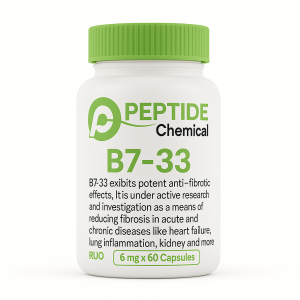
B7-33 6mg
B7-33 exibits potent anti-fibrotic effects. It is under active research and investigation as a means of reducing fibrosis in acute and chronic diseases like heart failure, lung inflammation, kidney and more. In animal studies, B7-33 has reduced fibrosis by roughly 50%, leading to prolonged survival following injury and offering the first new means of treating heart failure in 20 years. It has been shown to reduce excessive scar formation following cardiac injury. It has also shown promise in the treatment of certain vascular disorders as well as preeclampsia of pregnancy.
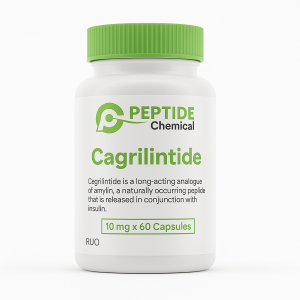
Cagrilintide
Cagrilintide is a long-acting analogue of amylin, a naturally occurring peptide that is released in conjunction with insulin. Cagrilintide has shown promise in animal trials as a treatment for obesity and type 2 diabetes. It has been studied for benefits not just in type 2 diabetes, but for liver damage, alcohol-related liver disease, and heart/blood vessel disease. There is some speculation about the role of this peptide in Alzheimer’s disease as well, but no research has been published in that particular sub-domain, yet. Many trials, however, have looked at the combination of cagrilintide and semaglutide in the treatment of obesity and type 2 diabetes. The two proteins appear to work synergistically to provide more robust and more permanent weight loss effects. It is important to note that while preclinical studies suggest promising therapeutic potential, clinical trials in humans are limited. Further research needs to be done to determine the efficacy and safety profiles.
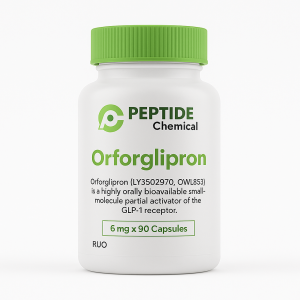
Orforglipron (6mg x 90 Capsules)



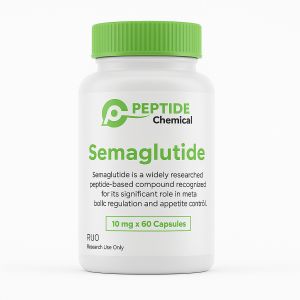
Semaglutide
Semaglutide is a widely researched peptide-based compound recognized for its significant role in metabolic regulation and appetite control. It belongs to the class of GLP-1 receptor agonists, which are designed to mimic naturally occurring hormones involved in glucose metabolism and satiety signaling.
Semaglutide 3m
Semaglutide is a widely researched peptide-based compound recognized for its significant role in metabolic regulation and appetite control. It belongs to the class of GLP-1 receptor agonists, which are designed to mimic naturally occurring hormones involved in glucose metabolism and satiety signaling.
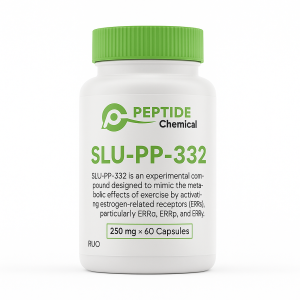
SLU-PP-332
SLU-PP-332 (250mcg x 60 Capsules = 15,000mcg) SLU-PP-332 (1000mcg x 30 Capsules = 30,000mcg) SLU-PP-332 is an experimental compound designed to mimic the metabolic effects of exercise by activating estrogen-related receptors (ERRs), particularly ERRα, ERRβ, and ERRγ. This activation leads to increased energy expenditure, enhanced fatty acid oxidation, and improved mitochondrial function.



Reviews
There are no reviews yet.