

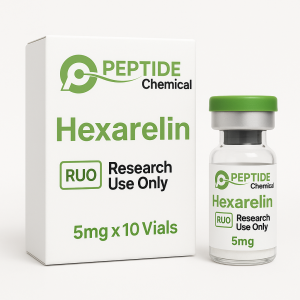
Hexarelin is a potent synthetic peptide widely studied for its strong ability to stimulate natural growth hormone release. It belongs to the family of growth hormone–releasing peptides (GHRPs) and is recognized for its high receptor affinity and robust physiological response.
This peptide works by binding to the growth hormone secretagogue receptor (GHS-R), which signals the pituitary gland to release growth hormone. By activating this pathway, Hexarelin supports endogenous hormone production rather than supplying external hormones.
One of Hexarelin’s most defining characteristics is its exceptional potency. Among GHRPs, it is often regarded as one of the strongest stimulators of growth hormone release, making it a focal point in advanced hormonal research.
Hexarelin is commonly explored for its role in muscle growth and recovery. Growth hormone plays a critical role in protein synthesis, muscle repair, and cellular regeneration, positioning Hexarelin as a valuable compound in performance-oriented research.
In recovery studies, Hexarelin is associated with enhanced tissue repair following physical stress. Muscles, tendons, and connective tissues rely on growth hormone–mediated processes for healing and structural integrity.
Hexarelin is also researched for its potential impact on fat metabolism. Growth hormone supports lipolysis, the breakdown of stored fat for energy, making this peptide relevant in body composition and metabolic efficiency studies.
Another area of interest is Hexarelin’s effect on bone health. Growth hormone contributes to bone density and strength, and Hexarelin’s strong stimulation profile has attracted attention in skeletal health research.
The peptide’s influence extends to cardiovascular research as well. Some studies explore Hexarelin’s interaction with cardiac tissue, where growth hormone signaling may support heart muscle resilience and function.
Hexarelin is known for producing a strong and rapid growth hormone pulse. This pulsatile release closely resembles natural hormonal rhythms, which is considered beneficial for physiological balance.
Compared to other GHRPs, Hexarelin demonstrates a longer-lasting effect on growth hormone release. This sustained activity supports prolonged anabolic and regenerative signaling.
Hexarelin is often studied in research models focused on strength and performance. By supporting recovery and tissue repair, it may help maintain consistent physical output during demanding routines.
The peptide is also examined for its potential role in improving sleep quality. Growth hormone release is closely tied to deep sleep cycles, and enhanced signaling may support more restorative rest.
Hexarelin’s interaction with the ghrelin receptor means it may influence appetite-related pathways. This makes it relevant in studies examining the relationship between hunger signaling and growth hormone activity.
In aging research, Hexarelin is investigated for its ability to counteract age-related decline in growth hormone production. Maintaining hormonal signaling is a key interest in longevity-focused science.
Hexarelin is valued for its predictable and measurable response. Its well-defined mechanism allows researchers to design consistent protocols and monitor outcomes with precision.
The peptide’s anabolic environment supports nitrogen retention, which is important for muscle preservation and recovery during periods of physical or metabolic stress.
Hexarelin is non-stimulatory in nature and does not directly activate the central nervous system. This allows it to support regeneration without causing nervous overstimulation or jitteriness.
Research also explores Hexarelin’s influence on immune system function. Growth hormone plays a role in cellular renewal and immune response, linking this peptide to broader wellness research.
Hexarelin’s effects are not limited to muscle tissue alone. Organs and tissues throughout the body rely on growth hormone signaling for maintenance and repair.
The peptide is frequently discussed alongside other growth hormone–releasing compounds due to its high efficacy. Comparisons often highlight its superior potency and duration of action.
Hexarelin’s ability to stimulate growth hormone without suppressing natural production makes it attractive in research settings focused on hormonal balance.
In performance and rehabilitation research, Hexarelin is studied for its ability to support faster recovery times, potentially reducing downtime between physical stress events.
The compound’s reliability has contributed to its long-standing presence in peptide research. Its consistent effects have made it a benchmark for evaluating newer growth hormone secretagogues.
Hexarelin’s strong anabolic signaling may support improved strength retention and muscle integrity over time, particularly in physically demanding environments.
In metabolic research, Hexarelin is explored for how growth hormone influences energy utilization, fat breakdown, and nutrient partitioning.
The peptide’s compatibility with structured research protocols makes it suitable for controlled studies examining hormonal optimization and regeneration.
Hexarelin continues to be of interest in advanced peptide research due to its ability to deliver powerful results while maintaining physiological alignment.
As research into growth hormone–supportive peptides expands, Hexarelin remains relevant due to its potency, stability, and well-characterized mechanism of action.
Its role in supporting recovery, strength, metabolic balance, and tissue repair positions it as a foundational compound in growth hormone research.
Ultimately, Hexarelin stands out as a highly potent growth hormone–releasing peptide that supports the body’s natural regenerative systems. Through its strong receptor activation and sustained hormonal signaling, it remains a key compound in performance, recovery, and longevity-focused research.
Hexarelin (2mg x 10), CJC-1295 no DAC (2mg x 10)
Original price was: $650.00.$552.00Current price is: $552.00.
Ipamorelin (2mg x 10), CJC-1295 no DAC (2mg x 10)
Original price was: $650.00.$552.00Current price is: $552.00.
-15%Hot
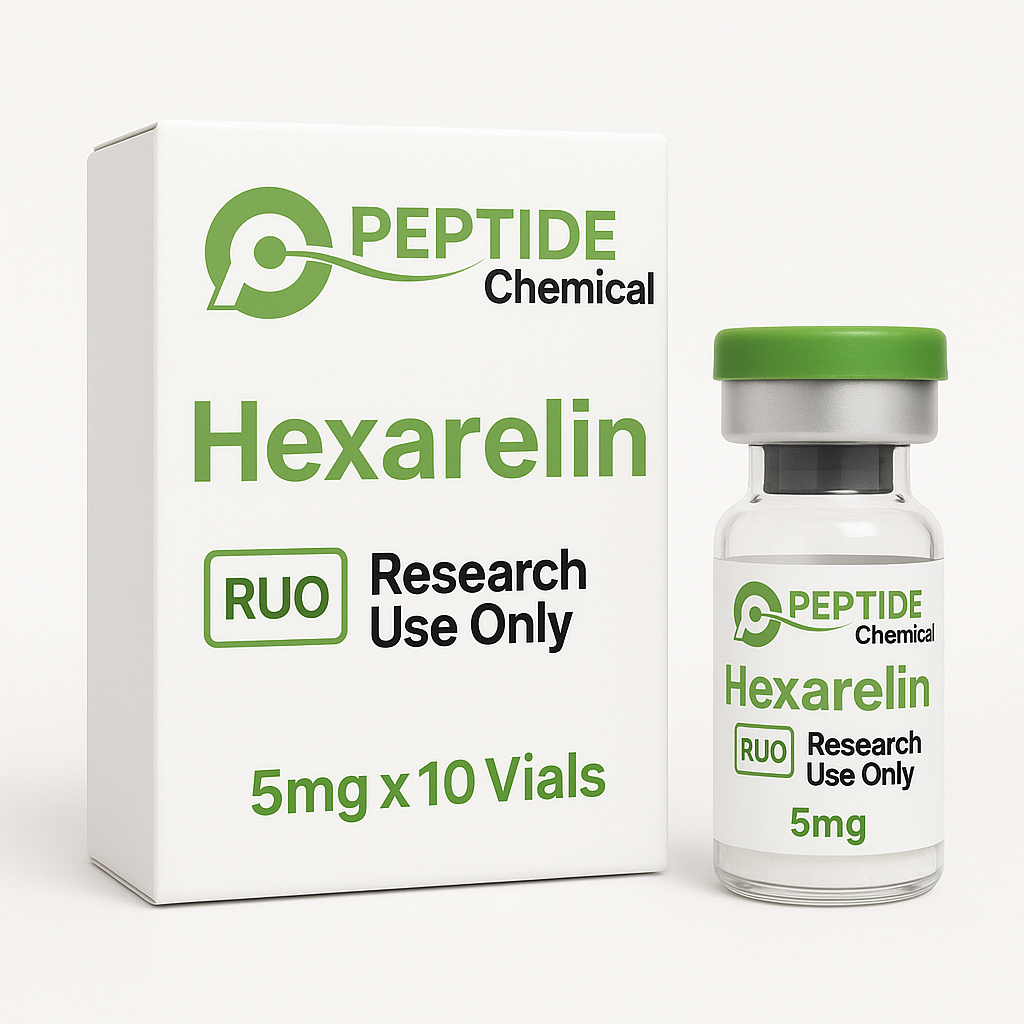
Hexarelin (5mg x 10), CJC-1295 no DAC (5mg x 10)
Original price was: $945.00.$803.00Current price is: $803.00.
Ultimately, Hexarelin stands out as a highly potent growth hormone–releasing peptide that supports the body’s natural regenerative systems. Through its strong receptor activation and sustained hormonal signaling, it remains a key compound in performance, recovery, and longevity-focused research.
Description
Shipping & Delivery
Related products
BPC-157 5mg
 BPC-157 has undergone a great deal of research because its healing abilities extend well beyond the lining of the stomach. Studies in animal models indicate that BPC-157 can enhance angiogenesis, promote wound healing, stimulate collagen synthesis, modulate the inflammatory response, and protect against oxidative stress. The peptide has shown benefits in animal models with inflammatory bowel disease, GI ulcers, musculoskeletal injuries, heart damage, eye injuries and neurological damage. Research has shown that the oral bioavailability of BPC-157 is quite high.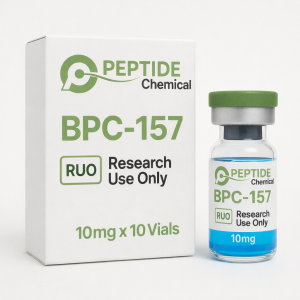
BPC-157, TB-500 (Blend)
BPC-157 has undergone a great deal of research because its healing abilities extend well beyond the lining of the stomach. Studies in animal models indicate that BPC-157 can enhance angiogenesis, promote wound healing, stimulate collagen synthesis, modulate the inflammatory response, and protect against oxidative stress. The peptide has shown benefits in animal models with inflammatory bowel disease, GI ulcers, musculoskeletal injuries, heart damage, eye injuries and neurological damage. Research has shown that the oral bioavailability of BPC-157 is quite high. BPC-157, TB-500, KPV, GHK-Cu 80mg (Klow Blend)
BPC-157 has undergone a great deal of research because its healing abilities extend well beyond the lining of the stomach. Studies in animal models indicate that BPC-157 can enhance angiogenesis, promote wound healing, stimulate collagen synthesis, modulate the inflammatory response, and protect against oxidative stress. The peptide has shown benefits in animal models with inflammatory bowel disease, GI ulcers, musculoskeletal injuries, heart damage, eye injuries and neurological damage. Research has shown that the oral bioavailability of BPC-157 is quite high. 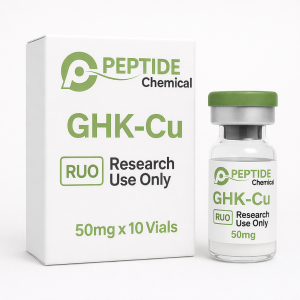
GHK-Cu 50mg Copper Peptide
GHK-Cu is a small, naturally occurring peptide with the ability to attenuate inflammation, improve antioxidant responses, and improve gene expression on a large scale. Research shows that this copper-chelating peptide may be of critical importance both in the prevention of neurodegenerative disease and as a tool for exploring pathophysiological mechanisms. Studies in mice have revealed that GHK-Cu can protect against neurological insults, improve wound healing, reduce rates of infection, and boost blood vessel growth. The peptide has been of interest in recent years for its anti-oxidant properties that, in combination with its ability to alter gene expression patterns, appear to help slow or even reverse some aspects of aging.



Reviews
There are no reviews yet.