

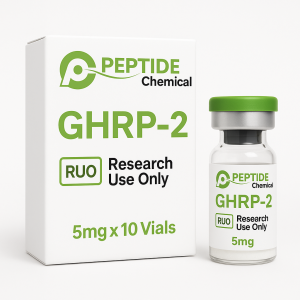
GHRP-2, or Growth Hormone Releasing Peptide-2, is a well-known synthetic peptide studied for its ability to stimulate the body’s natural growth hormone release. It has been widely explored in research related to recovery, muscle development, metabolism, and overall physiological performance.
This peptide functions by interacting with the ghrelin receptor, also known as the growth hormone secretagogue receptor. By activating this pathway, GHRP-2 encourages the pituitary gland to release growth hormone in a manner that aligns with the body’s natural hormonal rhythms.
One of the defining characteristics of GHRP-2 is its strong and rapid growth hormone–stimulating effect. Compared to earlier peptides, it is known for producing a robust and reliable response, making it a staple in growth hormone research.
GHRP-2 is often studied for its role in supporting muscle recovery and tissue repair. Growth hormone plays a critical role in protein synthesis, cellular regeneration, and muscle maintenance, all of which are essential for physical performance and recovery.
In performance-related research, GHRP-2 is valued for its ability to support lean muscle preservation. By encouraging endogenous growth hormone release, it helps create an environment conducive to muscle repair and structural integrity.
Another important aspect of GHRP-2 is its influence on fat metabolism. Growth hormone is involved in lipolysis, the process by which stored fat is broken down and utilized for energy, making this peptide relevant in metabolic studies.
GHRP-2 is also examined for its effects on recovery speed. Improved growth hormone signaling may help shorten recovery time after physical stress, training, or injury, supporting overall physical resilience.
The peptide’s action is pulsatile rather than continuous. This means it encourages natural growth hormone pulses, which more closely resemble the body’s physiological release patterns compared to constant stimulation.
GHRP-2 has been studied for its potential role in improving sleep quality. Growth hormone release is closely tied to deep sleep phases, and enhanced signaling may support more restorative sleep cycles.
In addition to physical recovery, GHRP-2 is researched for its effects on connective tissue health. Tendons, ligaments, and joints rely on growth hormone–mediated repair processes for strength and durability.
One of the notable characteristics of GHRP-2 is its short half-life. This allows for precise timing and controlled research protocols, making it easier to study its effects in structured environments.
GHRP-2 is often compared to other growth hormone secretagogues due to its potency. Its strong receptor affinity makes it an efficient option in studies focused on hormonal optimization.
The peptide may also influence appetite signaling due to its interaction with the ghrelin receptor. This aspect makes it interesting in research exploring hunger regulation alongside growth hormone activity.
In metabolic research, GHRP-2 is explored for its ability to support overall energy balance. Growth hormone influences how the body utilizes fats and carbohydrates, contributing to metabolic efficiency.
GHRP-2 is frequently included in research protocols that focus on body composition. Supporting muscle preservation while encouraging fat utilization is a central theme in these investigations.
Because it stimulates endogenous hormone release rather than supplying hormones directly, GHRP-2 is considered a regulatory compound. This approach supports the body’s internal control mechanisms.
Researchers also explore GHRP-2’s potential impact on immune system support. Growth hormone plays a role in cellular regeneration and immune cell function, linking this peptide to broader wellness research.
GHRP-2’s effects on cellular repair extend beyond muscles. Organs and tissues throughout the body rely on growth hormone signaling for maintenance and renewal.
The peptide is often valued for its predictability. Its well-documented mechanism allows researchers to anticipate responses and design consistent protocols.
In longevity-focused research, GHRP-2 is studied for its role in counteracting age-related decline in growth hormone production. Supporting natural hormone output is a key area of interest in aging science.
GHRP-2 is non-stimulatory and does not directly excite the nervous system. This allows it to support recovery and regeneration without causing jitteriness or nervous overstimulation.
Its compatibility with other peptides has also been explored in research settings. GHRP-2 is often discussed alongside complementary compounds that support hormonal balance and tissue repair.
The peptide’s influence on nitrogen retention is another area of interest. Improved nitrogen balance supports muscle preservation and recovery during periods of physical stress.
GHRP-2 continues to be studied for its role in maintaining strength and vitality. Growth hormone is a foundational element of physical resilience and structural health.
In research related to athletic performance, GHRP-2 is examined for its ability to support consistent training output by enhancing recovery and reducing downtime.
The compound’s relatively fast onset of action allows researchers to observe changes within controlled timelines, making it suitable for detailed physiological studies.
GHRP-2 represents a well-established tool in peptide research due to its clear mechanism and reproducible effects. Its longevity in scientific exploration speaks to its reliability.
As interest in hormone-supportive peptides grows, GHRP-2 remains relevant due to its direct yet regulated stimulation of growth hormone release.
Its role in supporting recovery, metabolism, and tissue integrity positions it as a foundational compound in growth hormone–related research.
Ultimately, GHRP-2 stands out as a powerful growth hormone–releasing peptide that works in harmony with the body’s natural signaling systems. By supporting regeneration, metabolic balance, and recovery, it continues to be a valuable focus in advanced peptide and performance research.
Hot
GHRP-2 (5mg x 10), CJC-1295 no DAC (5mg x 10)
$726.00
GHRP-2, or Growth Hormone Releasing Peptide-2, is a well-known synthetic peptide studied for its ability to stimulate the body’s natural growth hormone release. It has been widely explored in research related to recovery, muscle development, metabolism, and overall physiological performance.
Description
Shipping & Delivery
Related products
BPC-157 10mg
 BPC-157 has undergone a great deal of research because its healing abilities extend well beyond the lining of the stomach. Studies in animal models indicate that BPC-157 can enhance angiogenesis, promote wound healing, stimulate collagen synthesis, modulate the inflammatory response, and protect against oxidative stress. The peptide has shown benefits in animal models with inflammatory bowel disease, GI ulcers, musculoskeletal injuries, heart damage, eye injuries and neurological damage. Research has shown that the oral bioavailability of BPC-157 is quite high.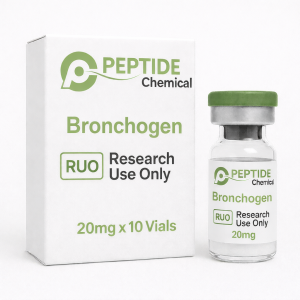
Bronchogen 20mg (Bioregulator)
Bronchogen is a bioregulatory peptide with tissue-specific effects in the lungs. Research in rat models shows that Bronchogen can decrease inflammation and reestablish health lung tissue states by affecting several DNA transcription pathways. The net effect of Bronchogen in the lungs is to improve the epithelium, increase surfactant production, and reduce inflammation. There is ongoing research looking at the benefit of Bronchogen not just in disease, but in aging as well. It appears that Bronchogen is geroprotective, helping to reverse age-related decline in lung function by reactivating senescent DNA. The peptide may even prove useful in helping to unravel the pathways that protect against cancer development in the lungs.
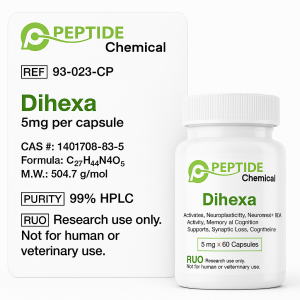
Dihexa (5mg x 60 Capsules = 300mg)
Dihexa is a small peptide-derived compound designed to support cognitive function and brain regeneration. It acts by activating the HGF/c-Met signaling pathway, which plays a critical role in forming new synaptic connections and enhancing neuroplasticity. Dihexa also mimics the action of brain-derived neurotrophic factor (BDNF), a key molecule involved in learning, memory, and neuronal survival. Preclinical research studies have shown that Dihexa can significantly improve memory consolidation and reverse cognitive deficits in models of Alzheimer’s disease, traumatic brain injury, and stroke. Unlike traditional nootropics or growth factors with poor blood–brain barrier penetration, Dihexa is orally bioavailable and metabolically stable, allowing for targeted CNS effects. Its unique mechanism positions it as a promising research compound for neurodegenerative conditions, offering potential in synaptic repair, inflammation reduction, and long-term cognitive enhancement. 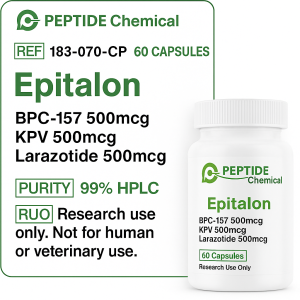
Epitalon 3mg (60 capsules) (Telomere Length)
Epithalon (Epitalon) has long been understood to help preserve telomeres, which are the protective end caps found on fragments of DNA (chromosomes). Telomeres protect DNA from degradation as it is replicated during cell division (one cell splitting into two). Telomeres themselves suffer degradation, however, and eventually become too short to be effective. At this point, a cell will either commit cell suicide in a process called apoptosis or it will go dormant in a process called senescence. Both processes lead to aging and eventual dysfunction and disease. Senescence is one of the primary drivers of disease and aging.
Epitalon has been shown to activate an enzyme called telomerase, which protects and repairs telomeres. More active telomerase means that cells age slower and remain functional longer. The net result is that overall aging appears to be slowed down. Research in rodents indicates that Epitalon may extend life by as much as 27% via this mechanism[2], [3].
Epitalon does not only activate telomerase. As noted above, Epitalon has been shown to affect expression for several genes through alteration of DNA structure. This process, called epigenetic modification, is of interest to scientists because it provides the foundation for controlling gene expression at a very fine level. Research is being conducted to learn how to harness epigenetic technology, which could potentially allow scientists to alter everything from an individual’s eye color to how intelligent a person is or how long someone lives.
Micro-encapsulated Epitalon has shown excellent orally bioavailability in lab research studies. 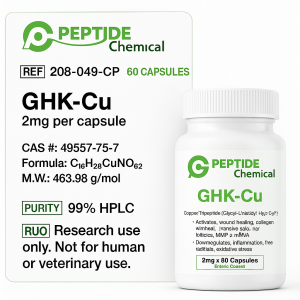
GHK-Cu (2mg x 60 Capsules) (Copper Tripeptide)
GHK-Cu is a small, naturally occurring peptide with the ability to attenuate inflammation, improve antioxidant responses, and improve gene expression on a large scale. Research shows that this copper-chelating peptide may be of critical importance both in the prevention of neurodegenerative disease and as a tool for exploring pathophysiological mechanisms. Studies in mice have revealed that GHK-Cu can protect against neurological insults, improve wound healing, reduce rates of infection, and boost blood vessel growth. The peptide has been of interest in recent years for its anti-oxidant properties that, in combination with its ability to alter gene expression patterns, appear to help slow or even reverse some aspects of aging.
Melanotan 2 (MT2) (3mg x 10 Vials = 30mg)
Melanotan-2 (MT-2) is a synthetic derivative of human alpha-melanocyte-stimulating hormone (α-MSH), developed at the University of Arizona in the 1980s. The initial purpose was to create a sunless tanning alternative, inspired by α-MSH's ability to induce sexual arousal and skin darkening in rodents. However, as research progressed, MT-2's diverse effects were unveiled. These include enhancing sexual arousal, promoting skin pigmentation, reducing compulsive behavior, managing addiction, suppressing hunger, decreasing glucagon production, and even potentially reversing certain features associated with autism. Melanotan-2 research has shown it to enhance sexual arousal, promote skin pigmentation through melanocyte activation and reduce compulsive/addictive behaviors.
TB-500 (Thymosin Beta-4) (43aa) (2mg x 10 Vials = 20mg)
TB-500 (Thymosin Beta-4) is a 43 amino acid peptide sequence. In animal models, Thymosin Beta-4 has been shown to improve blood vessel growth, regulate wound healing, decrease inflammation, and reduce oxidative damage in the heart and central nervous system. Thymosin-beta-4 has a role in protection, tissue repair, regeneration and remodeling of injured or damaged tissues. It is also of active interest in anti-aging research.



Reviews
There are no reviews yet.