

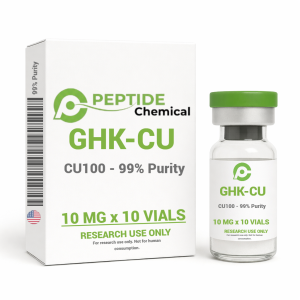
GHK-Cu (Copper Tripeptide-1)
GHK-Cu, also known as Copper Tripeptide-1, is a naturally occurring peptide complex formed by the binding of the tripeptide GHK (glycyl-L-histidyl-L-lysine) with a copper ion. It is widely studied in cellular biology due to its role in signaling pathways associated with tissue maintenance and cellular communication.
In research settings, GHK-Cu is valued for its ability to interact with multiple biological systems simultaneously. The copper-binding structure allows it to influence gene expression and cellular signaling processes related to structural integrity and repair mechanisms.
GHK-Cu is frequently examined in studies focused on extracellular matrix regulation. Researchers explore how the peptide-copper complex supports communication between cells responsible for collagen, elastin, and proteoglycan signaling pathways.
One defining feature of GHK-Cu is its involvement in cellular regeneration research. It has been shown to influence pathways associated with cell growth, differentiation, and adaptive response to environmental stressors.
The copper ion within GHK-Cu plays a critical role in enzymatic activity. Copper-dependent enzymes are essential for oxidative balance and tissue remodeling, making GHK-Cu relevant in studies examining redox regulation and cellular metabolism.
GHK-Cu is also investigated for its influence on inflammatory signaling pathways. Researchers study how it interacts with cytokine expression and cellular stress response systems in controlled laboratory models.
In skin and connective tissue research, GHK-Cu is examined for its role in structural protein signaling. Its activity provides insight into how cells coordinate maintenance and renewal processes at the molecular level.
The peptide is notable for its ability to modulate gene expression. Research has shown that GHK-Cu can upregulate genes associated with repair and downregulate those linked to cellular breakdown, making it a valuable tool for genetic signaling studies.
GHK-Cu is commonly included in aging and longevity research due to its broad regulatory role in cellular health. Its influence across multiple systems supports investigations into how coordinated signaling affects long-term tissue stability.
Unlike single-pathway peptides, GHK-Cu operates through a network of interactions rather than a single receptor. This multi-target activity allows researchers to study integrated biological responses rather than isolated effects.
The compound’s naturally occurring origin contributes to its relevance in physiologically aligned research models. Its presence in human plasma and tissues makes it particularly useful for biologically relevant experimental design.
GHK-Cu’s stability and well-characterized molecular profile support reproducibility in laboratory environments. This reliability has led to its widespread use as a reference compound in peptide and copper biology research.
Researchers also study GHK-Cu for its antioxidant-related activity, examining how it helps regulate oxidative stress and maintain cellular balance under challenging conditions.
As interest in regenerative science and cellular optimization continues to grow, GHK-Cu remains a cornerstone compound due to its versatility, stability, and broad biological relevance.
Its unique combination of peptide signaling and trace mineral coordination makes GHK-Cu an essential research tool for exploring complex cellular communication networks.
New
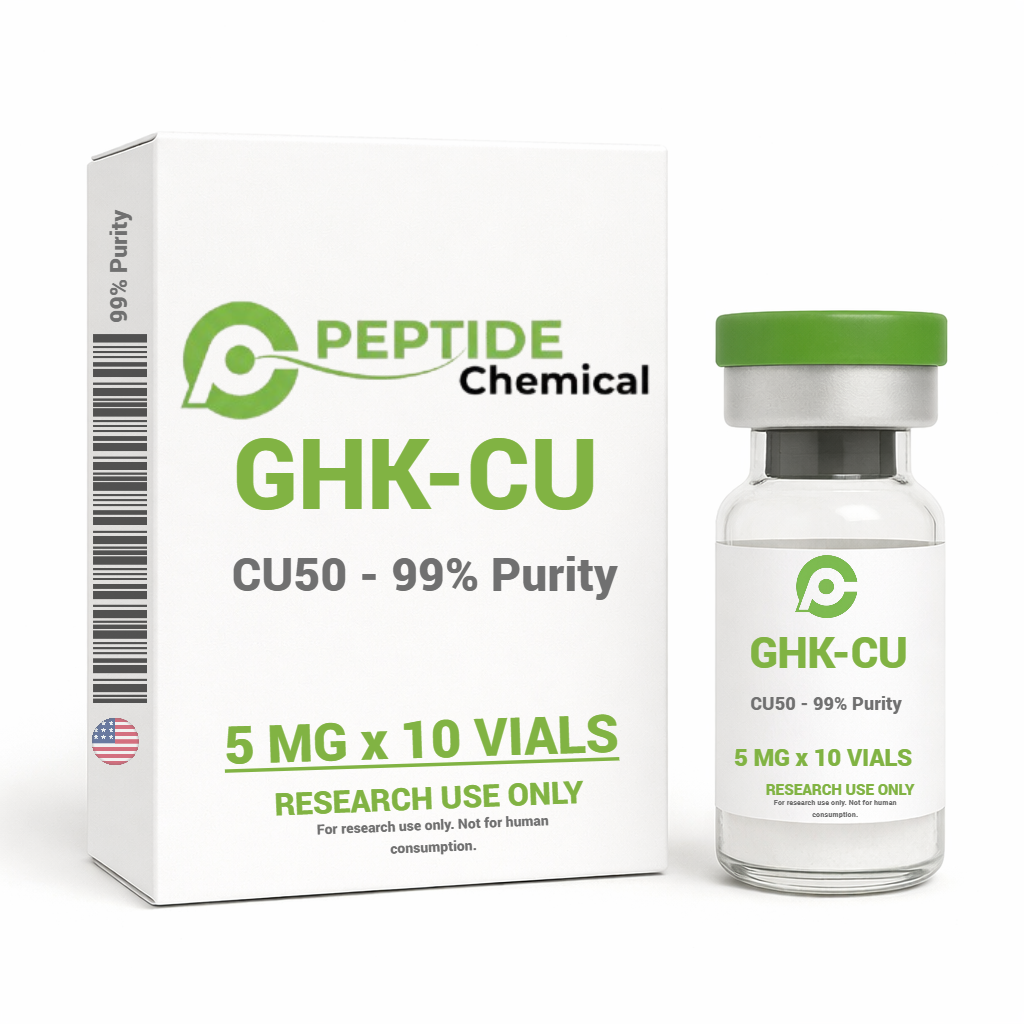
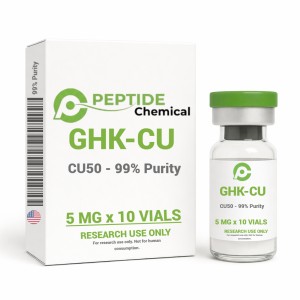
GHK-Cu (Copper Tripeptide) 5mg
$28.00
GHK-Cu, also known as Copper Tripeptide-1, is a naturally occurring peptide complex formed by the binding of the tripeptide GHK (glycyl-L-histidyl-L-lysine) with a copper ion. It is widely studied in cellular biology due to its role in signaling pathways associated with tissue maintenance and cellular communication.
Description
Shipping & Delivery
Related products
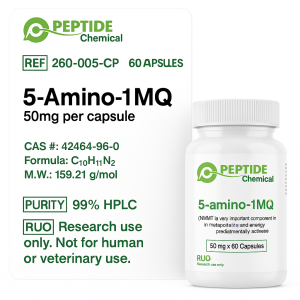
5-Amino-1MQ 50mg (60 Capsules)
 5-amino-1MQ is a small molecule that blocks the activity of the enzyme called nicotinamide N-methyltransferase (NNMT). NNMT is a very important component in metabolism and energy and is predominantly active in fat tissue. By blocking NNMT, 5-amino-1MQ stimulates an increase in nicotinamide adenine dinucleotide (NAD+), a cofactor that is central to cellular metabolism, thereby increasing metabolic rate and activating a gene called sirtuin-1 (SIRT1).
SIRT1 is also known as the "longevity gene" because of its role in reducing the risk of diabetes, obesity, metabolic syndrome, atherosclerosis and other forms of cardiovascular disease, kidney disease, liver disease, neurodegeneration, and cancer. Research in mice given 5-amino-1MQ showed a 7% reduction in body mass over 10 days without any changes in food intake, compared to controls. Research has shown that decreasing NNMT may help shrink fat cells and reduce the size of fat deposits.
5-amino-1MQ is a small molecule that blocks the activity of the enzyme called nicotinamide N-methyltransferase (NNMT). NNMT is a very important component in metabolism and energy and is predominantly active in fat tissue. By blocking NNMT, 5-amino-1MQ stimulates an increase in nicotinamide adenine dinucleotide (NAD+), a cofactor that is central to cellular metabolism, thereby increasing metabolic rate and activating a gene called sirtuin-1 (SIRT1).
SIRT1 is also known as the "longevity gene" because of its role in reducing the risk of diabetes, obesity, metabolic syndrome, atherosclerosis and other forms of cardiovascular disease, kidney disease, liver disease, neurodegeneration, and cancer. Research in mice given 5-amino-1MQ showed a 7% reduction in body mass over 10 days without any changes in food intake, compared to controls. Research has shown that decreasing NNMT may help shrink fat cells and reduce the size of fat deposits. 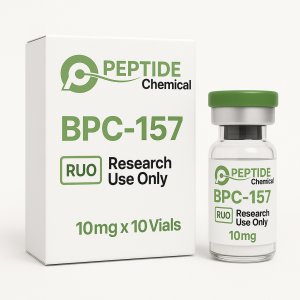
BPC-157 10mg
BPC-157 has undergone a great deal of research because its healing abilities extend well beyond the lining of the stomach. Studies in animal models indicate that BPC-157 can enhance angiogenesis, promote wound healing, stimulate collagen synthesis, modulate the inflammatory response, and protect against oxidative stress. The peptide has shown benefits in animal models with inflammatory bowel disease, GI ulcers, musculoskeletal injuries, heart damage, eye injuries and neurological damage. Research has shown that the oral bioavailability of BPC-157 is quite high. BPC-157 15mg
BPC-157 has undergone a great deal of research because its healing abilities extend well beyond the lining of the stomach. Studies in animal models indicate that BPC-157 can enhance angiogenesis, promote wound healing, stimulate collagen synthesis, modulate the inflammatory response, and protect against oxidative stress. The peptide has shown benefits in animal models with inflammatory bowel disease, GI ulcers, musculoskeletal injuries, heart damage, eye injuries and neurological damage. Research has shown that the oral bioavailability of BPC-157 is quite high. BPC-157 5mg
BPC-157 has undergone a great deal of research because its healing abilities extend well beyond the lining of the stomach. Studies in animal models indicate that BPC-157 can enhance angiogenesis, promote wound healing, stimulate collagen synthesis, modulate the inflammatory response, and protect against oxidative stress. The peptide has shown benefits in animal models with inflammatory bowel disease, GI ulcers, musculoskeletal injuries, heart damage, eye injuries and neurological damage. Research has shown that the oral bioavailability of BPC-157 is quite high. BPC-157, TB-500, KPV, GHK-Cu 80mg (Klow Blend)
BPC-157 has undergone a great deal of research because its healing abilities extend well beyond the lining of the stomach. Studies in animal models indicate that BPC-157 can enhance angiogenesis, promote wound healing, stimulate collagen synthesis, modulate the inflammatory response, and protect against oxidative stress. The peptide has shown benefits in animal models with inflammatory bowel disease, GI ulcers, musculoskeletal injuries, heart damage, eye injuries and neurological damage. Research has shown that the oral bioavailability of BPC-157 is quite high. 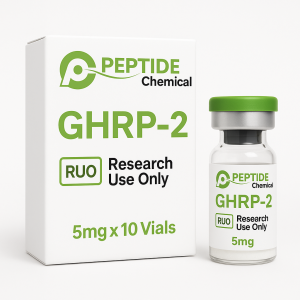



Reviews
There are no reviews yet.