

DSIP (Delta Sleep-Inducing Peptide)
Delta Sleep-Inducing Peptide (DSIP) is a naturally occurring neuropeptide originally isolated from mammalian brain tissue. It is widely studied in neuroscience and endocrine research due to its interaction with central nervous system signaling pathways and its influence on peptide-mediated cellular communication.
In laboratory research, DSIP is valued for its role in modulating neuronal signaling and intracellular communication. Its activity provides researchers with a model to study how short neuropeptides influence regulatory pathways within the central nervous system under controlled conditions.
One of the defining characteristics of DSIP is its short amino acid sequence, which allows precise investigation into peptide–receptor interactions without the complexity of longer peptide chains. This compact structure is ideal for high-precision laboratory studies.
DSIP is frequently examined in research exploring neuronal homeostasis and neuropeptide-mediated signaling. Researchers study how DSIP influences intracellular signaling networks, contributing to a better understanding of peptide control mechanisms in neural systems.
The peptide is also used in studies investigating interactions with other neurotransmitter systems. Its signaling influence provides a platform for examining molecular crosstalk and peptide modulation of central nervous system pathways.
DSIP’s stable molecular structure supports reproducibility in experimental settings. Consistent behavior in vitro makes it suitable for comparative studies and long-term research designs.
Researchers often utilize DSIP to examine regulatory signaling dynamics within neuronal networks. Its effects on receptor-mediated pathways allow controlled study of peptide signaling specificity.
Unlike broad-acting neurotransmitters, DSIP operates primarily through targeted modulation of intracellular and receptor-mediated pathways, providing precise control in laboratory models.
DSIP is also of interest in research focused on adaptive cellular signaling, stress-response pathways, and peptide-mediated intracellular regulation. It serves as a model compound to explore how short neuropeptides influence system-level neural coordination.
Because DSIP affects multiple central nervous system pathways, it is often included in systems-based research to study integrated neuronal responses rather than isolated effects.
The peptide’s well-characterized molecular profile and predictable signaling behavior make DSIP a reliable research tool for neuroscience and peptide biology studies.
DSIP continues to attract scientific interest due to its compact design, stability, and relevance in understanding complex peptide-regulated signaling networks in neuronal systems.
Its precise structure and targeted signaling properties make DSIP an important compound for researchers investigating peptide-mediated communication and neuropeptide function in controlled laboratory environments.
New
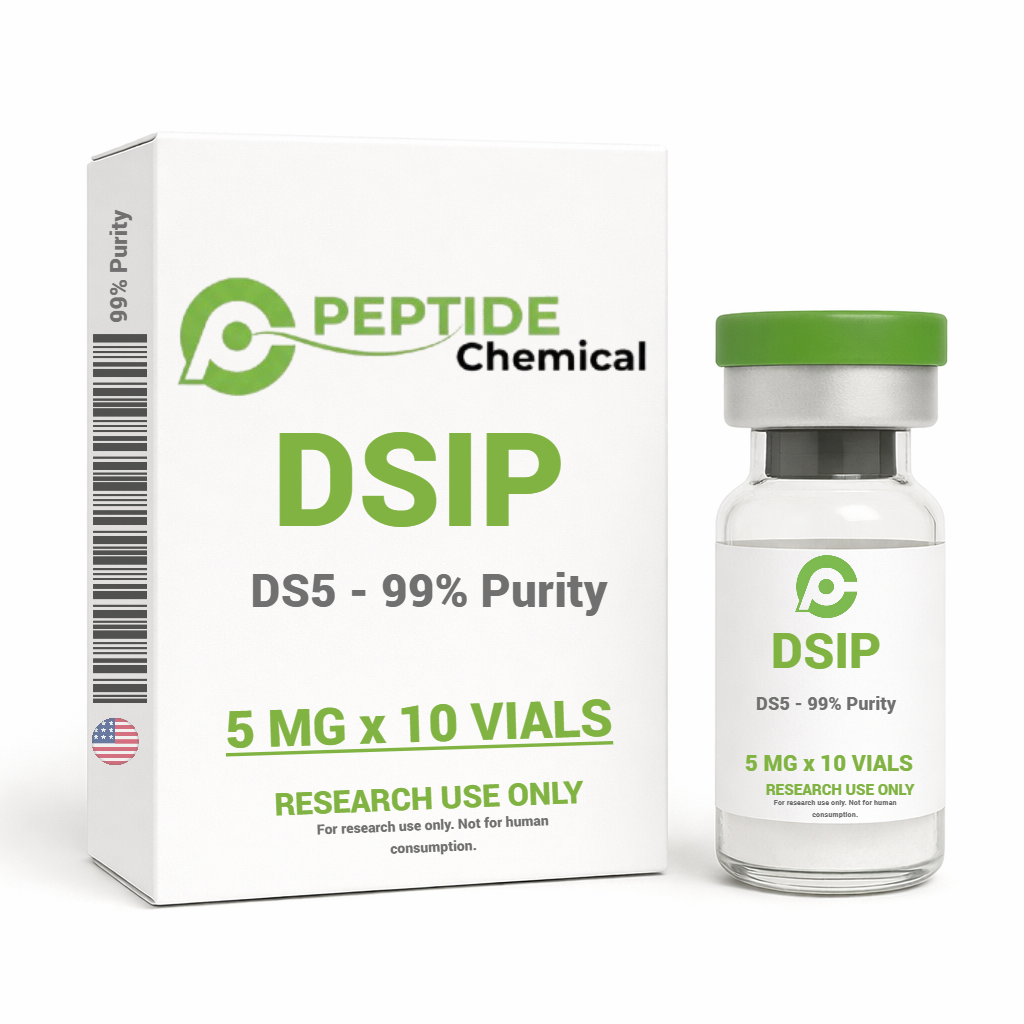
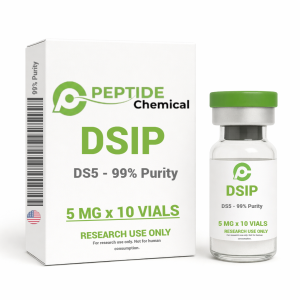
DSIP (Delta Sleep-Inducing Peptide) 5mg
$40.00
Delta Sleep-Inducing Peptide (DSIP) is a naturally occurring neuropeptide originally isolated from mammalian brain tissue. It is widely studied in neuroscience and endocrine research due to its interaction with central nervous system signaling pathways and its influence on peptide-mediated cellular communication.
Description
Shipping & Delivery
Related products
BPC-157 5mg
 BPC-157 has undergone a great deal of research because its healing abilities extend well beyond the lining of the stomach. Studies in animal models indicate that BPC-157 can enhance angiogenesis, promote wound healing, stimulate collagen synthesis, modulate the inflammatory response, and protect against oxidative stress. The peptide has shown benefits in animal models with inflammatory bowel disease, GI ulcers, musculoskeletal injuries, heart damage, eye injuries and neurological damage. Research has shown that the oral bioavailability of BPC-157 is quite high.
 BPC-157 5mg
BPC-157 has undergone a great deal of research because its healing abilities extend well beyond the lining of the stomach. Studies in animal models indicate that BPC-157 can enhance angiogenesis, promote wound healing, stimulate collagen synthesis, modulate the inflammatory response, and protect against oxidative stress. The peptide has shown benefits in animal models with inflammatory bowel disease, GI ulcers, musculoskeletal injuries, heart damage, eye injuries and neurological damage. Research has shown that the oral bioavailability of BPC-157 is quite high. BPC-157, TB-500, KPV, GHK-Cu 80mg (Klow Blend)
BPC-157 has undergone a great deal of research because its healing abilities extend well beyond the lining of the stomach. Studies in animal models indicate that BPC-157 can enhance angiogenesis, promote wound healing, stimulate collagen synthesis, modulate the inflammatory response, and protect against oxidative stress. The peptide has shown benefits in animal models with inflammatory bowel disease, GI ulcers, musculoskeletal injuries, heart damage, eye injuries and neurological damage. Research has shown that the oral bioavailability of BPC-157 is quite high. 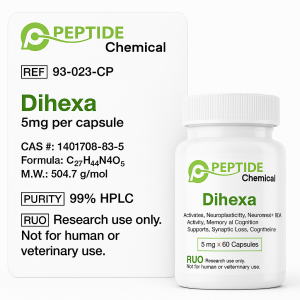
Dihexa (5mg x 60 Capsules = 300mg)
Dihexa is a small peptide-derived compound designed to support cognitive function and brain regeneration. It acts by activating the HGF/c-Met signaling pathway, which plays a critical role in forming new synaptic connections and enhancing neuroplasticity. Dihexa also mimics the action of brain-derived neurotrophic factor (BDNF), a key molecule involved in learning, memory, and neuronal survival. Preclinical research studies have shown that Dihexa can significantly improve memory consolidation and reverse cognitive deficits in models of Alzheimer’s disease, traumatic brain injury, and stroke. Unlike traditional nootropics or growth factors with poor blood–brain barrier penetration, Dihexa is orally bioavailable and metabolically stable, allowing for targeted CNS effects. Its unique mechanism positions it as a promising research compound for neurodegenerative conditions, offering potential in synaptic repair, inflammation reduction, and long-term cognitive enhancement. 
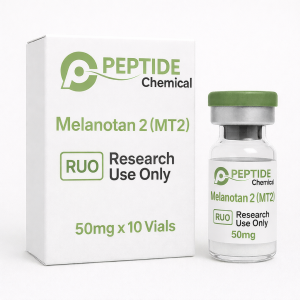
Melanotan 2 (MT2) (3mg x 10 Vials = 30mg)
Melanotan-2 (MT-2) is a synthetic derivative of human alpha-melanocyte-stimulating hormone (α-MSH), developed at the University of Arizona in the 1980s. The initial purpose was to create a sunless tanning alternative, inspired by α-MSH's ability to induce sexual arousal and skin darkening in rodents. However, as research progressed, MT-2's diverse effects were unveiled. These include enhancing sexual arousal, promoting skin pigmentation, reducing compulsive behavior, managing addiction, suppressing hunger, decreasing glucagon production, and even potentially reversing certain features associated with autism. Melanotan-2 research has shown it to enhance sexual arousal, promote skin pigmentation through melanocyte activation and reduce compulsive/addictive behaviors.



Reviews
There are no reviews yet.