

Cagrilintide is an innovative peptide under advanced research for its role in appetite regulation, metabolic signaling, and body-weight management pathways. It represents a next wave of compounds designed to work in harmony with the body’s natural satiety mechanisms, offering a sophisticated approach to controlling hunger and supporting long-term metabolic balance.
Unlike compounds that rely on stimulation or forced suppression, Cagrilintide is designed to support the body’s own appetite-regulating signals. It works through amylin-related pathways, which play an important role in how the brain interprets fullness, meal satisfaction, and portion regulation. This creates a more natural, controlled eating experience.
One of the defining characteristics of Cagrilintide is its ability to promote earlier and longer-lasting satiety. By reinforcing signals of fullness, it helps reduce the drive toward overeating and constant snacking. This effect supports more mindful eating habits and helps create a calmer relationship with food.
Cagrilintide research focuses heavily on central appetite signaling. The compound interacts with receptors involved in hunger perception, allowing the body to better recognize when sufficient nourishment has been consumed. This enhanced feedback loop can significantly influence daily caloric behavior.
The peptide is often explored for its potential to complement lifestyle interventions such as structured nutrition, portion awareness, and metabolic programs. By reducing appetite noise, individuals may find it easier to stay consistent with wellness routines without feeling deprived.
Another notable aspect of Cagrilintide is its effect on gastric function. Research suggests it supports slower gastric emptying, which helps prolong the feeling of fullness after meals. This supports sustained satiety and smoother digestion patterns throughout the day.
Cagrilintide is valued in metabolic research for its non-stimulant profile. Instead of artificially increasing energy or suppressing hunger aggressively, it encourages physiological balance, making it well suited for long-term wellness and sustainability-focused protocols.
Individuals exploring modern weight-management research often look to Cagrilintide for its ability to reduce appetite variability. Fluctuating hunger signals can undermine progress, and this compound aims to stabilize those fluctuations for more predictable daily patterns.
Beyond appetite, Cagrilintide is also being studied for its broader effects on metabolic rhythm. Appetite regulation is deeply linked to energy use, digestion timing, and glucose handling, making this peptide relevant to comprehensive metabolic research.
Because it supports appetite regulation at the neurological level, Cagrilintide may help reduce impulsive eating behaviors. This mental clarity around food choices can be just as impactful as the physical effects on fullness.
Cagrilintide’s mechanism is designed to align with the body’s natural post-meal signaling. This alignment helps reduce the need for external control or rigid dieting strategies, supporting a more intuitive wellness approach.
In research contexts, Cagrilintide is often discussed alongside other metabolic peptides due to its complementary signaling pathways. Its unique role within appetite control systems makes it a valuable component in advanced metabolic exploration.
The compound’s gradual, steady effects are part of what makes it appealing for long-term use. Rather than dramatic short-term changes, Cagrilintide supports sustained appetite balance that builds progressively over time.
Users exploring appetite-modulating research frequently report a quieter hunger baseline. Meals feel more satisfying, and the urge to eat between meals often becomes less prominent, contributing to better daily structure.
Cagrilintide is also studied for how it may support consistency in dietary adherence. When hunger signals become more manageable, maintaining structured nutrition plans becomes significantly easier.
The peptide’s influence on meal timing can help discourage late-night eating or unplanned snacking. This can be particularly valuable for individuals seeking better metabolic alignment and daily rhythm.
Because Cagrilintide does not rely on stimulant activity, it avoids the common crashes or jittery sensations associated with appetite suppressants. This smoother profile supports comfort, focus, and daily stability.
Many individuals interested in metabolic research value Cagrilintide for its potential role in supporting long-term weight maintenance. Appetite control is often the most challenging aspect of maintaining results, and this peptide directly addresses that challenge at the signaling level.
Cagrilintide is also associated with improved meal satisfaction. Feeling full is not only about volume but about signaling completion, and this compound helps reinforce that sense of completion after eating.
The peptide’s role in appetite feedback may also support emotional well-being. Reduced food fixation and hunger stress can free mental energy, improving focus and overall quality of life.
In structured research protocols, Cagrilintide is often explored for its ability to reinforce consistency rather than aggressive change. Consistency remains one of the strongest predictors of long-term metabolic success.
Its pharmacological profile allows it to integrate into broader metabolic or performance-oriented research systems. This versatility makes it useful in various investigative and wellness-focused frameworks.
Cagrilintide’s approach reflects a growing trend in metabolic science: working with biology rather than against it. By supporting natural satiety pathways, it aligns with sustainable lifestyle integration.
Regular exposure to balanced satiety signaling may also help recalibrate long-term appetite patterns. Over time, the body may become more efficient at recognizing true hunger versus habit-driven eating.
The compound’s research interest continues to grow due to its role in non-GLP-1 appetite modulation. This distinction makes it particularly interesting for combination and comparative metabolic studies.
Cagrilintide is often regarded as a peptide that supports behavioral harmony around eating. When hunger is regulated, choices become easier, routines feel less restrictive, and adherence improves organically.
Its steady, non-aggressive effects make it appealing for individuals seeking scientific support without extreme intervention. This makes it suitable for longer research timelines and gradual lifestyle alignment.
The peptide’s appetite-stabilizing nature may also support smoother energy patterns throughout the day, as erratic hunger often correlates with energy highs and lows.
Cagrilintide exemplifies a modern, research-driven mindset focused on sustainability, balance, and physiological intelligence. It reflects an evolution away from force-based solutions toward regulatory support.
By supporting appetite regulation, meal satisfaction, and metabolic rhythm, Cagrilintide contributes to a more controlled and comfortable wellness journey. Its influence extends beyond hunger into consistency, mindset, and daily structure.
Cagrilintide continues to stand out as a valuable research peptide for those exploring advanced appetite control, metabolic balance, and long-term body-weight regulation through biologically aligned mechanisms.
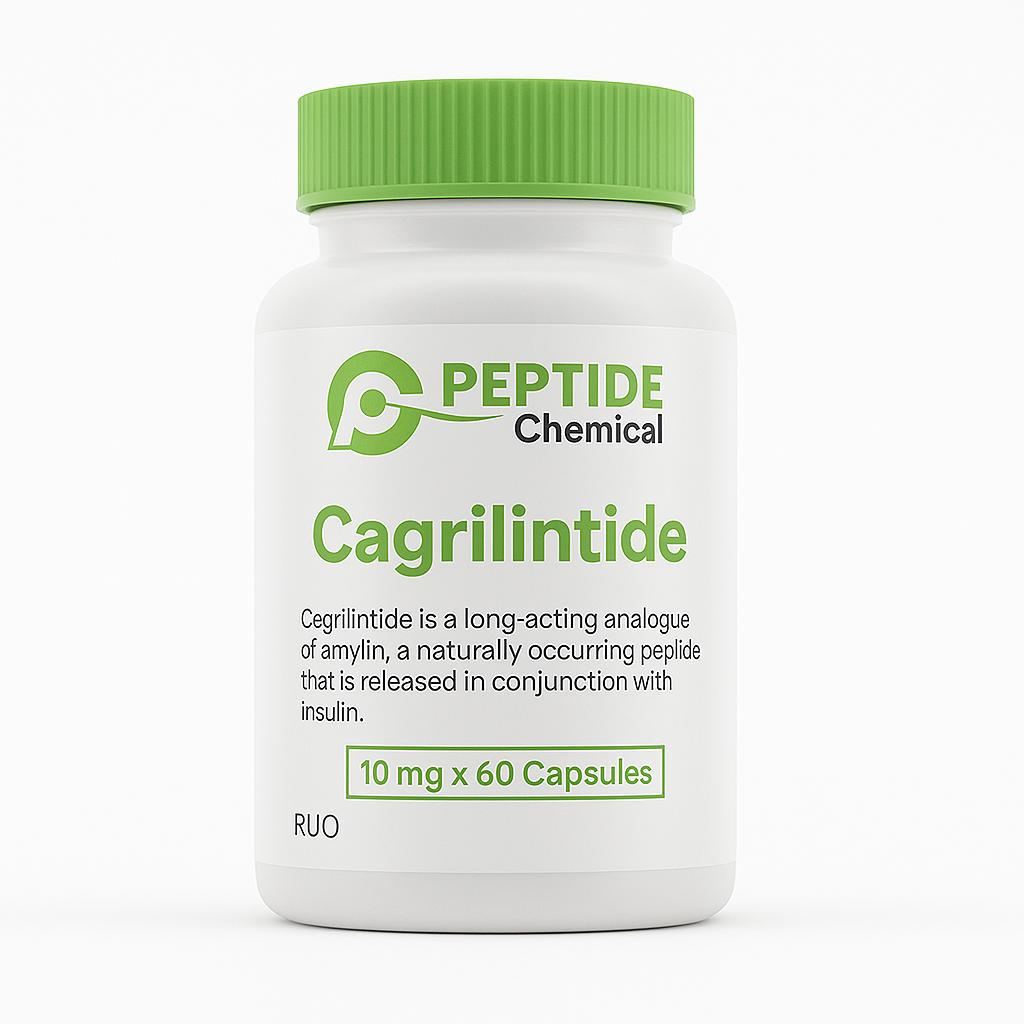
Cagrilintide
$170.00
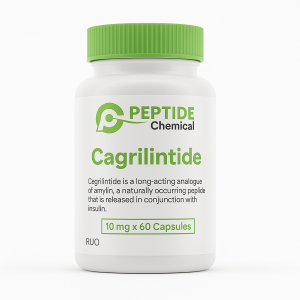
Cagrilintide is a long-acting analogue of amylin, a naturally occurring peptide that is released in conjunction with insulin. Cagrilintide has shown promise in animal trials as a treatment for obesity and type 2 diabetes. It has been studied for benefits not just in type 2 diabetes, but for liver damage, alcohol-related liver disease, and heart/blood vessel disease. There is some speculation about the role of this peptide in Alzheimer’s disease as well, but no research has been published in that particular sub-domain, yet. Many trials, however, have looked at the combination of cagrilintide and semaglutide in the treatment of obesity and type 2 diabetes. The two proteins appear to work synergistically to provide more robust and more permanent weight loss effects. It is important to note that while preclinical studies suggest promising therapeutic potential, clinical trials in humans are limited. Further research needs to be done to determine the efficacy and safety profiles.
Related products
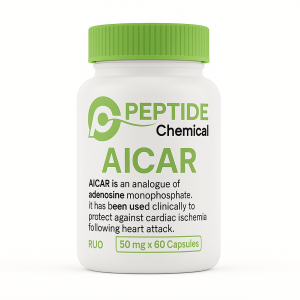
AICAR 50mg
AICAR is an analogue of adenosine monophosphate. It has been used clinically to protect against cardiac ischemia following heart attack. AICAR has antioxidant properties and may therefore help to slow the physiologic signs of aging. There is ongoing research into the use of AICAR to mediate the effects of diabetes, auto-immune diseases, and other inflammatory conditions.

Gut Inflammation (60 Capsules) (Stable BPC-157 Arginate, KPV, Larazotide) FREE Shipping
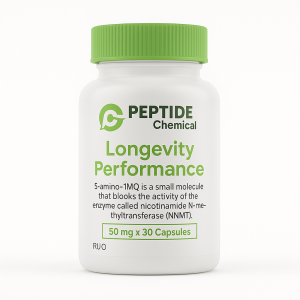
Longevity, Performance & Obesity Research (60 Capsules)
5-amino-1MQ is a small molecule that blocks the activity of the enzyme called nicotinamide N-methyltransferase (NNMT). By blocking NNMT, 5-amino-1MQ stimulates an increase in NAD+, a cofactor that is central to cellular metabolism, thereby increasing metabolic rate and activating a gene called sirtuin-1 (SIRT1). SIRT1 is also known as the "longevity gene" because of its role in reducing the risk of diabetes, obesity, metabolic syndrome, atherosclerosis and other forms of cardiovascular disease, kidney disease, liver disease, neurodegeneration, and cancer.
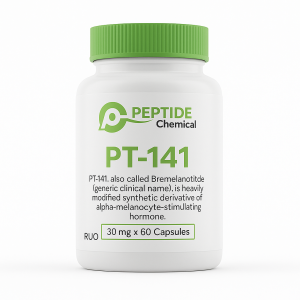
PT-141 (3mg x 10 Vials = 30mg)
PT-141, also called Bremelanotide (generic clinical name), is a heavily modified synthetic derivative of alpha-melanocyte-stimulating hormone. It has been tested in clinical trials as a treatment for both male/female hypoactive sexual desire disorder and acute hemorrhage. PT-141 is an agonist for the melanocortin-4 and melanocortin-1 receptors. Research shows that it promotes sexual arousal and stimulates the immune system.
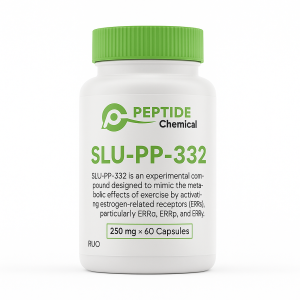
SLU-PP-332
SLU-PP-332 (250mcg x 60 Capsules = 15,000mcg) SLU-PP-332 (1000mcg x 30 Capsules = 30,000mcg) SLU-PP-332 is an experimental compound designed to mimic the metabolic effects of exercise by activating estrogen-related receptors (ERRs), particularly ERRα, ERRβ, and ERRγ. This activation leads to increased energy expenditure, enhanced fatty acid oxidation, and improved mitochondrial function.



Reviews
There are no reviews yet.