

Botulinum Toxin
Botulinum toxin is a highly potent neurotoxic protein produced by the bacterium Clostridium botulinum. In scientific research, it is primarily studied for its precise and well-characterized effects on neuromuscular signaling and neurotransmitter release mechanisms.
At the molecular level, botulinum toxin acts by interfering with SNARE proteins involved in synaptic vesicle fusion. This disruption prevents the release of acetylcholine at neuromuscular junctions, making the toxin a powerful tool for studying neurotransmission and synaptic regulation.
In laboratory research, botulinum toxin is valued for its specificity. Its targeted action on cholinergic nerve terminals allows researchers to investigate how chemical signaling controls muscle contraction and neural communication at a highly detailed level.
Botulinum toxin has become an important model compound in neurobiology. Researchers use it to explore synaptic plasticity, nerve signaling interruption, and the recovery processes that occur following temporary neurotransmission blockade.
The toxin’s mechanism has contributed significantly to understanding how neurons communicate with muscle fibers. By selectively inhibiting signal transmission, it enables controlled examination of neuromuscular dependency and signaling thresholds.
Botulinum toxin is also studied in cellular trafficking research. Its interaction with intracellular transport pathways provides insight into protein internalization, vesicle movement, and enzymatic cleavage processes within nerve cells.
In neuroscience research, botulinum toxin serves as a reference compound for investigating inhibitory signaling effects. Its predictable molecular behavior supports reproducible experiments across different neurological models.
Researchers are also interested in the toxin’s structural biology. Detailed study of its protein domains has helped expand understanding of protein folding, receptor binding, and enzymatic specificity.
Botulinum toxin has played a key role in advancing knowledge of synaptic disorders. By mimicking pathological signal interruption, it allows scientists to model disease-related disruptions in neurotransmission under controlled conditions.
The compound is frequently used in comparative studies involving other neurotoxins to better understand differences in receptor affinity, cellular entry mechanisms, and duration of activity.
Because of its extreme potency, botulinum toxin is handled exclusively in specialized research environments with strict safety protocols. This characteristic underscores its role as a laboratory-controlled substance rather than a general-use compound.
Botulinum toxin research has contributed extensively to modern neuropharmacology. Insights gained from its study have influenced broader understanding of nerve signaling, muscle control, and cellular communication.
Its precise and localized action makes it uniquely valuable for studying targeted neural inhibition without widespread systemic effects in experimental models.
As neuroscience and cellular signaling research continue to evolve, botulinum toxin remains a foundational compound for exploring the mechanisms that govern synaptic transmission and neuromuscular control.
New
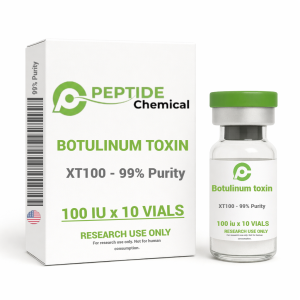
Botulinum toxin
$130.00
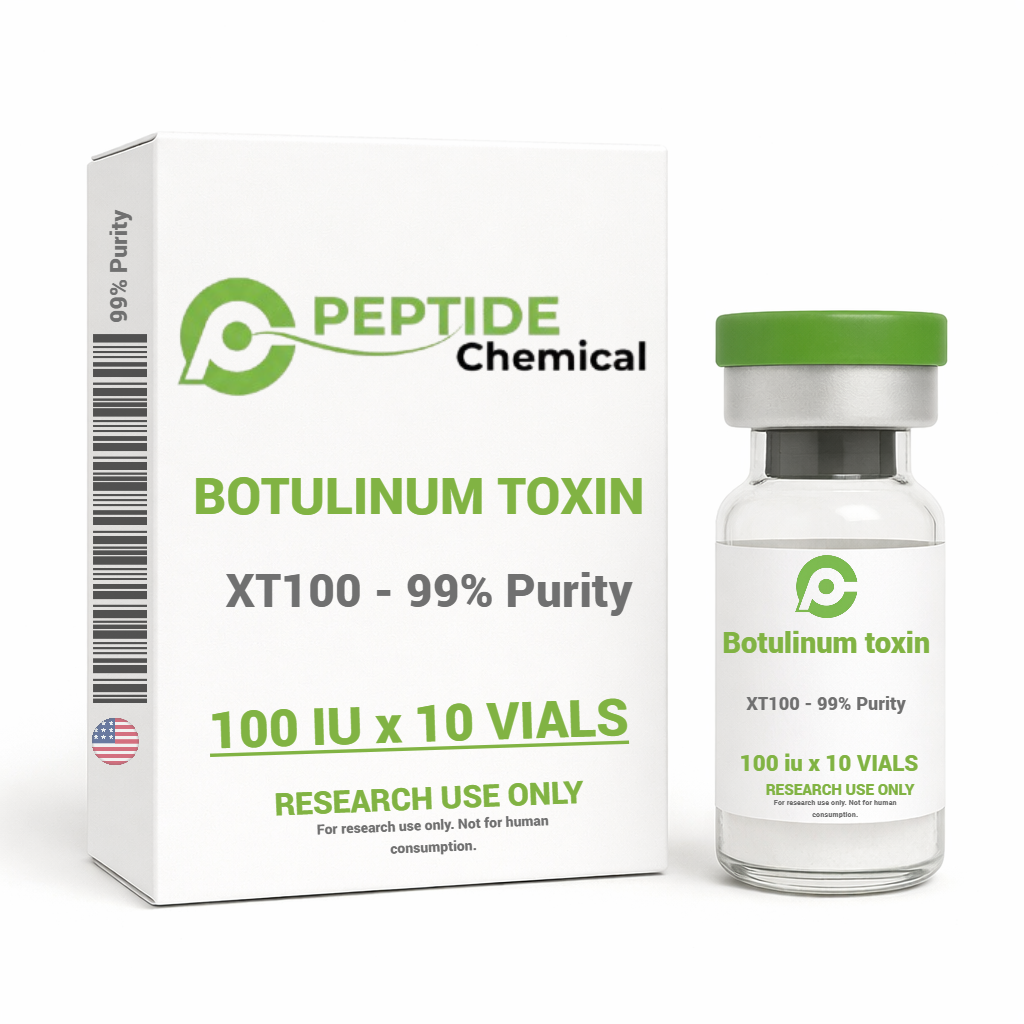
Botulinum toxin is a highly potent neurotoxic protein produced by the bacterium Clostridium botulinum. In scientific research, it is primarily studied for its precise and well-characterized effects on neuromuscular signaling and neurotransmitter release mechanisms.
Description
Shipping & Delivery
Related products
BPC-157 10mg
 BPC-157 has undergone a great deal of research because its healing abilities extend well beyond the lining of the stomach. Studies in animal models indicate that BPC-157 can enhance angiogenesis, promote wound healing, stimulate collagen synthesis, modulate the inflammatory response, and protect against oxidative stress. The peptide has shown benefits in animal models with inflammatory bowel disease, GI ulcers, musculoskeletal injuries, heart damage, eye injuries and neurological damage. Research has shown that the oral bioavailability of BPC-157 is quite high.
 BPC-157 10mg
BPC-157 has undergone a great deal of research because its healing abilities extend well beyond the lining of the stomach. Studies in animal models indicate that BPC-157 can enhance angiogenesis, promote wound healing, stimulate collagen synthesis, modulate the inflammatory response, and protect against oxidative stress. The peptide has shown benefits in animal models with inflammatory bowel disease, GI ulcers, musculoskeletal injuries, heart damage, eye injuries and neurological damage. Research has shown that the oral bioavailability of BPC-157 is quite high. BPC-157 15mg
BPC-157 has undergone a great deal of research because its healing abilities extend well beyond the lining of the stomach. Studies in animal models indicate that BPC-157 can enhance angiogenesis, promote wound healing, stimulate collagen synthesis, modulate the inflammatory response, and protect against oxidative stress. The peptide has shown benefits in animal models with inflammatory bowel disease, GI ulcers, musculoskeletal injuries, heart damage, eye injuries and neurological damage. Research has shown that the oral bioavailability of BPC-157 is quite high. BPC-157 5mg
BPC-157 has undergone a great deal of research because its healing abilities extend well beyond the lining of the stomach. Studies in animal models indicate that BPC-157 can enhance angiogenesis, promote wound healing, stimulate collagen synthesis, modulate the inflammatory response, and protect against oxidative stress. The peptide has shown benefits in animal models with inflammatory bowel disease, GI ulcers, musculoskeletal injuries, heart damage, eye injuries and neurological damage. Research has shown that the oral bioavailability of BPC-157 is quite high. 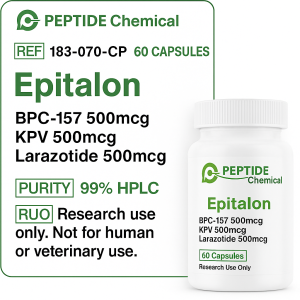
Epitalon 3mg (60 capsules) (Telomere Length)
Epithalon (Epitalon) has long been understood to help preserve telomeres, which are the protective end caps found on fragments of DNA (chromosomes). Telomeres protect DNA from degradation as it is replicated during cell division (one cell splitting into two). Telomeres themselves suffer degradation, however, and eventually become too short to be effective. At this point, a cell will either commit cell suicide in a process called apoptosis or it will go dormant in a process called senescence. Both processes lead to aging and eventual dysfunction and disease. Senescence is one of the primary drivers of disease and aging.
Epitalon has been shown to activate an enzyme called telomerase, which protects and repairs telomeres. More active telomerase means that cells age slower and remain functional longer. The net result is that overall aging appears to be slowed down. Research in rodents indicates that Epitalon may extend life by as much as 27% via this mechanism[2], [3].
Epitalon does not only activate telomerase. As noted above, Epitalon has been shown to affect expression for several genes through alteration of DNA structure. This process, called epigenetic modification, is of interest to scientists because it provides the foundation for controlling gene expression at a very fine level. Research is being conducted to learn how to harness epigenetic technology, which could potentially allow scientists to alter everything from an individual’s eye color to how intelligent a person is or how long someone lives.
Micro-encapsulated Epitalon has shown excellent orally bioavailability in lab research studies. 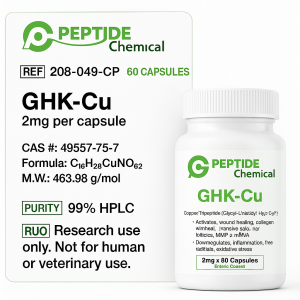
GHK-Cu (2mg x 60 Capsules) (Copper Tripeptide)
GHK-Cu is a small, naturally occurring peptide with the ability to attenuate inflammation, improve antioxidant responses, and improve gene expression on a large scale. Research shows that this copper-chelating peptide may be of critical importance both in the prevention of neurodegenerative disease and as a tool for exploring pathophysiological mechanisms. Studies in mice have revealed that GHK-Cu can protect against neurological insults, improve wound healing, reduce rates of infection, and boost blood vessel growth. The peptide has been of interest in recent years for its anti-oxidant properties that, in combination with its ability to alter gene expression patterns, appear to help slow or even reverse some aspects of aging.
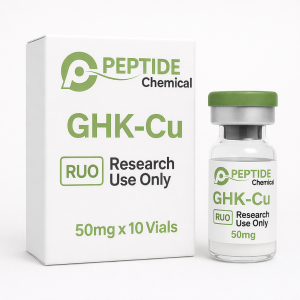
GHK-Cu 50mg Copper Peptide
GHK-Cu is a small, naturally occurring peptide with the ability to attenuate inflammation, improve antioxidant responses, and improve gene expression on a large scale. Research shows that this copper-chelating peptide may be of critical importance both in the prevention of neurodegenerative disease and as a tool for exploring pathophysiological mechanisms. Studies in mice have revealed that GHK-Cu can protect against neurological insults, improve wound healing, reduce rates of infection, and boost blood vessel growth. The peptide has been of interest in recent years for its anti-oxidant properties that, in combination with its ability to alter gene expression patterns, appear to help slow or even reverse some aspects of aging.
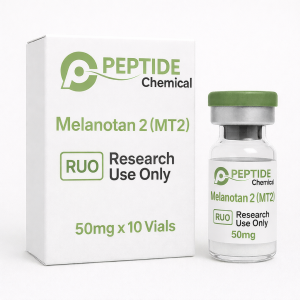
Melanotan 2 (MT2) (3mg x 10 Vials = 30mg)
Melanotan-2 (MT-2) is a synthetic derivative of human alpha-melanocyte-stimulating hormone (α-MSH), developed at the University of Arizona in the 1980s. The initial purpose was to create a sunless tanning alternative, inspired by α-MSH's ability to induce sexual arousal and skin darkening in rodents. However, as research progressed, MT-2's diverse effects were unveiled. These include enhancing sexual arousal, promoting skin pigmentation, reducing compulsive behavior, managing addiction, suppressing hunger, decreasing glucagon production, and even potentially reversing certain features associated with autism. Melanotan-2 research has shown it to enhance sexual arousal, promote skin pigmentation through melanocyte activation and reduce compulsive/addictive behaviors.



Reviews
There are no reviews yet.