

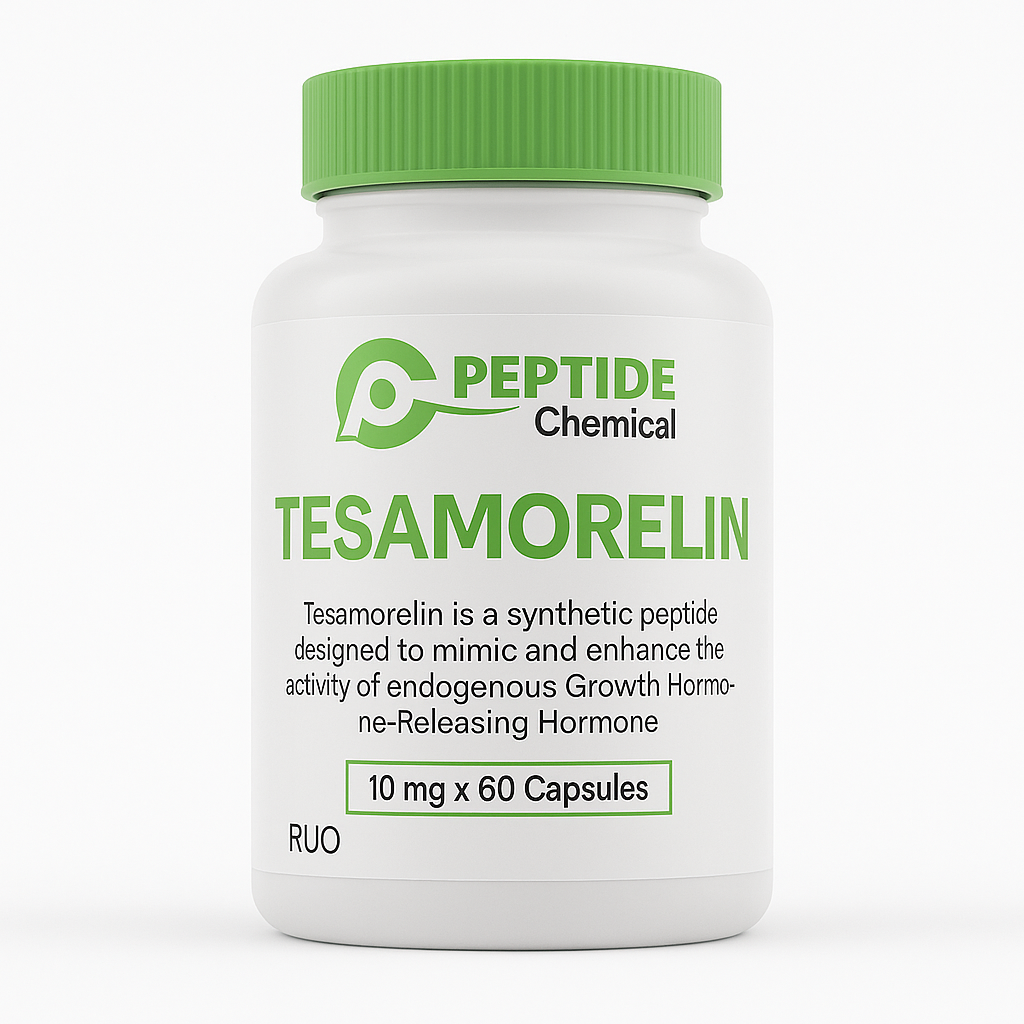
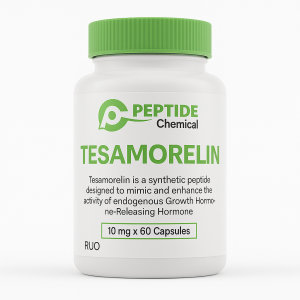
esamorelin is a synthetic peptide designed to mimic and enhance the activity of endogenous Growth Hormone–Releasing Hormone (GHRH). By acting directly on GHRH receptors in the pituitary gland, it stimulates a natural increase in growth hormone secretion rather than introducing external hormone sources. This mechanism makes Tesamorelin a unique therapeutic candidate in metabolic, lipolytic, and endocrine research environments.
Developed originally to combat HIV-associated lipodystrophy, Tesamorelin has earned recognition for its ability to specifically target and reduce visceral adipose tissue. Unlike subcutaneous fat, visceral fat surrounds internal organs and contributes significantly to metabolic disorders, cardiovascular risk, and insulin resistance. Tesamorelin’s selective reduction of visceral fat has made it a groundbreaking option for populations suffering from abnormal fat redistribution.
The peptide comprises a 44–amino acid sequence modeled after natural GHRH but enhanced with a trans-3-hexenoic acid moiety. This modification dramatically increases its stability in physiological environments, helping it resist rapid degradation by dipeptidyl peptidase IV (DPP-IV). Because of this extended half-life, Tesamorelin maintains higher biological activity with less frequent dosing.
Tesamorelin promotes metabolic improvements through the downstream elevation of insulin-like growth factor 1 (IGF-1). As growth hormone secretion increases, IGF-1 levels rise in response, producing a host of beneficial effects. These include enhanced lipolysis, improved fat oxidation, reduced hepatic fat accumulation, and accelerated energy utilization. IGF-1 also contributes to tissue repair, protein synthesis, and cellular regeneration.
One of the distinctive advantages of Tesamorelin is that it supports growth hormone pulsatility. Natural GH release occurs in rhythmic pulses throughout the day, especially during sleep. Tesamorelin amplifies these pulses rather than overwhelming them with sustained hormone elevation, which helps preserve physiological balance and may reduce long-term adverse effects.
Clinical research has demonstrated that Tesamorelin improves lipid profiles. Subjects receiving the peptide often show reductions in triglycerides, lowered inflammatory markers such as C-reactive protein, and improvements in adiponectin levels. These metabolic changes suggest that Tesamorelin may have cardioprotective benefits beyond fat reduction.
The peptide also influences liver health. Studies indicate Tesamorelin may reduce hepatic fat content and improve markers associated with non-alcoholic fatty liver disease. By moderating visceral fat and influencing lipid metabolism, the peptide plays a role in lowering the risk of fatty liver progression, an increasingly common metabolic condition worldwide.
From a biochemical standpoint, Tesamorelin works by binding to GHRH receptors on somatotroph cells in the anterior pituitary. This binding triggers cyclic AMP production and activates protein kinase A, which then initiates GH synthesis and secretion. The downstream effects extend across muscle, liver, adipose tissue, and other GH-responsive systems.
In body composition research, Tesamorelin has been associated with enhanced muscle preservation during caloric deficit. Growth hormone supports protein synthesis and reduces muscle catabolism, making Tesamorelin particularly interesting for researchers studying sarcopenia, aging, and long-term metabolic adaptation.
Tesamorelin’s lipolytic effects primarily target visceral fat depots. Visceral fat is more hormonally active and more responsive to GH-mediated fat breakdown than subcutaneous fat, which helps explain why Tesamorelin selectively removes deep abdominal fat while preserving healthier peripheral fat stores. This selectivity is a hallmark of the peptide.
Beyond metabolic studies, Tesamorelin has been investigated for cognitive and neurological effects. Some research suggests that increasing IGF-1 may support brain function, memory consolidation, and neuroprotection. Although early results are promising, neurological benefits remain an emerging area of study.
Tesamorelin also appears to influence mitochondrial function. By promoting fat oxidation and improving metabolic signaling pathways, it may enhance mitochondrial efficiency, energy output, and cellular resilience. These mechanisms are particularly relevant in aging research, where mitochondrial decline is a key factor.
Studies have shown improvements in quality-of-life indicators among subjects treated with Tesamorelin. Individuals report better energy levels, improved physical function, and enhanced emotional well-being. Though subjective, these reports align with the known metabolic improvements associated with increased GH and IGF-1 activity.
One notable aspect of Tesamorelin research is that the peptide does not cause significant increases in glucose levels when used appropriately, especially compared to some other growth hormone–related interventions. However, monitoring remains essential because GH can influence insulin sensitivity in certain individuals.
In terms of structural design, Tesamorelin’s amino acid sequence closely resembles natural GHRH, but the additional molecular modification prolongs its duration of action. This structure allows it to survive transport through the bloodstream long enough to exert strong and reliable endocrine effects.
Tesamorelin has been widely used in research exploring age-related metabolic decline. Growth hormone naturally decreases with age, contributing to increases in fat mass, decreases in muscle mass, and reduced energy expenditure. Tesamorelin offers a model for studying how restoring GH pulsatility might counteract these changes.
The peptide also plays a role in sleep research. Growth hormone release is intrinsically tied to sleep cycles, particularly deep sleep. By stimulating GH release, Tesamorelin may influence sleep quality and recovery processes, areas that continue to attract scientific interest.
Its effects on immune system signaling have also been studied. GH and IGF-1 influence immune cell proliferation and cytokine activity, meaning Tesamorelin may indirectly support certain immune responses. This connection is complex and still under investigation.
Tesamorelin demonstrates notable stability in plasma, maintaining functionality long enough to exert meaningful biological influence. Its resistance to enzymatic breakdown helps ensure consistent GH stimulation over time, further distinguishing it from shorter-lasting GHRH analogs.
In exercise physiology research, Tesamorelin has shown potential benefits for recovery, muscular adaptation, and overall athletic performance models. Elevated GH and IGF-1 may support tissue repair and reduce downtime between intense training sessions, though such use remains strictly experimental.
Growth hormone–mediated fat loss, such as that influenced by Tesamorelin, typically occurs without significant calorie restriction. This makes the peptide valuable for studying metabolic alterations independent of diet. Researchers can observe changes in body composition driven primarily by hormonal shifts.
Tesamorelin’s impact on water retention appears lower than that seen with direct GH administration. By controlling GH release instead of flooding the system, it mirrors the body’s natural hormone rhythm and minimizes abrupt hormonal spikes.
As a research peptide, Tesamorelin is usually well tolerated in controlled study environments. Side effects observed in trials tend to be mild and related to localized reactions or temporary hormone adjustments. This favorable profile enhances its utility in long-term scientific investigations.
One area of interest is Tesamorelin’s potential to support metabolic health in aging populations. As visceral fat accumulation increases with age, Tesamorelin provides a model for reducing harmful fat stores while maintaining lean tissue and preserving metabolic function.
Tesamorelin may also influence collagen synthesis through IGF-1 pathways, contributing to tissue strength, elasticity, and general regenerative processes. This has sparked interest in dermatology and wound-healing research.
Researchers have noted improvements in lipid mobilization and resting metabolic rate when studying Tesamorelin’s effects. As GH increases, the body shifts toward greater utilization of fatty acids as an energy source, reducing reliance on glucose pathways.
Given the peptide’s multifaceted effects, Tesamorelin continues to serve as an important tool for understanding hormone-driven metabolic regulation. Its selective impact on visceral fat and its ability to restore GH pulsatility make it uniquely valuable among GHRH analogs.
Ongoing studies are exploring Tesamorelin’s influence on longevity pathways. Since excess visceral fat is strongly associated with early mortality, cardiovascular disease, and metabolic decline, reducing it through controlled GH stimulation may offer insights into healthy aging interventions.
Tesamorelin’s growing body of evidence highlights its significance not only for HIV-associated lipodystrophy but for broader metabolic research. Its targeted effects, safety profile, and hormonal precision make it a cornerstone peptide in modern endocrinology and metabolic science.
HotNew
Tesamorelin
$110.00
Tesamorelin’s growing body of evidence highlights its significance not only for HIV-associated lipodystrophy but for broader metabolic research. Its targeted effects, safety profile, and hormonal precision make it a cornerstone peptide in modern endocrinology and metabolic science.
Description
Shipping & Delivery
Related products
AICAR 50mg
AICAR is an analogue of adenosine monophosphate. It has been used clinically to protect against cardiac ischemia following heart attack. AICAR has antioxidant properties and may therefore help to slow the physiologic signs of aging. There is ongoing research into the use of AICAR to mediate the effects of diabetes, auto-immune diseases, and other inflammatory conditions.
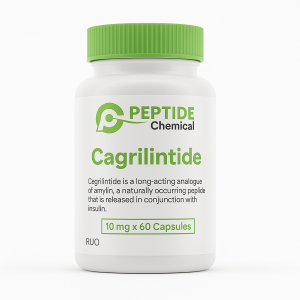
Cagrilintide
Cagrilintide is a long-acting analogue of amylin, a naturally occurring peptide that is released in conjunction with insulin. Cagrilintide has shown promise in animal trials as a treatment for obesity and type 2 diabetes. It has been studied for benefits not just in type 2 diabetes, but for liver damage, alcohol-related liver disease, and heart/blood vessel disease. There is some speculation about the role of this peptide in Alzheimer’s disease as well, but no research has been published in that particular sub-domain, yet. Many trials, however, have looked at the combination of cagrilintide and semaglutide in the treatment of obesity and type 2 diabetes. The two proteins appear to work synergistically to provide more robust and more permanent weight loss effects. It is important to note that while preclinical studies suggest promising therapeutic potential, clinical trials in humans are limited. Further research needs to be done to determine the efficacy and safety profiles.

Gut Inflammation (60 Capsules) (Stable BPC-157 Arginate, KPV, Larazotide) FREE Shipping
BPC-157 Arginate Salt is very stable in human gastric juice and boosts the oral bioavailability from less than 3% to greater than 90%. BPC 157 arginate salt is also more stable in varied temperature environments and can resist the effects of UV light. Studies show that just 5% of BPC 157 arginate is degraded after 5 hours in gastric acid as compared to 98% of the acetate salt with oral administration. The enhanced oral bioavailability of the arginate salt makes it the preferred choice in BPC 157 oral research.
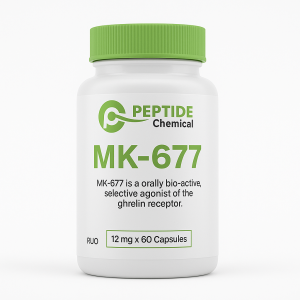
MK-677 (Ibutamoren) 12.5mg (60 Capsules)
MK-677, is a orally bio-active, selective agonist of the ghrelin receptor. Research shows that MK-677 increases the natural secretion of growth hormone (GH) and insulin-like growth factor 1 (IGF-1), but does not affect cortisol levels. It is being researched as a possible treatment for GH deficiency, muscle and bone wasting, appetite stimulation and Alzheimer's disease. MK-677 research in mice, appeared to prevent the onset of AD, even in genetically predisposed mice, as long as it was started before significant amyloid beta accumulation. MK-677 research has also shown exceptionally promising benefits in improving sleep quality.
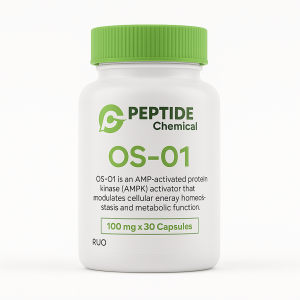
OS-01 (100mg x 30 Capsules)



OS-01 is an AMP-activated protein kinase (AMPK) activator that modulates cellular energy homeostasis and metabolic function. AMPK, a central regulator of energy balance, is activated in response to low intracellular ATP levels, enhancing glucose uptake, fatty acid oxidation, and mitochondrial biogenesis. OS-01 stimulates AMPK phosphorylation, leading to increased ATP production, improved insulin sensitivity, and enhanced autophagic flux, thereby promoting cellular repair and longevity. This compound has been shown to mitigate oxidative stress by downregulating reactive oxygen species (ROS) and inflammatory cytokines, reducing cellular damage and aging-related dysfunction. Additionally, OS-01 enhances endurance by optimizing energy substrate utilization and preserving glycogen stores during exercise. It plays a protective role in renal and cardiovascular systems by attenuating fibrosis, reducing endothelial dysfunction, and improving mitochondrial efficiency. Preclinical studies suggest its potential in managing metabolic disorders, including type 2 diabetes, obesity, and cardiovascular diseases, by improving glucose homeostasis and reducing insulin resistance. Furthermore, OS-01’s activation of autophagy contributes to neuroprotection, reducing age-related neurodegeneration. Its multifaceted mechanism positions it as a promising candidate for therapeutic intervention in metabolic and age-related diseases.
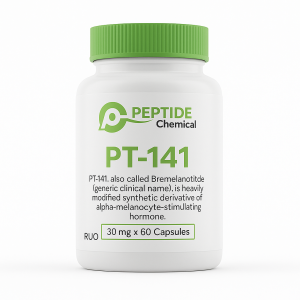
PT-141
PT-141, also called Bremelanotide (generic clinical name), is a heavily modified synthetic derivative of alpha-melanocyte-stimulating hormone. It has been tested in clinical trials as a treatment for both male/female hypoactive sexual desire disorder and acute hemorrhage. PT-141 is an agonist for the melanocortin-4 and melanocortin-1 receptors. Research shows that it promotes sexual arousal and stimulates the immune system.
PT-141 (3mg x 10 Vials = 30mg)
PT-141, also called Bremelanotide (generic clinical name), is a heavily modified synthetic derivative of alpha-melanocyte-stimulating hormone. It has been tested in clinical trials as a treatment for both male/female hypoactive sexual desire disorder and acute hemorrhage. PT-141 is an agonist for the melanocortin-4 and melanocortin-1 receptors. Research shows that it promotes sexual arousal and stimulates the immune system.
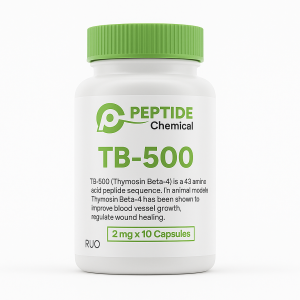
TB-500 (Thymosin Beta-4) (43aa)
TB-500 (Thymosin Beta-4) is a 43 amino acid peptide sequence. In animal models, Thymosin Beta-4 has been shown to improve blood vessel growth, regulate wound healing, decrease inflammation, and reduce oxidative damage in the heart and central nervous system. Thymosin-beta-4 has a role in protection, tissue repair, regeneration and remodeling of injured or damaged tissues. It is also of active interest in anti-aging research.



Reviews
There are no reviews yet.