

![IGF-1 DES (Insulin-Like Growth Factor-1 DES [1-3]) 10mg](https://peptidechemical.net/wp-content/uploads/2025/12/IGD-300x300.png)
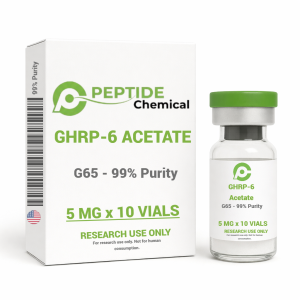
GHRP-6 Acetate (Growth Hormone Releasing Peptide-6)
GHRP-6 Acetate is a synthetic hexapeptide widely studied in endocrinology and peptide research for its ability to interact with growth hormone secretagogue receptors (GHS-R). Its chemical structure allows researchers to examine receptor-mediated signaling and peptide-driven intracellular pathways in controlled experimental models.
In laboratory research, GHRP-6 Acetate is valued for its ability to stimulate receptor pathways that regulate endogenous peptide release. This makes it a useful compound for investigating feedback loops, receptor sensitivity, and downstream cellular signaling associated with growth hormone pathways.
One of the defining characteristics of GHRP-6 Acetate is its chemical stability. The acetate form enhances peptide shelf-life and maintains consistent molecular behavior, which is critical for reproducible laboratory experiments.
GHRP-6 Acetate is frequently included in studies focused on receptor activation and peptide signaling kinetics. Researchers explore how transient receptor engagement influences intracellular pathways, transcriptional activity, and protein synthesis processes.
The peptide is also used in comparative research alongside other growth hormone releasing peptides to study differences in receptor affinity, activation duration, and signaling intensity, providing insight into structure–function relationships.
GHRP-6 Acetate’s compact molecular structure allows for high-precision analysis of receptor–ligand interactions. Researchers can study binding dynamics, receptor specificity, and signaling cascade modulation under controlled experimental conditions.
Unlike broader-acting hormones, GHRP-6 Acetate functions through targeted receptor engagement, making it a valuable tool for investigating discrete signaling pathways without widespread systemic effects in vitro.
The peptide’s predictable molecular behavior supports consistency across multiple research studies. Its well-characterized receptor interaction makes it suitable for standardization and protocol replication.
GHRP-6 Acetate is also examined in studies of endocrine signaling regulation, intracellular pathway modulation, and peptide-mediated molecular communication.
Because growth hormone pathways interact with multiple tissues and feedback mechanisms, GHRP-6 Acetate is frequently incorporated in systems-based research rather than isolated pathway analysis, allowing broader insight into peptide-driven signaling networks.
The peptide’s stability, receptor selectivity, and structural simplicity make it a reliable tool for advanced laboratory research in endocrinology and peptide science.
GHRP-6 Acetate continues to attract scientific interest due to its reproducible receptor engagement, molecular stability, and relevance in studying growth hormone–related signaling.
Its compact design, predictable molecular profile, and targeted activity make GHRP-6 Acetate an essential research compound for laboratory-based exploration of peptide receptor biology and intracellular signaling.
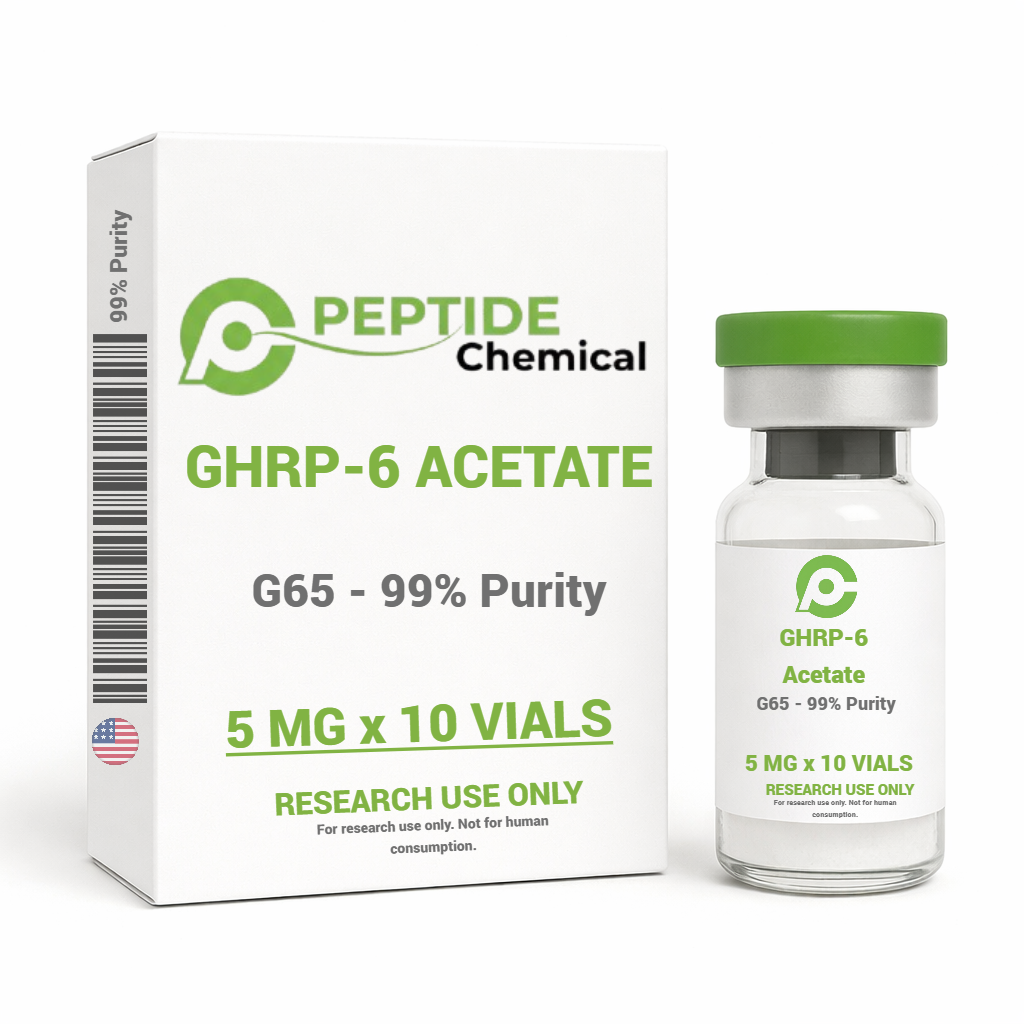
GHRP-6 Acetate (Growth Hormone Releasing Peptide-6) 5mg
$23.00
GHRP-6 Acetate is a synthetic hexapeptide widely studied in endocrinology and peptide research for its ability to interact with growth hormone secretagogue receptors (GHS-R). Its chemical structure allows researchers to examine receptor-mediated signaling and peptide-driven intracellular pathways in controlled experimental models.
Related products
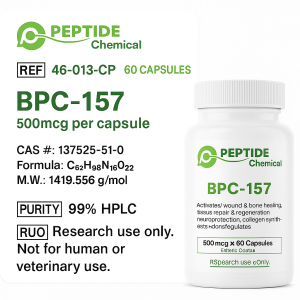
BPC 157 500mcg (60 Capsules)
 BPC-157 has undergone a great deal of research because its healing abilities extend well beyond the lining of the stomach. Studies in animal models indicate that BPC-157 can enhance angiogenesis, promote wound healing, stimulate collagen synthesis, modulate the inflammatory response, and protect against oxidative stress. The peptide has shown benefits in animal models with inflammatory bowel disease, GI ulcers, musculoskeletal injuries, heart damage, eye injuries and neurological damage. Research has shown that the oral bioavailability of BPC-157 is quite high.
BPC-157 15mg
BPC-157 has undergone a great deal of research because its healing abilities extend well beyond the lining of the stomach. Studies in animal models indicate that BPC-157 can enhance angiogenesis, promote wound healing, stimulate collagen synthesis, modulate the inflammatory response, and protect against oxidative stress. The peptide has shown benefits in animal models with inflammatory bowel disease, GI ulcers, musculoskeletal injuries, heart damage, eye injuries and neurological damage. Research has shown that the oral bioavailability of BPC-157 is quite high. 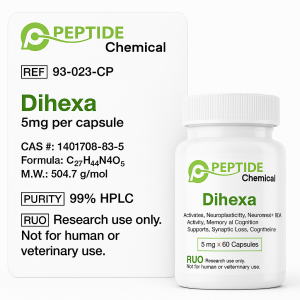
Dihexa (5mg x 60 Capsules = 300mg)
Dihexa is a small peptide-derived compound designed to support cognitive function and brain regeneration. It acts by activating the HGF/c-Met signaling pathway, which plays a critical role in forming new synaptic connections and enhancing neuroplasticity. Dihexa also mimics the action of brain-derived neurotrophic factor (BDNF), a key molecule involved in learning, memory, and neuronal survival. Preclinical research studies have shown that Dihexa can significantly improve memory consolidation and reverse cognitive deficits in models of Alzheimer’s disease, traumatic brain injury, and stroke. Unlike traditional nootropics or growth factors with poor blood–brain barrier penetration, Dihexa is orally bioavailable and metabolically stable, allowing for targeted CNS effects. Its unique mechanism positions it as a promising research compound for neurodegenerative conditions, offering potential in synaptic repair, inflammation reduction, and long-term cognitive enhancement. 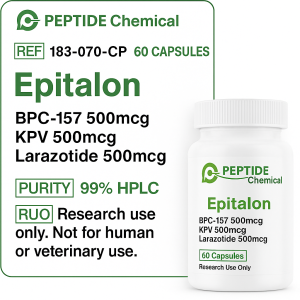
Epitalon 3mg (60 capsules) (Telomere Length)
Epithalon (Epitalon) has long been understood to help preserve telomeres, which are the protective end caps found on fragments of DNA (chromosomes). Telomeres protect DNA from degradation as it is replicated during cell division (one cell splitting into two). Telomeres themselves suffer degradation, however, and eventually become too short to be effective. At this point, a cell will either commit cell suicide in a process called apoptosis or it will go dormant in a process called senescence. Both processes lead to aging and eventual dysfunction and disease. Senescence is one of the primary drivers of disease and aging.
Epitalon has been shown to activate an enzyme called telomerase, which protects and repairs telomeres. More active telomerase means that cells age slower and remain functional longer. The net result is that overall aging appears to be slowed down. Research in rodents indicates that Epitalon may extend life by as much as 27% via this mechanism[2], [3].
Epitalon does not only activate telomerase. As noted above, Epitalon has been shown to affect expression for several genes through alteration of DNA structure. This process, called epigenetic modification, is of interest to scientists because it provides the foundation for controlling gene expression at a very fine level. Research is being conducted to learn how to harness epigenetic technology, which could potentially allow scientists to alter everything from an individual’s eye color to how intelligent a person is or how long someone lives.
Micro-encapsulated Epitalon has shown excellent orally bioavailability in lab research studies. 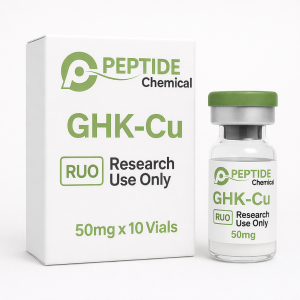
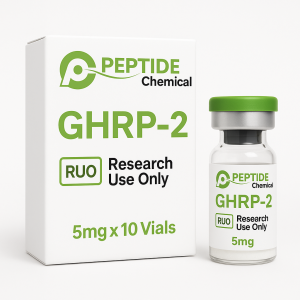
GHK-Cu 50mg Copper Peptide
NAD+
NAD+ (nicotinamide adenine dinucleotide) is a vital coenzyme in all living cells, essential for metabolic processes and cellular function. It acts as a mediator of redox reactions, alternating between its oxidized (NAD+) and reduced (NADH) forms to facilitate electron transfer, crucial for energy production and sustaining life. Involved in over 500 enzymatic reactions, NAD+ is central to maintaining cellular homeostasis. Research shows that NAD+ may be beneficial in improving muscle function, protecting cells of the nervous system, and generally reducing the effects of aging.
Beyond energy metabolism, NAD+ supports DNA repair and gene regulation through enzymes like sirtuins and PARPs. Sirtuins use NAD+ to regulate cellular functions such as DNA repair, gene expression, and aging, while PARPs utilize it to repair DNA damage and maintain genomic stability. These roles underscore NAD+'s importance in cellular integrity and combating aging.



Reviews
There are no reviews yet.