

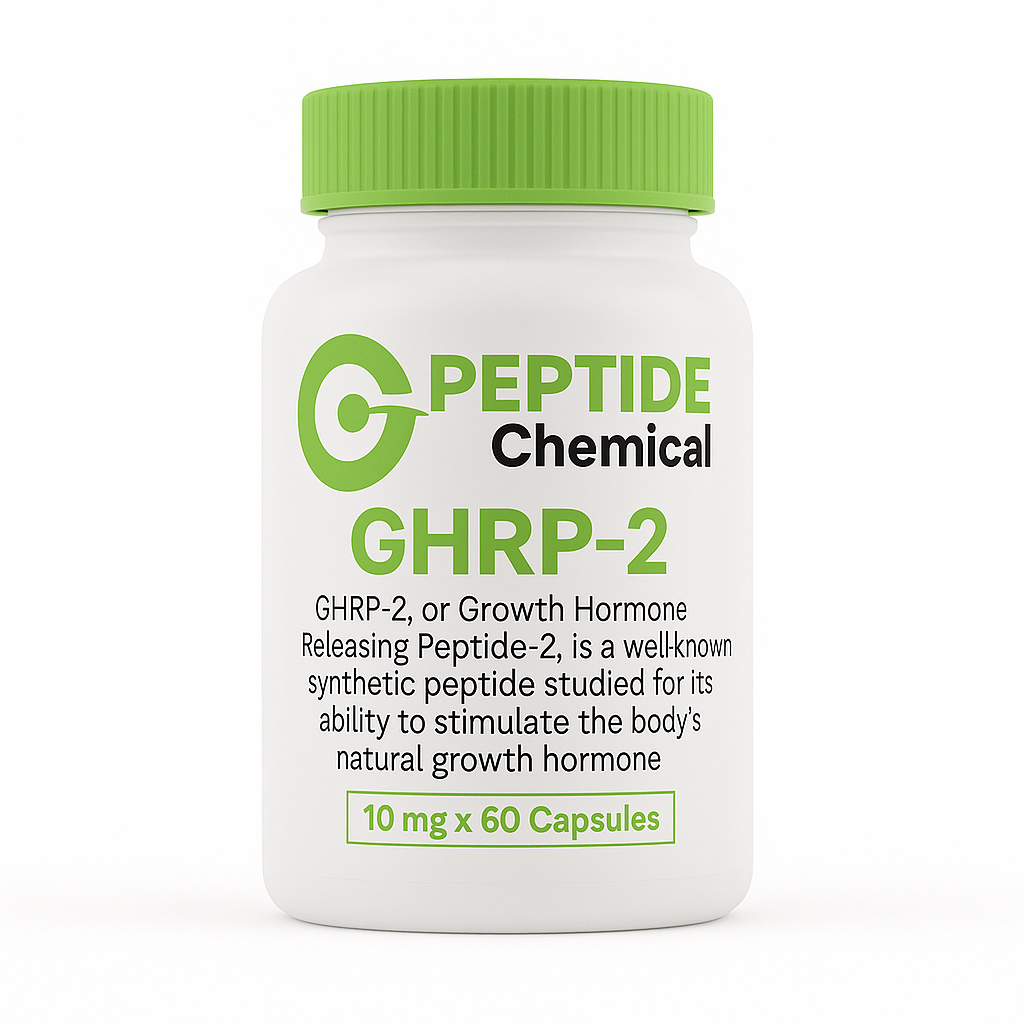
GHRP-2, or Growth Hormone Releasing Peptide-2
GHRP-2, or Growth Hormone Releasing Peptide-2, is a well-known synthetic peptide studied for its ability to stimulate the body’s natural growth hormone release. It has been widely explored in research related to recovery, muscle development, metabolism, and overall physiological performance.
This peptide functions by interacting with the ghrelin receptor, also known as the growth hormone secretagogue receptor. By activating this pathway, GHRP-2 encourages the pituitary gland to release growth hormone in a manner that aligns with the body’s natural hormonal rhythms.
One of the defining characteristics of GHRP-2 is its strong and rapid growth hormone–stimulating effect. Compared to earlier peptides, it is known for producing a robust and reliable response, making it a staple in growth hormone research.
GHRP-2 is often studied for its role in supporting muscle recovery and tissue repair. Growth hormone plays a critical role in protein synthesis, cellular regeneration, and muscle maintenance, all of which are essential for physical performance and recovery.
In performance-related research, GHRP-2 is valued for its ability to support lean muscle preservation. By encouraging endogenous growth hormone release, it helps create an environment conducive to muscle repair and structural integrity.
Another important aspect of GHRP-2 is its influence on fat metabolism. Growth hormone is involved in lipolysis, the process by which stored fat is broken down and utilized for energy, making this peptide relevant in metabolic studies.
GHRP-2 is also examined for its effects on recovery speed. Improved growth hormone signaling may help shorten recovery time after physical stress, training, or injury, supporting overall physical resilience.
The peptide’s action is pulsatile rather than continuous. This means it encourages natural growth hormone pulses, which more closely resemble the body’s physiological release patterns compared to constant stimulation.
GHRP-2 has been studied for its potential role in improving sleep quality. Growth hormone release is closely tied to deep sleep phases, and enhanced signaling may support more restorative sleep cycles.
In addition to physical recovery, GHRP-2 is researched for its effects on connective tissue health. Tendons, ligaments, and joints rely on growth hormone–mediated repair processes for strength and durability.
One of the notable characteristics of GHRP-2 is its short half-life. This allows for precise timing and controlled research protocols, making it easier to study its effects in structured environments.
GHRP-2 is often compared to other growth hormone secretagogues due to its potency. Its strong receptor affinity makes it an efficient option in studies focused on hormonal optimization.
The peptide may also influence appetite signaling due to its interaction with the ghrelin receptor. This aspect makes it interesting in research exploring hunger regulation alongside growth hormone activity.
In metabolic research, GHRP-2 is explored for its ability to support overall energy balance. Growth hormone influences how the body utilizes fats and carbohydrates, contributing to metabolic efficiency.
GHRP-2 is frequently included in research protocols that focus on body composition. Supporting muscle preservation while encouraging fat utilization is a central theme in these investigations.
Because it stimulates endogenous hormone release rather than supplying hormones directly, GHRP-2 is considered a regulatory compound. This approach supports the body’s internal control mechanisms.
Researchers also explore GHRP-2’s potential impact on immune system support. Growth hormone plays a role in cellular regeneration and immune cell function, linking this peptide to broader wellness research.
GHRP-2’s effects on cellular repair extend beyond muscles. Organs and tissues throughout the body rely on growth hormone signaling for maintenance and renewal.
The peptide is often valued for its predictability. Its well-documented mechanism allows researchers to anticipate responses and design consistent protocols.
In longevity-focused research, GHRP-2 is studied for its role in counteracting age-related decline in growth hormone production. Supporting natural hormone output is a key area of interest in aging science.
GHRP-2 is non-stimulatory and does not directly excite the nervous system. This allows it to support recovery and regeneration without causing jitteriness or nervous overstimulation.
Its compatibility with other peptides has also been explored in research settings. GHRP-2 is often discussed alongside complementary compounds that support hormonal balance and tissue repair.
The peptide’s influence on nitrogen retention is another area of interest. Improved nitrogen balance supports muscle preservation and recovery during periods of physical stress.
GHRP-2 continues to be studied for its role in maintaining strength and vitality. Growth hormone is a foundational element of physical resilience and structural health.
In research related to athletic performance, GHRP-2 is examined for its ability to support consistent training output by enhancing recovery and reducing downtime.
The compound’s relatively fast onset of action allows researchers to observe changes within controlled timelines, making it suitable for detailed physiological studies.
GHRP-2 represents a well-established tool in peptide research due to its clear mechanism and reproducible effects. Its longevity in scientific exploration speaks to its reliability.
As interest in hormone-supportive peptides grows, GHRP-2 remains relevant due to its direct yet regulated stimulation of growth hormone release.
Its role in supporting recovery, metabolism, and tissue integrity positions it as a foundational compound in growth hormone–related research.
Ultimately, GHRP-2 stands out as a powerful growth hormone–releasing peptide that works in harmony with the body’s natural signaling systems. By supporting regeneration, metabolic balance, and recovery, it continues to be a valuable focus in advanced peptide and performance research.